
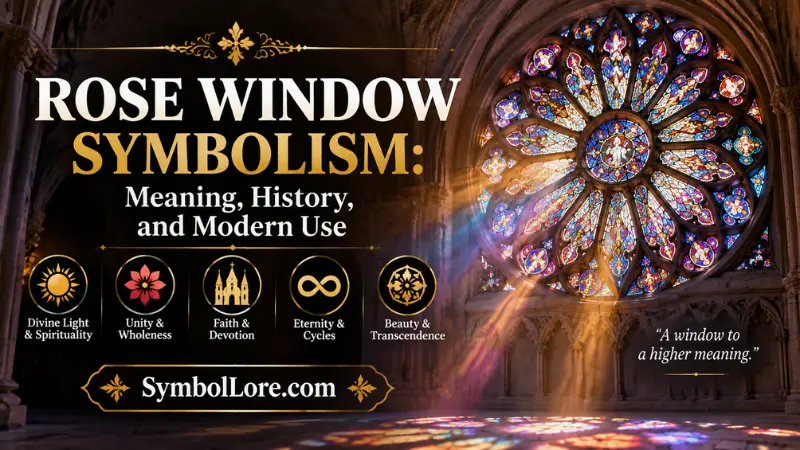
A rose window is a circular stained-glass design often found in Gothic churches, where carefully arranged sections of colored glass create patterns resembling a blooming flower. Rose window symbolism commonly represents spiritual harmony, divine connection, and the relationship between earthly life and the heavens, while its historical meanings also include unity, eternity, and sacred order.
These circular windows have attracted attention because they combine architecture, art, mathematics, and religious storytelling. In American culture today, rose windows appear not only in churches but also in homes, tattoos, jewelry, artwork, and decorative designs where people appreciate their beauty and symbolic associations.
Understanding this symbol requires looking beyond its appearance. The rose window reflects centuries of ideas about light, faith, community, balance, and human creativity.
Quick Answer
Rose window symbolism commonly represents spiritual unity, divine light, and harmony in modern interpretations, especially in religious and architectural settings. Historically, rose windows symbolized heavenly order, eternity, and the connection between the physical world and spiritual beliefs.
TL;DR
- Rose windows represent unity, balance, and spiritual illumination.
- Gothic churches used them to express religious ideas.
- Circular designs connect with eternity and wholeness.
- Americans often view them as art and heritage symbols.
- Modern uses include tattoos, decor, and jewelry.
What a Rose Window Looks Like and Where People Find It
A rose window is a large circular window divided into symmetrical sections called tracery. These sections often contain stained glass arranged into geometric patterns, floral shapes, religious scenes, or abstract designs.
The name comes from the resemblance between the window’s radial pattern and the petals of a rose. However, the design is not simply decorative. The circle, repeated patterns, and movement from the center outward create a visual representation of balance and order.
People most commonly encounter rose windows in medieval European cathedrals, especially Gothic churches. In the United States, they appear in historic churches, universities, museums, and buildings influenced by Gothic architecture.
Modern designers also borrow the circular structure for:
- Home decorations
- Wall art
- Jewelry patterns
- Tattoos
- Digital illustrations
- Architectural features
The symbol continues to attract people because it combines visual beauty with ideas about connection and meaning.
What It Commonly Means in the United States
In the United States, rose windows are most often connected with Christian architecture and religious heritage. Many Americans recognize them as features of churches that represent faith, devotion, and the use of light as a spiritual metaphor.
Light passing through stained glass creates changing colors inside a building. This effect has traditionally been associated with divine presence, reflection, and moments of contemplation.
Outside religious settings, Americans may interpret rose windows more broadly as symbols of:
| Context | Meaning in the USA | Common Associations | Notes |
| Churches | Faith and spiritual reflection | Prayer, worship, divine light | Most traditional use |
| Architecture | Beauty and craftsmanship | Balance, symmetry, design | Often seen in historic buildings |
| Tattoos | Personal meaning and identity | Harmony, growth, inner balance | Meaning varies by wearer |
| Home decor | Artistic expression | Calm, elegance, creativity | Usually nonreligious |
| Jewelry | Personal connection | Beauty, protection, memory | Often symbolic rather than formal |
For many people today, the rose window is appreciated both as religious artwork and as a universal design representing harmony.
Ancient Roots and Early Symbolism
The rose window developed during the medieval period, especially between the 12th and 14th centuries during the rise of Gothic architecture. Builders created enormous churches with taller walls and larger openings for stained glass.
The circular form had important symbolic associations. A circle has no beginning or end, making it a natural image for ideas such as eternity, completeness, and perfection.
Before Gothic churches, circular designs appeared in various cultures and artistic traditions. The use of radial patterns can be found in ancient architecture, religious art, and decorative systems where symmetry represented cosmic order.
Medieval Christian thinkers often connected geometric harmony with the organization of creation. A carefully designed circular window could represent the belief that the universe followed a meaningful structure.
Religious Meaning in Christian Traditions
Rose windows are strongly associated with Christianity, particularly Catholic and Anglican traditions. Many famous examples appear on the western fronts of cathedrals, where they became important visual elements of worship spaces.
The center of a rose window often served as the visual focus. Surrounding sections could represent:
- Biblical stories
- Saints
- Religious symbols
- Heavenly beings
- Creation themes
The colors also contributed to interpretation. Blue glass was often associated with heaven and spirituality, while red could suggest sacrifice, love, or devotion.
The window’s ability to transform sunlight into colored patterns created a teaching experience for worshippers. In periods when many people could not read religious texts, visual storytelling helped communicate important beliefs.
Why Light Became a Major Symbol
Light plays a central role in the meaning of rose windows. The physical experience of sunlight passing through colored glass influenced how people understood the design.
In Christian thought, light has often represented:
- Truth
- Guidance
- Hope
- Divine presence
A dark stone church illuminated by colorful light created a contrast between ordinary surroundings and a more reflective atmosphere.
Modern interpretations also connect this use of light with personal ideas such as inspiration, awareness, and emotional renewal. Someone who chooses a rose window design today may appreciate the symbolism of finding clarity or balance.
The Rose Window in American Culture and Design
Although rose windows originated in Europe, they became part of American architectural history through churches, universities, and public buildings influenced by European styles.
Many American religious communities preserve stained-glass windows as important parts of their identity and heritage. These windows often honor historical events, religious stories, or community members.
Outside churches, American artists use rose window patterns because they offer a combination of structure and creativity. The design works well in modern spaces because its symmetry creates a feeling of order.
Common American uses include:
- Decorative wall panels
- Meditation spaces
- Wedding artwork
- Handmade crafts
- Graphic designs
The symbol has moved from a strictly religious object into a broader artistic form.
Cross-Cultural Interpretations of Circular Designs
While rose windows have a specific connection to European Christianity, circular symbolic patterns appear across many cultures.
Circles are often associated with ideas such as:
- Wholeness
- Cycles of nature
- Balance
- Continuity
In some traditions, circular designs represent the relationship between humans, nature, and the universe. Similar ideas appear in mandala traditions, sacred geometry, and decorative arts around the world.
These similarities do not mean all circular symbols share the same meaning. The interpretation depends on cultural background, religious context, and personal experience.
Emotional and Psychological Associations
People often respond to rose windows because their design naturally creates feelings of order and calm. The repeated patterns encourage the eye to move around the circle, creating a sense of rhythm.
Psychologically, symmetrical designs are often experienced as visually pleasing because humans tend to notice patterns and balance.
A person may connect a rose window with:
- Peace
- Reflection
- Belonging
- Creativity
- Personal transformation
These meanings are usually personal interpretations rather than fixed definitions.
Rose Windows in Tattoos and Personal Identity
Rose window tattoos have become a way for people to combine architectural beauty with personal symbolism.
Some people choose this design because of religious beliefs or family connections. Others select it because they appreciate Gothic art, symmetry, or the idea of creating balance in life.
Common tattoo interpretations include:
- Inner harmony
- Spiritual connection
- Personal growth
- Memory and tradition
- Appreciation for art
The meaning depends heavily on additional tattoo elements, such as flowers, crosses, animals, or geometric patterns.
Modern Decor, Fashion, and Digital Use
Today, rose window patterns appear in many creative industries. Designers often use the shape because it immediately creates a sense of elegance and structure.
Modern examples include:
- Decorative mirrors
- Rugs and furniture patterns
- Clothing designs
- Accessories
- Digital artwork
Unlike historical church windows, modern versions may have no religious purpose. Many people simply enjoy the combination of symmetry, color, and craftsmanship.
Common Misunderstandings About the Symbol
One common misunderstanding is that every rose window has one universal meaning. In reality, meanings differ depending on the building, culture, and historical period.
Another misconception is that rose windows are only religious symbols. While their strongest historical connection is Christian architecture, modern uses often focus on art, design, and personal expression.
Some people also connect the circular patterns with ideas from modern spirituality. These interpretations may be meaningful personally, but they are separate from the original medieval religious context.
How the Meaning Has Changed Over Time
The meaning of rose windows has evolved from a primarily religious architectural feature into a wider cultural symbol.
During the medieval period, the focus was often on worship, biblical teaching, and divine order. In later centuries, historians and artists viewed rose windows as examples of architectural achievement and artistic skill.
Today, the symbol can represent:
- Religious devotion
- Historical preservation
- Artistic creativity
- Personal identity
- Emotional balance
Its ability to carry different meanings helps explain why it remains popular.
FAQs
What does a rose window symbolize?
A rose window commonly symbolizes spiritual light, harmony, and eternity. In historical churches, it often represented religious ideas about creation, faith, and divine order.
Why are rose windows found in churches?
Rose windows were placed in churches to bring colored light into worship spaces and communicate religious messages through visual art. They also enhanced the beauty of Gothic architecture.
What does a rose window tattoo mean?
A rose window tattoo may represent faith, balance, personal growth, or appreciation for Gothic design. The meaning depends on the individual’s reasons for choosing the artwork.
Are rose windows only Christian symbols?
Rose windows are strongly connected with Christianity, but modern interpretations often treat them as artistic symbols of symmetry, beauty, and harmony.
What do the colors in a rose window represent?
Colors can have different meanings depending on the design. Traditionally, blue was often linked with heaven, while red could represent love, sacrifice, or devotion.
Why are circular designs important in symbolism?
Circular designs often represent completeness, cycles, and continuity because they have no clear beginning or end. Many cultures use circles in symbolic art.
Conclusion
Rose windows began as important elements of Gothic religious architecture, where they expressed ideas about faith, light, and heavenly order. Over time, their meaning expanded beyond churches into art, design, and personal expression.
Today, rose window symbolism represents a blend of historical tradition and modern interpretation. Whether seen in a cathedral, tattoo, or decorative artwork, the symbol continues to reflect human interest in balance, beauty, and connection.



[…] In the United States, purple irises are commonly associated with wisdom, respect, and admiration. People often choose them when they want to communicate appreciation without the stronger romantic meaning sometimes connected with roses. […]