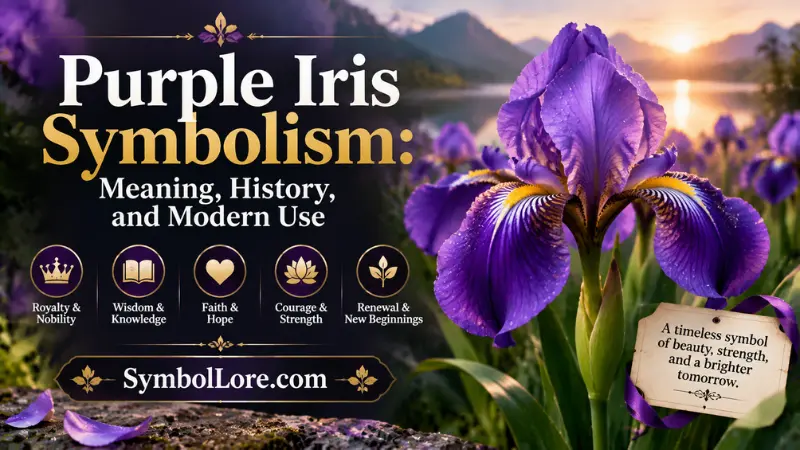
Flowers often communicate ideas that words cannot easily express. Their colors, shapes, and cultural associations allow people to represent emotions, relationships, memories, and personal values. The purple iris symbolism is especially connected with wisdom, royalty, admiration, hope, and spiritual reflection, making it a meaningful flower in American gardens, celebrations, art, and personal expression.
The purple iris stands out because of its unusual color, elegant shape, and long relationship with human culture. From ancient stories to modern floral arrangements, people have used this flower to express respect, encouragement, and beauty. Its meaning changes depending on the setting, but many interpretations share themes of dignity, insight, and connection.
Quick Answer
Purple iris symbolism commonly represents wisdom, admiration, and dignity in modern American culture, especially in gifts, gardens, and decorative designs. Historically, purple irises have also been linked with royalty, spiritual ideas, and messages of respect in different traditions.
TL;DR
- Purple irises symbolize wisdom, respect, and admiration.
- Ancient traditions connected irises with royalty and communication.
- Americans often use them for gardens and meaningful gifts.
- Purple color adds associations with dignity and creativity.
- Iris flowers appear in art, tattoos, and home design.
What the Purple Iris Looks Like and Why It Stands Out
The iris is a flowering plant recognized by its tall stems, sword-shaped leaves, and distinctive petals that often appear layered or fan-like. Purple iris varieties range from soft lavender shades to deep violet tones, creating a visual connection with elegance and sophistication.
Many people encounter purple irises in residential gardens, botanical spaces, floral arrangements, paintings, and seasonal landscaping. Their upright growth and detailed petals make them popular among gardeners who want a flower that adds structure and color to outdoor spaces.
The flower’s appearance contributes to its symbolism. Its tall form can suggest strength and confidence, while its delicate petals create associations with beauty and refinement.
What Purple Iris Symbolizes in the United States
In the United States, purple irises are commonly associated with wisdom, respect, and admiration. People often choose them when they want to communicate appreciation without the stronger romantic meaning sometimes connected with roses.
Purple irises are used in several everyday settings:
| Context | Meaning in the USA | Common Associations | Notes |
| Gifts | Admiration and respect | Appreciation, encouragement | Often given to show care |
| Gardens | Beauty and personal taste | Elegance, creativity | Popular ornamental flower |
| Memorial settings | Remembrance and dignity | Reflection, honor | Used depending on personal preference |
| Art and design | Sophistication | Style, imagination | Common decorative symbol |
| Tattoos | Individual meaning | Growth, identity | Meaning depends on the wearer |
In American culture, the flower is usually viewed positively. It can represent intellectual qualities, emotional maturity, and appreciation for someone’s character.
Ancient Roots and Early Symbolism of the Iris
The iris has a long history in Mediterranean cultures. Ancient Greeks connected the flower with Iris, the goddess who served as a messenger between the gods and humans. Because of this association, the iris became connected with communication, messages, and connections between different worlds.
The flower’s name itself comes from the Greek word for “rainbow,” referring to the goddess Iris and the variety of colors found in iris flowers. Purple varieties later gained additional associations because purple pigments were historically connected with status and wealth.
In ancient and medieval Europe, iris flowers appeared in art, religious imagery, and royal designs. Their elegant appearance made them suitable symbols for ideas involving honor and spiritual reflection.
Why Purple Became Associated With Royalty and Wisdom
The color purple has carried strong cultural meanings for thousands of years. In many societies, purple dyes were difficult and expensive to produce, which made them symbols of wealth, leadership, and social status.
Over time, purple also became associated with intellectual qualities. Modern color psychology often connects purple with creativity, imagination, and reflection. These ideas influence how people interpret purple flowers today.
When combined with the iris flower, the purple color strengthens associations with:
- knowledge
- dignity
- creativity
- respect
- thoughtful expression
The meaning does not come from the flower alone but from the relationship between the iris and the cultural history of the color purple.
Religious and Spiritual Interpretations of Purple Iris
The iris appears in several religious and spiritual traditions, although meanings vary by culture and belief system.
In some Christian artistic traditions, iris flowers have been connected with themes of sorrow, hope, and spiritual understanding. The flower’s three main petals have sometimes been interpreted symbolically in relation to religious ideas, although interpretations differ among artists and communities.
In broader spiritual contexts, purple irises may represent reflection, inner growth, and a search for understanding. These meanings are personal rather than universal, and people often choose the flower based on their own experiences.
Purple Iris in American Gardens and Home Design
Gardening is one of the most common ways Americans interact with purple irises. Many homeowners plant them because they return year after year and provide strong seasonal color.
In garden design, purple irises often create a sense of:
- calmness
- elegance
- balance
- natural beauty
Interior designers and artists also use iris imagery in patterns, paintings, and decorative objects. The flower’s detailed shape works well in styles ranging from traditional botanical art to modern minimalist designs.
Unlike some symbols that depend heavily on specific traditions, the purple iris often works as a flexible symbol of beauty and personal expression.
Emotional Meaning: What Purple Iris Communicates
Flowers often carry emotional messages, and purple irises are frequently connected with thoughtful feelings rather than dramatic expressions.
Giving someone purple irises may communicate:
- “I admire you.”
- “I respect your wisdom.”
- “I appreciate who you are.”
- “I value our connection.”
The flower is often associated with mature emotions. Instead of representing intense passion, it commonly suggests appreciation, recognition, and thoughtful affection.
For some people, purple irises also represent personal transformation because flowers return each year after periods of dormancy. This seasonal cycle can remind people of renewal and continued growth.
Purple Iris in Weddings, Memorials, and Special Occasions
Purple irises can appear in important life events because their meanings fit many emotional situations.
At weddings, they may represent admiration, commitment, and a relationship built on respect. They are sometimes chosen as accent flowers because their color adds elegance without overpowering other arrangements.
In memorial settings, irises may symbolize remembrance and honor. Their connection with reflection and dignity makes them appropriate for occasions focused on celebrating someone’s life.
However, flower meanings are not fixed rules. Personal memories, family traditions, and cultural backgrounds often influence how people interpret them.
Purple Iris in Tattoos, Fashion, and Personal Identity
Modern tattoo culture frequently uses flowers as symbols of identity, experiences, and personal values. A purple iris tattoo may represent wisdom, individuality, resilience, or a connection to nature.
Some people choose iris tattoos because of personal memories, such as a favorite garden flower or a connection to a family member. Others appreciate the flower’s visual qualities and symbolic associations.
In fashion and design, purple iris imagery can communicate elegance, creativity, and a preference for natural beauty. The meaning usually depends on the person using the symbol.
Cross-Cultural Meanings of the Purple Iris
The iris has appeared in many cultures, but interpretations are not identical.
In Japan, irises have been associated with protection, courage, and seasonal beauty. Iris festivals have celebrated the flower’s arrival during warmer months.
In European traditions, the iris has appeared in royal symbols and artistic works. Its connection with dignity and honor influenced how many people viewed the flower.
In modern global culture, purple irises often combine older meanings with newer personal interpretations. A person may value the flower for tradition, appearance, memory, or individual symbolism.
Common Misunderstandings About Purple Iris Symbolism
Because flowers often develop many meanings, misunderstandings can occur. Some websites present flower symbolism as if every interpretation is universally accepted, but meanings often depend on culture and context.
A purple iris does not have one fixed message. While wisdom, admiration, and dignity are common associations, someone may choose the flower simply because they enjoy its color and appearance.
Another misunderstanding is assuming that every spiritual interpretation applies to everyone. Symbolic meanings are influenced by personal beliefs, family traditions, and cultural experiences.
How Purple Iris Meaning Has Changed Over Time
The meaning of the iris has developed through centuries of cultural changes. Ancient stories emphasized communication and divine connections, while later traditions added associations with royalty, faith, and artistic beauty.
Today, Americans often interpret purple irises through a combination of history and personal experience. The flower may represent admiration, creativity, remembrance, or simply a love of gardening.
Modern symbolism tends to be more personal than traditional symbolism. People choose flowers not only because of established meanings but also because of the emotions and memories they create.
Purple Iris in Modern Culture and Digital Spaces
Today, flower symbolism appears beyond physical gardens and bouquets. Purple iris images are shared online, used in branding, featured in artwork, and included in digital designs.
Social media has expanded how people use flowers as expressions of identity. A purple iris image may represent creativity, calmness, personal growth, or appreciation for nature.
Artists and designers continue using iris imagery because it combines recognizable beauty with flexible meaning. The flower can feel classic while still fitting modern visual styles.
FAQs
What does a purple iris symbolize?
A purple iris commonly symbolizes wisdom, admiration, respect, and dignity. Its meaning can change depending on cultural background, personal experiences, and the situation where it appears.
What does a purple iris tattoo mean?
A purple iris tattoo may represent individuality, personal growth, wisdom, or a meaningful connection to nature. Many people choose it because of both its appearance and personal significance.
Are purple irises associated with spirituality?
Yes, purple irises can have spiritual associations in some traditions, including reflection, hope, and understanding. However, these meanings vary and are not universal across all beliefs.
Why are purple flowers linked with royalty?
Purple became connected with royalty because certain purple dyes were historically rare and expensive. Over time, the color gained associations with status, dignity, and sophistication.
Are purple irises good flowers for gifts?
Purple irises can be thoughtful gifts because they often communicate admiration and appreciation. They are especially suitable when someone wants to express respect rather than romantic passion.
What is the difference between iris and purple iris symbolism?
Iris symbolism includes broader meanings such as communication, hope, and connection. Purple iris symbolism adds the color-based associations of wisdom, dignity, and creativity.
Conclusion
Purple irises combine the natural beauty of the flower with centuries of cultural interpretation. They are commonly associated with wisdom, admiration, respect, and dignity, while their historical connections add layers involving royalty, communication, and reflection.
Today, purple iris symbolism continues to appear in American gardens, gifts, art, tattoos, and personal expressions. Its meaning is not limited to one tradition; instead, it remains a flexible symbol shaped by history, culture, and individual experience.
The purple iris endures because it allows people to express appreciation and thoughtfulness through a simple but meaningful natural image.