
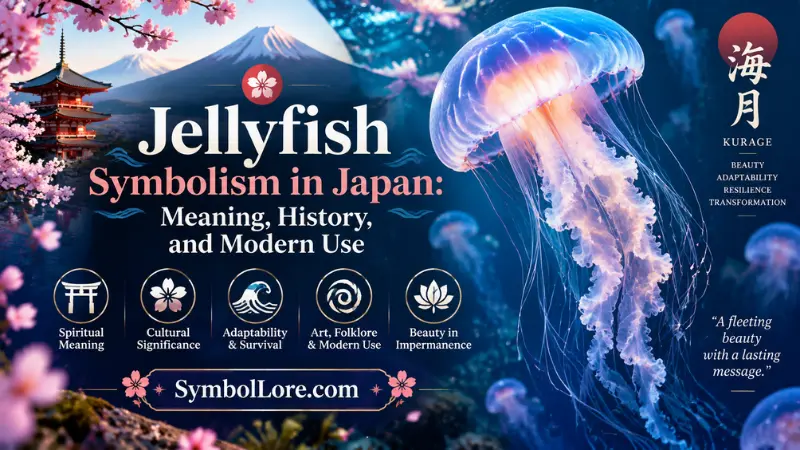
Jellyfish are unusual ocean creatures known for their transparent bodies, floating movements, and connection to the changing rhythms of the sea. In Japan, jellyfish symbolism in Japan reflects ideas connected with adaptability, beauty, mystery, emotional balance, and the relationship between humans and nature.
Unlike some animals that have fixed meanings in Japanese traditions, jellyfish symbolism developed more through artistic expression, modern design, aquarium culture, and personal interpretation. Their gentle movement and delicate appearance often inspire feelings of calmness, freedom, and acceptance of change.
Today, jellyfish appear in Japanese art, tattoos, fashion, interior design, and popular culture. Their symbolism connects ancient appreciation for nature with modern ideas about individuality and emotional expression.
Quick Answer
Jellyfish symbolism in Japan commonly represents adaptability, beauty, emotional calm, and acceptance of change in modern culture. Their flowing movement and connection to the ocean also link them with nature, mystery, and the ability to move through life’s uncertainty.
TL;DR
- Jellyfish symbolize adaptability and graceful change.
- Japanese art often connects them with ocean beauty.
- Their movement represents freedom and emotional flow.
- Modern designs use jellyfish for calm and creativity.
- Tattoos may express resilience and individuality.
- They reflect a connection between humans and nature.
What Jellyfish Represent in Japanese Culture
Jellyfish do not have one single traditional meaning in Japan, but several symbolic ideas have developed around their appearance and behavior.
Their soft, floating movement creates an image of effortless motion. Unlike fish that swim with clear direction, jellyfish drift with ocean currents. This quality often connects them with flexibility and the ability to adjust to circumstances.
In Japanese aesthetics, natural objects are often appreciated for their temporary and changing qualities. Jellyfish fit this perspective because their beauty comes from movement, light, and a constantly shifting environment.
Common symbolic associations include:
| Context | Meaning in Japan and the USA | Common Associations | Notes |
| Nature symbolism | Adaptation and balance | Ocean, movement, change | Reflects connection with natural cycles |
| Art and design | Beauty and creativity | Transparency, elegance, imagination | Popular in modern visual culture |
| Tattoos | Personal growth and freedom | Resilience, individuality | Meaning depends on the wearer |
| Aquariums | Calm and relaxation | Peace, meditation, wonder | Jellyfish displays are popular worldwide |
| Spiritual interpretation | Acceptance and transformation | Flow, emotional awareness | Often personal rather than traditional |
The Natural Features Behind Jellyfish Symbolism
The symbolism of jellyfish comes strongly from their physical characteristics.
A jellyfish has no bones, yet it survives in changing ocean environments. This creates an association with flexibility and endurance. Their bodies move with currents rather than fighting against them, which can represent a willingness to adapt.
Their transparent appearance also influences their symbolic meaning. Many people connect transparency with openness, honesty, and emotional sensitivity.
The gentle movement of jellyfish creates a contrast with their ability to defend themselves through stinging tentacles. This combination can represent a balance between softness and protection.
Ancient Japanese Views of the Ocean and Marine Life
Japanese culture has long maintained a close relationship with the sea. The ocean has influenced food traditions, mythology, art, and daily life across coastal communities.
Marine creatures often appear in Japanese stories and artwork because the sea represents both opportunity and uncertainty. Fishermen depended on the ocean, while also respecting its unpredictable nature.
Although jellyfish were not one of the most prominent symbols in classical Japanese mythology, their connection to the ocean places them within a broader tradition of appreciating marine life as part of nature’s complexity.
Jellyfish and Japanese Aesthetic Ideas
Japanese aesthetics often value simplicity, impermanence, and harmony with nature. Concepts such as appreciating temporary beauty influence how many natural forms are viewed.
Jellyfish naturally fit these ideas because they appear delicate and constantly changing. Their appearance depends on movement, water, and light.
In modern Japanese visual culture, jellyfish are often used to create peaceful and dreamlike scenes. Their slow movement and glowing appearance make them popular subjects in photography, digital art, and aquarium exhibitions.
What Jellyfish Symbolize in the United States
In the United States, jellyfish symbolism often focuses on personal meaning rather than traditional cultural beliefs.
Many Americans associate jellyfish with:
- Freedom and independence
- Emotional sensitivity
- Creativity
- Transformation
- Peaceful living
Jellyfish images are common in ocean-themed home decor, artwork, clothing, and tattoos. Their unusual shape allows people to use them as a symbol of individuality.
For some people, a jellyfish represents learning to move through difficult situations without losing personal identity. The idea comes from the creature’s ability to survive while constantly adapting.
Emotional and Psychological Meaning of Jellyfish
Jellyfish symbolism is often connected with emotional experiences.
Their slow movement can represent calmness and mindfulness. Many people find watching jellyfish aquariums relaxing because the creatures move in a peaceful and repetitive way.
The symbol can also represent emotional awareness. A jellyfish appears fragile, but it has strong survival abilities. This contrast can reflect people who appear gentle while possessing inner strength.
For individuals who choose jellyfish imagery, the symbol may represent:
- Accepting life changes
- Staying flexible during challenges
- Protecting personal boundaries
- Finding beauty in uncertainty
Jellyfish in Japanese Art and Popular Culture
Modern Japan has embraced jellyfish as an artistic subject. Their glowing appearance and unusual structure make them visually appealing for designers and creators.
Jellyfish appear in:
- Aquarium displays
- Animation-inspired artwork
- Illustrations
- Fashion patterns
- Decorative designs
- Digital media
Japanese aquariums often highlight jellyfish through carefully designed lighting and environments. These displays transform the animal into an artistic experience rather than simply a scientific exhibit.
Their popularity comes from the combination of natural beauty and imaginative possibilities.
Jellyfish Tattoos and Personal Identity
Jellyfish tattoos have become popular internationally, including among people interested in Japanese-inspired designs.
A jellyfish tattoo may symbolize:
- Adaptability after major life changes
- Emotional strength
- Connection with the ocean
- Independence
- A peaceful personality
In Japanese tattoo-inspired artwork, ocean imagery often carries strong visual importance. However, the meaning of a jellyfish tattoo depends on the individual rather than a fixed cultural rule.
Some people choose the design because they admire marine life, while others connect it with personal experiences.
Spiritual and Philosophical Interpretations
Some people interpret jellyfish symbolism through spiritual or philosophical ideas. These interpretations are usually personal rather than official parts of Japanese religious traditions.
The jellyfish can represent flowing with life’s changes instead of resisting every situation. Its movement suggests patience and awareness.
In broader spiritual discussions, ocean creatures are often connected with emotions because water is commonly associated with feelings, memory, and transformation.
These meanings vary widely depending on personal beliefs and cultural background.
Color Symbolism of Jellyfish Designs
The color used in jellyfish artwork can influence interpretation.
| Color | Common Symbolic Association |
| Blue | Calmness, ocean connection, emotional balance |
| White | Purity, simplicity, peacefulness |
| Purple | Imagination, creativity, mystery |
| Pink | Gentleness, compassion, beauty |
| Green | Growth, renewal, connection with nature |
Artists often use glowing colors to emphasize the dreamlike qualities of jellyfish.
Common Misunderstandings About Jellyfish Symbolism
One misunderstanding is that jellyfish always represent weakness because of their soft appearance. In reality, their survival abilities make them a symbol of adjustment and endurance for many people.
Another misconception is that jellyfish have one official meaning in Japanese culture. Unlike some traditional symbols, jellyfish symbolism is more flexible and influenced by modern interpretation.
Their meaning changes depending on context, such as artwork, tattoos, entertainment, or personal reflection.
How Jellyfish Symbolism Has Changed Over Time
Historically, Japanese culture focused more strongly on animals such as cranes, koi fish, foxes, and dragons as symbolic figures. Jellyfish became more visible as artistic subjects through modern science, aquariums, and global design trends.
Today, jellyfish represent a mixture of traditional appreciation for nature and modern ideas about personal expression.
Their symbolism continues to evolve because people connect with their appearance, movement, and relationship with the ocean.
Why Jellyfish Remain Popular Today
Jellyfish continue to appear in modern culture because they combine beauty with unusual characteristics.
People are drawn to them because they suggest:
- Movement without pressure
- Beauty without perfection
- Strength without aggression
- Change without losing identity
From artwork to tattoos, jellyfish allow people to express complex ideas through a simple natural image.
FQAs
What does a jellyfish symbolize in Japan?
Jellyfish in Japan are commonly associated with adaptability, ocean beauty, change, and harmony with nature. Their meaning is mostly shaped by modern art and personal interpretation rather than one traditional belief.
Are jellyfish considered lucky symbols in Japanese culture?
Jellyfish are not widely recognized as traditional Japanese good-luck symbols. Some people may view them positively because of their connection with beauty, calmness, and nature.
What does a jellyfish tattoo symbolize?
A jellyfish tattoo can represent flexibility, emotional strength, personal growth, or connection with the sea. The meaning usually depends on the person wearing it.
Do jellyfish have religious meaning in Japan?
Jellyfish do not have a major established role in Japanese religious symbolism. However, some people connect them with broader ideas of nature, transformation, and life’s changing patterns.
Why are jellyfish popular in Japanese aquariums?
Jellyfish are popular because their movement creates a peaceful visual experience. Their transparent bodies and glowing displays make them attractive subjects for modern aquarium design.
Are jellyfish symbols positive or negative?
Jellyfish symbolism is usually positive, focusing on adaptability, beauty, and calmness. However, some people may associate them with danger because certain species can sting.
Conclusion
Jellyfish symbolism in Japan reflects a modern understanding of nature, movement, and adaptation. While jellyfish are not among Japan’s oldest traditional symbols, their connection with the ocean and their unusual beauty have given them meaningful cultural and artistic roles.
In contemporary culture, jellyfish represent flexibility, emotional balance, creativity, and the ability to move through change. Their symbolism reminds people that strength can appear in gentle forms and that adaptation can be a form of survival.