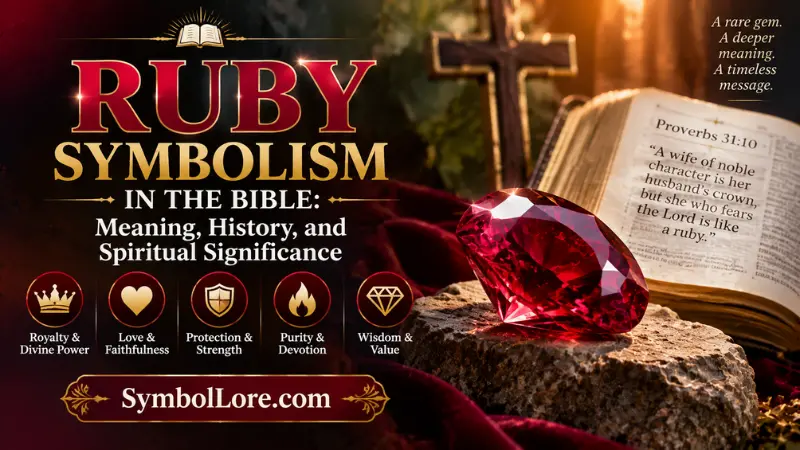
Rubies have long been valued for their rich red color, rarity, and connection with beauty and importance. In the Bible, ruby symbolism in the Bible is connected with ideas such as wisdom, value, beauty, devotion, and preciousness. Biblical references often use gemstones as images of something highly treasured, representing qualities that are considered more valuable than material wealth.
The meaning of rubies developed through ancient traditions, religious writings, and cultural interpretations. While the Bible does not provide a detailed gemstone guide, references to precious stones show how people understood rare jewels as symbols of honor, blessing, and spiritual worth.
Quick Answer
Ruby symbolism in the Bible commonly represents wisdom, great value, beauty, and spiritual richness, especially through comparisons between precious stones and things considered more valuable than gold. Historically, rubies were viewed as signs of importance and prosperity, while modern Christians often connect them with devotion, God’s blessings, and personal faith.
TL;DR
- Rubies symbolize wisdom, value, and beauty in biblical contexts.
- Precious stones represented wealth and honor in ancient cultures.
- Proverbs compares wisdom with valuable jewels.
- Red gemstones often connect with life, sacrifice, and devotion.
- Modern Christians use ruby imagery in jewelry and art.
What Rubies Represent in Biblical Symbolism
In biblical symbolism, rubies represent something rare and highly valuable. Their beauty and scarcity made them natural comparisons for qualities that people considered priceless, especially wisdom and righteousness.
One of the strongest connections appears in biblical wisdom literature. The Book of Proverbs compares wisdom with precious stones, teaching that spiritual understanding has greater worth than material riches. Although translations differ in the exact gemstone mentioned, many traditional interpretations associate these passages with rubies.
The symbolism focuses less on the physical stone itself and more on what it represents: something worth seeking, protecting, and honoring.
Biblical References to Precious Stones and Rubies
The Bible mentions gemstones in several contexts, including descriptions of wealth, sacred objects, and symbolic visions. Precious stones appeared in royal settings, priestly garments, and poetic descriptions of beauty.
In ancient Israelite culture, gemstones reflected craftsmanship, status, and divine blessing. The breastplate worn by the high priest included various stones representing the tribes of Israel, showing that jewels could carry religious meaning.
Rubies appear in some Bible translations, especially in passages about wisdom and value. These references helped create the association between rubies and qualities that surpass ordinary possessions.
Wisdom as a Ruby-Like Treasure
One of the most recognized meanings connected with rubies in biblical interpretation is wisdom.
The Bible frequently teaches that wisdom is more valuable than silver, gold, or expensive possessions. The comparison suggests that true understanding, moral judgment, and spiritual knowledge are treasures that cannot be measured financially.
Because rubies were among the most admired gemstones in the ancient world, they became a fitting image for something rare and precious.
| Context | Meaning in Biblical Interpretation | Common Associations | Notes |
| Wisdom | Greater value than wealth | Understanding, guidance | Commonly linked with Proverbs |
| Beauty | Precious and admired | Honor, excellence | Reflects gemstone rarity |
| Red Color | Life and devotion | Blood, sacrifice, passion | Depends on cultural interpretation |
| Wealth | Status and prosperity | Royalty, abundance | Seen in ancient societies |
Ancient Origins of Ruby Meaning
Rubies have been valued for thousands of years in civilizations across Asia, the Middle East, and the Mediterranean world. Ancient people admired them because of their intense red color and rarity.
In many cultures, red gemstones were connected with life, strength, and protection. These associations influenced how later societies viewed ruby imagery.
During biblical times, gemstones were often symbols of beauty and importance. Wealthy individuals, rulers, and religious leaders used precious stones to express honor and status.
The Meaning of Ruby Colors in Religious Thought
The red color of rubies contributes to their symbolic meaning. Red has commonly been associated with life, blood, love, sacrifice, and strong emotions.
Within Christian traditions, red can represent themes such as sacrifice, devotion, and spiritual commitment. However, interpretations vary depending on denomination, culture, and context.
The Bible does not assign one universal meaning to the color red in every situation. Instead, readers understand symbols by examining the surrounding passage and its purpose.
Ruby Symbolism in Christian Tradition
Christian interpretations often view precious stones as reminders of spiritual beauty and divine creation. Rubies may represent qualities such as faithfulness, love, and the value of a devoted life.
Some Christian artwork and religious jewelry use gemstones to express spiritual ideas. A ruby may appear as a reminder of commitment, love, or the importance of inner character.
These interpretations are traditions developed over time rather than direct biblical commands.
Ruby Meaning in American Christian Culture
In the United States, ruby symbolism is often connected with faith, personal meaning, and family traditions.
Many Americans associate rubies with:
- Birthstone jewelry
- Wedding anniversaries
- Religious gifts
- Memorial jewelry
- Personal reminders of faith
The ruby is especially recognized as the birthstone for July, making it common in jewelry gifts and personal celebrations.
For some Christians, ruby jewelry serves as a visible reminder of spiritual values such as love, devotion, and gratitude.
Rubies, Jewelry, and Personal Identity
Today, people often wear ruby jewelry because of emotional connections rather than only its appearance.
A ruby ring, necklace, or bracelet may represent:
- A loved one
- A religious commitment
- A personal achievement
- A family tradition
- A meaningful life event
In Christian communities, gemstones can become personal symbols that connect faith with everyday life.
Ruby Symbolism in Art and Design
Artists have used gemstones as visual symbols for centuries. Rubies often appear in paintings, religious objects, and decorative designs because their red color naturally attracts attention.
Modern designers continue using ruby imagery in:
- Church artwork
- Jewelry collections
- Home decorations
- Fashion accessories
- Digital illustrations
The gemstone’s association with beauty and importance allows it to communicate meaning quickly.
Cross-Cultural Meanings of Rubies
Ruby symbolism extends beyond biblical traditions. Different cultures have developed their own interpretations of the gemstone.
In some Asian traditions, rubies have been associated with protection, prosperity, and power. In European royal traditions, rubies represented wealth and status.
These meanings influenced how people across different societies viewed the gemstone, although interpretations changed depending on religious and cultural backgrounds.
Emotional and Psychological Meaning of Rubies
From a psychological perspective, people often connect ruby imagery with strong emotions because of its color.
The gemstone may communicate:
- Love and affection
- Confidence
- Passion
- Courage
- Personal value
When people choose ruby jewelry or artwork, they often select it because the stone reflects something meaningful about their identity or relationships.
Modern Uses of Ruby Symbolism
Ruby symbolism appears in many areas of modern life.
Common examples include:
Jewelry
Rubies remain popular in engagement rings, anniversary gifts, and family heirlooms.
Tattoos
Some people choose ruby tattoos to represent love, strength, personal transformation, or something they consider priceless.
Home Decor
Ruby colors appear in decorative objects because they create a feeling of warmth and elegance.
Media and Pop Culture
Red gemstones are frequently used in stories and designs to represent rarity, importance, or emotional intensity.
Common Misunderstandings About Ruby Symbolism
Some modern interpretations give gemstones meanings that are not directly supported by biblical texts.
For example, claims that every gemstone has a specific spiritual power come mainly from later traditions, folklore, or personal beliefs rather than clear biblical teachings.
A balanced interpretation recognizes that biblical gemstone references usually communicate broader ideas such as value, beauty, and honor.
How Ruby Symbolism Has Changed Over Time
The meaning of rubies has evolved as cultures changed. In ancient societies, gemstones often showed wealth and social position. In religious contexts, they became symbols of spiritual qualities.
Today, rubies carry a combination of traditional and personal meanings. Some people view them through faith, while others appreciate their beauty, history, or emotional importance.
The symbol continues because people connect rare objects with valuable human qualities.
FAQs
What does a ruby symbolize in the Bible?
A ruby is commonly associated with wisdom, value, beauty, and something precious. Biblical references to gemstones often use them as comparisons for qualities that are more valuable than material wealth.
Are rubies mentioned directly in the Bible?
Some Bible translations mention rubies in passages about wisdom and precious things. However, gemstone names can vary between translations because ancient gemstone identification was not always exact.
What does a ruby represent in Christianity?
In Christian interpretation, rubies may represent devotion, love, spiritual value, and the beauty of a faithful life. These meanings come from tradition and symbolic interpretation rather than a single biblical definition.
Why are rubies connected with wisdom?
Rubies became connected with wisdom because biblical wisdom literature compares understanding with treasures more valuable than precious possessions.
What does a ruby tattoo symbolize?
A ruby tattoo may represent love, strength, personal value, faith, or an important life experience. The meaning depends on the individual’s personal connection with the symbol.
Is the color red important in ruby symbolism?
Yes, the red color contributes to associations with life, love, sacrifice, and strong emotions. However, its meaning changes depending on cultural and religious context.
Do rubies have the same meaning in every culture?
No. Different cultures interpret rubies differently. Some connect them with prosperity and protection, while others focus on beauty, status, or spiritual meaning.
Conclusion
Rubies represent qualities that people have long considered valuable: wisdom, beauty, devotion, and rarity. In biblical interpretation, ruby symbolism in the Bible reflects the idea that spiritual treasures can be worth more than material possessions.
Although gemstone meanings have changed across cultures and generations, rubies continue to appear in religious art, jewelry, and personal expressions of faith. Their lasting appeal comes from the connection between a rare physical object and the qualities people hope to value in life.



[…] window symbolism commonly represents spiritual unity, divine light, and harmony in modern interpretations, especially in religious and […]
[…] Religion gives three important spiritual meanings. […]