
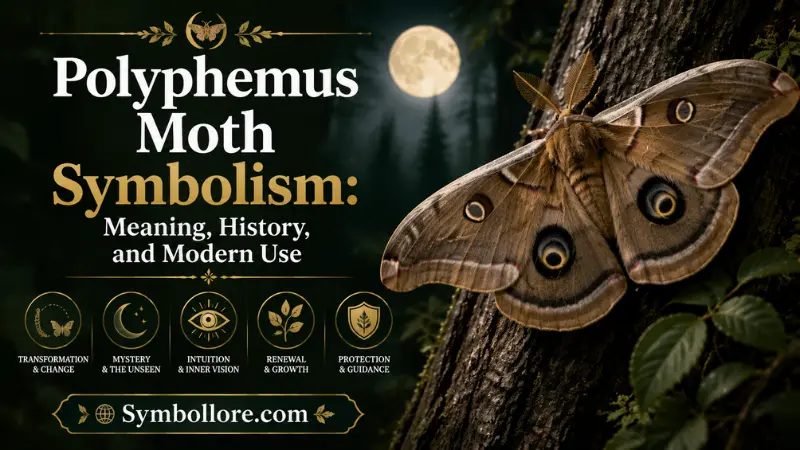
The polyphemus moth symbolism often represents transformation, natural beauty, patience, and the hidden strength found in quiet change. This large North American moth has become meaningful because of its dramatic life cycle, unusual appearance, and connection to the natural world.
Unlike symbols created through myths or human traditions, the meaning of the polyphemus moth comes mainly from observation of nature. Its journey from a small caterpillar to one of the largest moths in North America has encouraged people to associate it with growth, renewal, and the temporary stages of life.
In the United States, the polyphemus moth is admired by gardeners, nature enthusiasts, artists, and people interested in insect symbolism. Its large eye-like wing markings, peaceful presence, and brief adult life have made it a symbol of adaptation and appreciation for overlooked beauty.
Quick Answer
Polyphemus moth symbolism commonly represents transformation, personal growth, and the beauty of natural change in modern American culture. Historically, its eye-like wing patterns have connected it with protection, awareness, and themes from ancient mythology associated with the giant Polyphemus.
TL;DR
- Represents transformation through the moth’s dramatic life cycle
- Symbolizes patience, renewal, and natural adaptation
- Named after a figure from Greek mythology
- Eye patterns suggest awareness and protection
- Appears in tattoos, art, and nature-inspired designs
What the Polyphemus Moth Looks Like and Where It Appears
The polyphemus moth is one of the largest moth species found in North America. It belongs to the giant silk moth family and is recognized by its broad, brown wings and distinctive circular markings that resemble eyes.
These large “eyes” are called eyespots. They are not actual eyes but patterns that help confuse predators by making the moth appear larger or more threatening. The markings are one of the main reasons people connect the insect with ideas of awareness, protection, and hidden strength.
In the United States, polyphemus moths are commonly found in forests, gardens, and wooded suburban areas. They are especially familiar in eastern and central regions, where people may discover them resting on trees, fences, or outdoor surfaces.
Because adult moths live only briefly and do not feed, their appearance can feel like a rare natural encounter. This short appearance contributes to their association with temporary beauty and appreciating important moments.
The Core Symbolic Meanings of the Polyphemus Moth
The polyphemus moth carries several symbolic meanings, but four themes appear most consistently: transformation, resilience, awareness, and natural beauty.
| Context | Meaning in the USA | Common Associations | Notes |
| Life cycle | Transformation and growth | Change, renewal, new beginnings | Connected to metamorphosis |
| Eyespots | Awareness and protection | Observation, defense, intuition | Inspired by wing patterns |
| Short lifespan | Appreciation of moments | Impermanence, mindfulness | Reflects temporary beauty |
| Natural appearance | Connection with nature | Balance, simplicity, curiosity | Common in nature-inspired art |
The moth’s transformation from caterpillar to winged adult makes it a natural symbol for personal development. Many people see this process as a reminder that change can create something unexpected and meaningful.
Its survival skills also contribute to its symbolism. The moth does not rely on strength or aggression. Instead, it survives through adaptation, camouflage, and timing.
Ancient Roots Behind the Name Polyphemus
The polyphemus moth gets its name from Polyphemus, a Cyclops from Greek mythology. In ancient stories, Polyphemus was known for having one large eye, and the moth’s prominent eyespots inspired this connection.
The naming reflects a common human practice of using familiar stories to describe unusual features in nature. Scientists and naturalists have often named plants and animals after mythological figures when their appearance reminded observers of legendary characters.
Although the moth itself does not have a direct ancient symbolic tradition, the connection to Polyphemus adds another layer of interpretation. The eye-like markings encourage associations with vision, awareness, and observation.
Modern interpretations usually focus less on the Cyclops story and more on the moth’s natural characteristics.
Transformation and Personal Growth Symbolism
The strongest symbolic association of the polyphemus moth comes from metamorphosis.
A caterpillar enters a cocoon-like stage before emerging as a completely different creature. This natural process has made moths and butterflies common symbols of personal change across many cultures.
For many Americans, the polyphemus moth can represent:
- Leaving behind an earlier version of oneself
- Accepting periods of transition
- Growing through unfamiliar experiences
- Recognizing that change takes time
The moth’s transformation is different from a sudden change. It happens gradually and privately. This makes it a fitting symbol for personal development that happens away from public attention.
People going through career changes, emotional growth, or major life transitions may find meaning in the moth as a reminder that important changes often happen quietly before becoming visible.
Why the Polyphemus Moth Represents Patience and Timing
The life of a polyphemus moth emphasizes timing. Most of its existence occurs during its caterpillar and pupal stages, while the adult moth appears for only a short period.
This pattern has led many people to associate it with patience and preparation. The moth does not rush its development; it follows a natural process.
In modern American interpretations, this can represent:
- Trusting personal progress
- Allowing growth to happen naturally
- Understanding that preparation has value
- Accepting different stages of life
The symbolism contrasts with modern culture’s focus on immediate results. The polyphemus moth suggests that meaningful changes often require time before they become visible.
Polyphemus Moth Symbolism in American Culture
In the United States, the polyphemus moth is primarily viewed through a nature and conservation perspective rather than a religious or ceremonial one.
Many Americans encounter the moth through:
- Backyard wildlife observation
- Gardening communities
- Nature photography
- Educational programs
- Outdoor art
Native plant gardens and pollinator-friendly landscapes have increased public interest in insects, including moths. While butterflies often receive more attention, moths like the polyphemus moth are increasingly appreciated for their ecological role and unusual appearance.
The symbol is often connected with respect for overlooked parts of nature. It represents the idea that beauty is not always loud or immediately recognized.
The Eye Pattern and Its Meaning
The eyespots on the polyphemus moth’s wings are among its most recognizable features. Symbolically, eyes have long represented awareness, knowledge, and protection in human cultures.
The moth’s markings can suggest:
- Seeing beyond appearances
- Paying attention to hidden details
- Protecting oneself through awareness
- Recognizing unseen forces in nature
However, the eyespots are not traditionally a spiritual symbol in themselves. Their meaning comes from human interpretation of a natural defense mechanism.
This distinction matters because the moth’s symbolism is based on observation rather than a fixed religious or cultural rule.
Cross-Cultural Views of Moths and Similar Symbols
Moths have different meanings across cultures. In some traditions, they are connected with nighttime, mystery, or attraction because of their relationship with darkness and light.
Some cultures associate moths with:
- The unseen world
- Change after hardship
- Spiritual reflection
- Persistence
However, meanings vary widely. A moth viewed as a positive symbol in one culture may have a different association elsewhere.
The polyphemus moth specifically is most strongly connected with North American nature symbolism because it is native to the region and recognized as part of local wildlife.
Emotional and Psychological Meaning
People often connect with the polyphemus moth because it represents qualities many humans value: adaptation, quiet confidence, and resilience.
Its symbolism can reflect emotional experiences such as:
- Recovering after difficult periods
- Accepting personal differences
- Finding beauty in overlooked places
- Growing without needing constant attention
Unlike symbols associated with dominance or power, the polyphemus moth suggests a quieter form of strength. It survives through patience and adjustment rather than force.
For some people, seeing this moth can create a feeling of connection with nature and a reminder to slow down and observe the world around them.
Polyphemus Moth Tattoos and Personal Expression
Polyphemus moth tattoos have become popular among people who appreciate insects, natural imagery, and symbolic designs.
A person may choose this tattoo to represent:
- A personal transformation
- A major life chapter
- Connection with forests or wildlife
- Appreciation for unusual beauty
- Strength developed through change
The design is often combined with flowers, leaves, moons, stars, or botanical elements. These additions can shift the meaning toward themes of nature, exploration, or personal identity.
Unlike some traditional symbols, the polyphemus moth tattoo usually has a highly personal meaning rather than one universally accepted interpretation.
Modern Uses in Art, Decor, and Design
The polyphemus moth appears in modern creative spaces because of its striking appearance.
Common uses include:
- Botanical illustrations
- Nature photography
- Wall art
- Educational materials
- Jewelry designs
- Clothing patterns
Its muted brown coloring and detailed wings make it suitable for natural, vintage, and scientific-inspired aesthetics.
In home decor, the moth can represent curiosity and appreciation for the natural environment. It often appeals to people who prefer organic designs over artificial or highly decorative themes.
Common Misunderstandings About Polyphemus Moth Symbolism
One common misunderstanding is assuming that every moth carries the same meaning. While moths share some broad associations, individual species can have different symbolic interpretations.
Another misconception is that the polyphemus moth is connected to dark or negative meanings simply because it is active at night. Nighttime does not automatically represent danger; many cultures associate darkness with reflection, rest, and hidden aspects of nature.
The moth’s connection to mythology should also be understood carefully. Its name references Polyphemus, but the insect itself does not represent the entire mythological character.
How the Meaning of the Polyphemus Moth Has Evolved
The interpretation of the polyphemus moth has shifted as people’s relationship with nature has changed.
Earlier interest focused mainly on classification, collecting, and scientific study. Today, many people view the moth through conservation, environmental awareness, and personal symbolism.
Modern audiences often emphasize:
- Respect for biodiversity
- The value of overlooked creatures
- Natural cycles of change
- Personal growth through transition
The symbol has moved from being simply an unusual insect to becoming an example of how people find meaning in the natural world.
FAQs
What does a polyphemus moth symbolize?
A polyphemus moth commonly symbolizes transformation, patience, awareness, and natural beauty. Its meaning comes from its metamorphosis, unusual appearance, and ability to adapt.
What does a polyphemus moth tattoo mean?
A polyphemus moth tattoo often represents personal change, growth, resilience, or a connection with nature. The exact meaning depends on the person’s own experiences and design choices.
Is the polyphemus moth a spiritual symbol?
The polyphemus moth is not a major religious symbol, but some people use it as a personal symbol for reflection, renewal, and life transitions. Its meaning is usually individual rather than tied to a specific belief system.
Why is the polyphemus moth named after a Cyclops?
The moth is named after Polyphemus from Greek mythology because its large wing eyespots resemble the idea of a single large eye. The name highlights the insect’s unusual markings.
Are moths considered positive symbols in American culture?
Many Americans view moths positively as symbols of nature, adaptation, and transformation. While some older traditions associate moths with darkness, modern interpretations often focus on their ecological importance
What makes the polyphemus moth different from butterflies symbolically?
Both moths and butterflies can represent transformation, but the polyphemus moth is often associated more with quiet change, nighttime nature, and hidden beauty. Its symbolism emphasizes subtle growth rather than visible display.
Conclusion
The polyphemus moth is a symbol shaped by nature rather than by a single cultural tradition. Its transformation, distinctive eyespots, and brief appearance have inspired meanings connected with growth, patience, awareness, and appreciation of the natural world.
In modern America, polyphemus moth symbolism reflects a growing interest in finding meaning in ordinary wildlife. This remarkable moth reminds people that change can happen quietly and that overlooked parts of nature can hold unexpected significance.


