

Catfish are easy to recognize. Their broad heads, smooth bodies, and whisker-like barbels give them a look unlike most familiar freshwater fish. Catfish symbolism often grows from those physical traits and from the fish’s ability to find food and survive in water where visibility may be poor.
In the United States, however, the catfish has more than one cultural identity. It is a familiar game fish, an important part of Southern food traditions, a symbol of river life, and, since the rise of digital culture, a word connected with false online identities.
That means context matters. A catfish tattoo on an angler may express persistence and family tradition, while calling someone a “catfish” online has an entirely different and negative meaning.
Quick Answer
Catfish symbolism commonly represents adaptability, survival, awareness, and resourcefulness in modern American interpretation. Its ability to navigate low-visibility water also connects it with instinct and finding a way through uncertainty, while modern internet culture gives the catfish a separate meaning linked to hidden identity and deception.
TL;DR
- Catfish commonly represent adaptability, survival, instinct, and resourcefulness.
- Their sensory abilities inspire associations with awareness and intuition.
- American catfish imagery often reflects fishing and Southern regional identity.
- Some Indigenous traditions include catfish in specific clan and oral traditions.
- Modern “catfishing” gives the animal a separate meaning of online deception.
- Tattoos often express endurance, fishing heritage, independence, or personal roots.
What Catfish Commonly Mean in the United States
In modern American symbolism, the catfish most naturally suggests adaptability. It lives in an underwater environment where sight may not always be the best way to locate food or understand the surroundings. That makes it an appealing image for people who value adjusting to difficult circumstances.
The catfish can also represent resourcefulness. Rather than depending on a single method of finding food, many species make strong use of smell, taste, touch, and their sensitive barbels. Symbolically, this can suggest working with the abilities you have instead of waiting for perfect conditions.
Other common interpretations include persistence, practical intelligence, independence, and awareness.
These meanings are mostly modern interpretations based on the animal’s real behavior. They should not be presented as one ancient or universally accepted spiritual system.
In American fishing culture, the meaning becomes more personal. A catfish can represent years spent on rivers, family fishing trips, rural life, patience with a fishing rod, or pride in a hometown and region.
Why the Catfish’s Physical Traits Shape Its Meaning
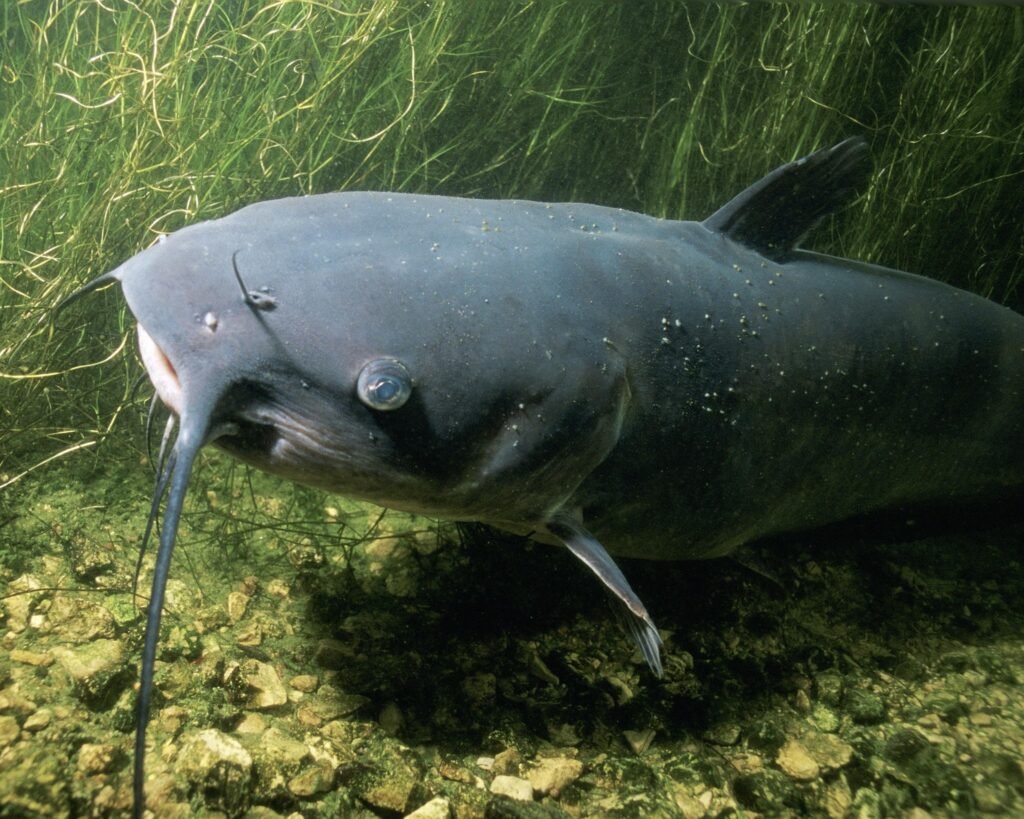
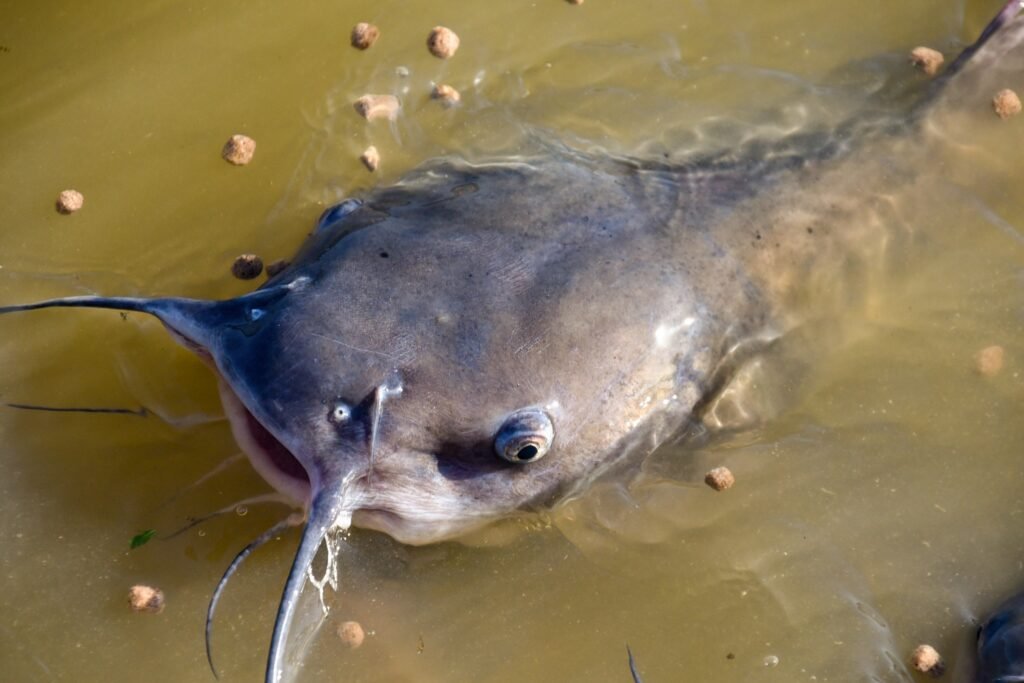
The most noticeable feature of a catfish is usually its barbels. They resemble whiskers, but they are sensory structures that help the fish detect its surroundings and locate food.
Channel catfish also have highly developed senses of smell and taste. Taste receptors occur across the body, with especially important sensory structures around the head and barbels. These adaptations help them locate food even when visibility is limited. (National Zoo)
That biology helps explain why modern symbolic interpretations often focus on perception.
A catfish does not need perfectly clear water before it can act. As a metaphor, it can represent someone who notices small signals, trusts experience, or keeps moving even when the full situation is unclear.
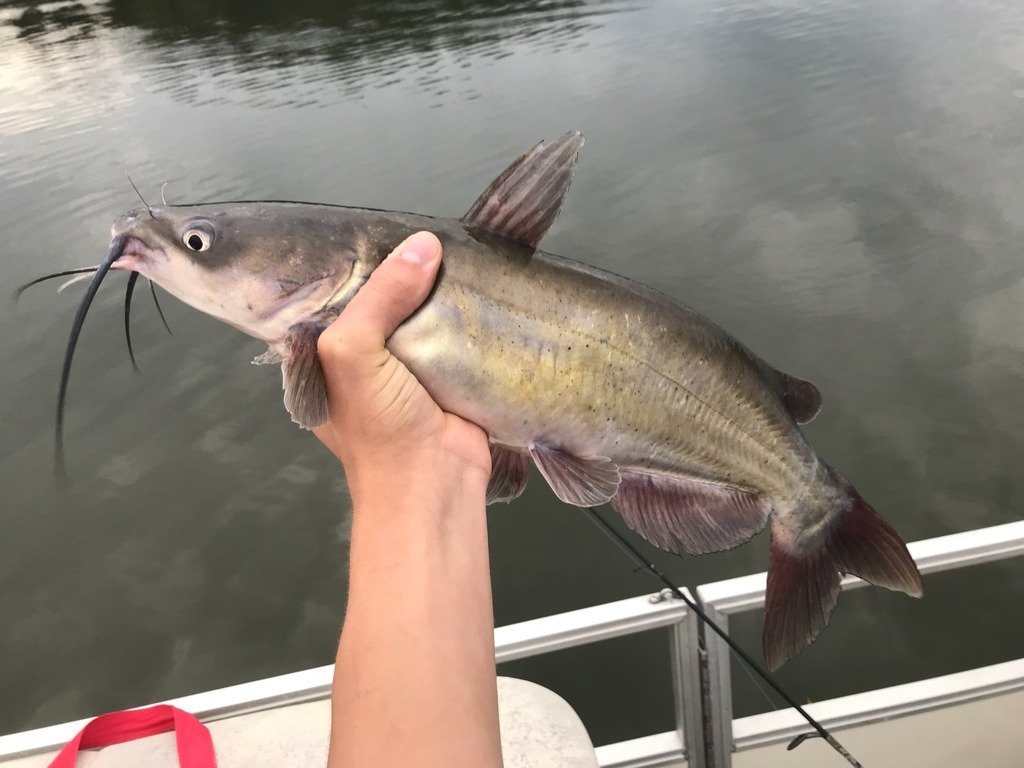
Its lack of obvious scales also gives the animal a distinctive visual identity. Combined with its wide mouth, flattened head, and long barbels, the catfish appears rugged rather than delicate.
For that reason, art and tattoos often present it as an earthy, tough, practical creature rather than an elegant ornamental fish.
Adaptability, Survival, and Resourcefulness
Adaptability is one of the most reasonable meanings attached to the catfish.
Many catfish species occupy rivers, lakes, ponds, streams, reservoirs, and other freshwater environments. Channel catfish in particular are hardy fish that tolerate a range of environmental conditions, which has also helped make them important in American aquaculture. (National Zoo)
Symbolically, adaptability does not mean simply accepting whatever happens. It can mean changing tactics when circumstances change.
Someone might choose a catfish image after surviving financial hardship, moving to a new place, changing careers, or recovering from a difficult period. In that context, the animal says something like, “I learned how to work with the conditions I had.”
Resourcefulness is closely related.
Catfish survive because their bodies are suited to their environment. That makes them a fitting symbol for practical problem-solving: observe the situation, use the tools available, and keep going.
This interpretation is especially natural for people who identify with working-class, rural, outdoor, or self-reliant values.
Awareness, Instinct, and Finding a Way Through Murky Water
Murky water has become one of the strongest metaphors surrounding the catfish.
People often describe uncertain situations as “muddy,” “unclear,” or difficult to read. Because catfish can locate food without depending only on vision, they provide an easy visual metaphor for functioning when information is incomplete.
This can give the fish an association with instinct.
Here, instinct does not need to mean supernatural knowledge. It can simply mean noticing details that other people overlook, learning from experience, or recognizing patterns before they become obvious.
The symbolism can therefore fit someone who stays calm in confusing circumstances.
A catfish tattoo or illustration may express the idea of navigating difficult environments without needing every answer first. That can be especially meaningful after periods of uncertainty, including changes in relationships, employment, family life, or identity.
There is also a warning within this interpretation: unclear water can hide problems. Awareness matters precisely because appearances may not tell the whole story.
Patience, Persistence, and Staying Grounded
Catfish are strongly associated with the lower parts of rivers, lakes, and ponds in the American imagination. Although the behavior of thousands of catfish species varies, familiar U.S. species such as channel catfish commonly feed near the bottom.
This has encouraged another symbolic idea: groundedness.
Calling someone grounded usually means that the person is practical, realistic, and not easily carried away by appearances. A catfish fits that image better than a bright tropical fish or an animal associated with flight.
Fishing adds another layer.
Catfish anglers often spend long periods waiting, reading the water, choosing bait, and learning which locations produce results. Because of this, the fish can represent patience and persistence from the angler’s point of view as much as from the animal’s behavior.
The meaning is therefore not simply “wait quietly.” It is closer to steady effort.
A person using catfish imagery may be expressing a willingness to stay with something until it works, especially when success does not arrive quickly.
Catfish in Southern, Fishing, and Food Culture
In the United States, catfish has a particularly strong connection with Southern and river-region identity.
Catfish has been eaten in North America for centuries, and written descriptions from the colonial period already discuss it as a familiar food fish. It later became closely tied to regional cooking, fish fries, restaurants, family meals, and commercial farming. American catfish aquaculture is now a substantial agricultural industry. (Library of Congress Blog)
That cultural background changes its symbolism.
For someone raised around Southern rivers or family fish fries, a catfish may represent home rather than an abstract spiritual idea. It can evoke grandparents, weekend fishing, rural communities, summer evenings, local recipes, and traditions passed through families.
Catfish also appears within broader Southern foodways shaped by Indigenous, African, European, and other cultural influences. (Smithsonian Institution)
For this reason, catfish decor in restaurants, cabins, fishing camps, and homes often communicates regional belonging.
Sometimes the meaning is humorous. Oversized catfish signs, fishing stories, and images of enormous catches play into a long American tradition of outdoor storytelling and friendly exaggeration.
Indigenous Traditions and Community-Specific Meanings
There is no single “Native American catfish meaning.”
Indigenous nations have separate languages, histories, clan systems, and oral traditions. Assigning one spiritual definition to all of them erases those differences.
Catfish does appear in particular traditions.
In Ojibwe cultural materials, Maanameg, meaning catfish, appears as a clan name. Educational materials from Ojibwe communities list Catfish among traditional clans, showing that the animal can be connected with kinship and social identity in specific community contexts. (Ojibwe People’s Dictionary)
A Menominee oral story also explains features of the catfish through a tale in which catfish attempt to attack a moose and are trampled into the mud. Their flattened heads and defensive spines become part of the story’s explanation for how the animal came to look as it does. (MPM)
These examples should remain attached to the communities that preserve them.
It would be inaccurate to turn them into claims such as “catfish always symbolizes courage in Native American culture.” Traditional stories and clan relationships carry meanings that depend on nation, family, place, and cultural context.
Catfish in Ancient Egypt and Other Cultural Contexts
Catfish imagery also appears far outside North America.
One especially interesting example comes from ancient Egypt. On the famous Palette of Narmer, the ruler’s name is represented by hieroglyphic signs showing a catfish and a chisel. Ancient Egyptian objects also include jewelry shaped like particular catfish species, including gold and turquoise fish pendants from the Middle Kingdom. (Smarthistory)
These objects are historically important, but they require careful interpretation.
The presence of a catfish in a royal name does not prove that ancient Egyptians believed catfish represented the same ideas that modern symbolism websites give them. Likewise, an ancient catfish pendant should not automatically be labeled a symbol of resilience or intuition without evidence.
This distinction matters because animal symbolism often becomes distorted when modern meanings are projected backward onto ancient cultures.
The safest conclusion is that catfish held recognizable cultural and visual roles in different societies, but those roles were not identical.
How the Meaning Evolved From River Fish to “Catfishing”
No modern meaning has changed the public image of the catfish more dramatically than the word catfishing.
Today, a catfish can mean a person who creates a false online identity, often to mislead someone in a relationship or social interaction. The modern usage became widely known after the 2010 documentary Catfish and later spread through television, social media, dating culture, and everyday speech. (Wordorigins.org)
This creates a strange symbolic split.
The living fish can suggest awareness, endurance, practical intelligence, and river culture. The internet meaning suggests hidden identity, manipulation, uncertainty, and distrust.
The two should not be confused.
Online deception is not an ancient symbolic meaning of the animal. It is a modern language development attached to the word “catfish.”
That distinction is important when interpreting artwork or tattoos. A fisherman with a catfish tattoo is unlikely to be announcing a connection with deceptive dating profiles.
Context decides which meaning applies.
Positive and Negative Meanings at a Glance
| Context | Meaning in the USA | Common Associations | Notes |
| Rivers and wildlife | Adaptability | Survival, awareness, resourcefulness | Based largely on observed traits |
| Fishing culture | Persistence | Patience, skill, outdoor life | Often connected with personal memories |
| Southern culture | Regional identity | Home, food, family, tradition | Commonly cultural rather than spiritual |
| Tattoos | Personal resilience | Independence, roots, endurance | Meaning depends on the wearer |
| Digital culture | Deception | False identity, secrecy, distrust | Modern internet meaning |
| Indigenous contexts | Clan or cultural identity | Kinship, stories, community | Meaning varies by nation and tradition |
The table shows why one definition cannot explain every appearance of a catfish.
The same image can feel positive, neutral, humorous, or negative depending on where it appears and who is using it.
Catfish Tattoos, Art, Jewelry, and Personal Style
Catfish tattoos often come from fishing culture rather than formal spiritual traditions.
An angler might choose one to remember a parent who taught them to fish. Someone from a river town may use the animal as a sign of local identity. Another person may simply admire catfish because they appear rugged, unusual, and unmistakable.
Common personal tattoo meanings include:
- resilience after hardship
- patience
- practical intelligence
- independence
- fishing heritage
- Southern or rural roots
- connection with rivers and freshwater
- adapting to uncertain conditions
The design changes the message.
A realistic catfish beside a hook or fishing rod usually points toward angling. A catfish surrounded by river plants may emphasize nature and home. A cartoon catfish can communicate humor. Darker designs involving masks, phones, or social media symbols may deliberately reference online deception.
Catfish also appears on fishing shirts, hats, signs, restaurant logos, cabin decor, jewelry, stickers, and social media graphics.
In most of these uses, identity matters more than spirituality. The animal becomes a shorthand for a lifestyle, place, hobby, or personal story.
Emotional Meaning and Why Context Changes the Interpretation
Emotionally, the catfish often communicates toughness without showiness.
An eagle dominates the sky. A lion announces strength. A catfish works below the surface.
That difference gives it an understated quality. Someone who chooses a catfish symbol may identify with getting through hard situations quietly rather than seeking attention.
It can also represent comfort and belonging. For people raised around freshwater fishing, the sight of a catfish may bring back memories of family members, familiar rivers, boats, cooking, or summer evenings.
Yet the digital meaning produces almost the opposite emotion. In online relationships, “catfish” can trigger suspicion, embarrassment, betrayal, or fear that someone is hiding who they really are.
This contrast is a useful reminder about symbolic interpretation: the object alone does not create the entire meaning.
The person, setting, culture, and purpose matter just as much.
It is also wise to question claims that catfish universally predict luck, money, romance, or supernatural events. Those ideas may belong to individual beliefs or local traditions, but they are not universal meanings of the animal.
FAQs
What does a catfish symbolize spiritually?
There is no single established spiritual meaning for catfish. In modern personal spirituality, people sometimes connect them with adaptability, intuition, awareness, persistence, and staying grounded during uncertain situations.
Is seeing a catfish considered good luck?
Catfish are not a standard national good-luck symbol in the United States. A person may interpret an encounter positively because of family beliefs or personal associations, but there is no universal rule that seeing one predicts good fortune.
What does a catfish tattoo mean?
A catfish tattoo can represent resilience, patience, fishing heritage, rural roots, independence, or the ability to adapt. For many anglers, however, the meaning is simpler: it celebrates fishing and time spent around rivers and lakes.
What does catfish mean in Native American traditions?
The meaning varies between Indigenous nations and communities. Catfish appears in specific Ojibwe clan traditions and in other regional stories, but it should not be given one universal “Native American” definition.
Why does catfish mean a fake person online?
The modern meaning became popular through the 2010 documentary Catfish. Today, “catfishing” usually refers to creating or using a false online identity to deceive another person, especially in social or romantic communication.
What can a catfish in a dream mean?
Dreams do not have one scientifically established symbolic dictionary. A catfish might personally suggest hidden information, uncertainty, fishing memories, survival, or online deception depending on what the dreamer already associates with the animal.
Is the catfish a positive or negative symbol?
It can be either. As an animal it often supports positive interpretations such as adaptability, persistence, and awareness, while the modern internet use of “catfish” carries a strongly negative meaning connected with deception.
Conclusion
Catfish symbolism is best understood through context rather than a single fixed definition. In modern American culture, the animal can represent adaptability, awareness, persistence, practical intelligence, fishing heritage, and regional identity. Digital culture has also added the much newer and negative association with false identities.
The most grounded interpretations come from looking at the real animal, the communities connected with it, and the setting in which its image appears. Whether it represents river life, family tradition, survival, or online deception depends on the story surrounding the fish.


