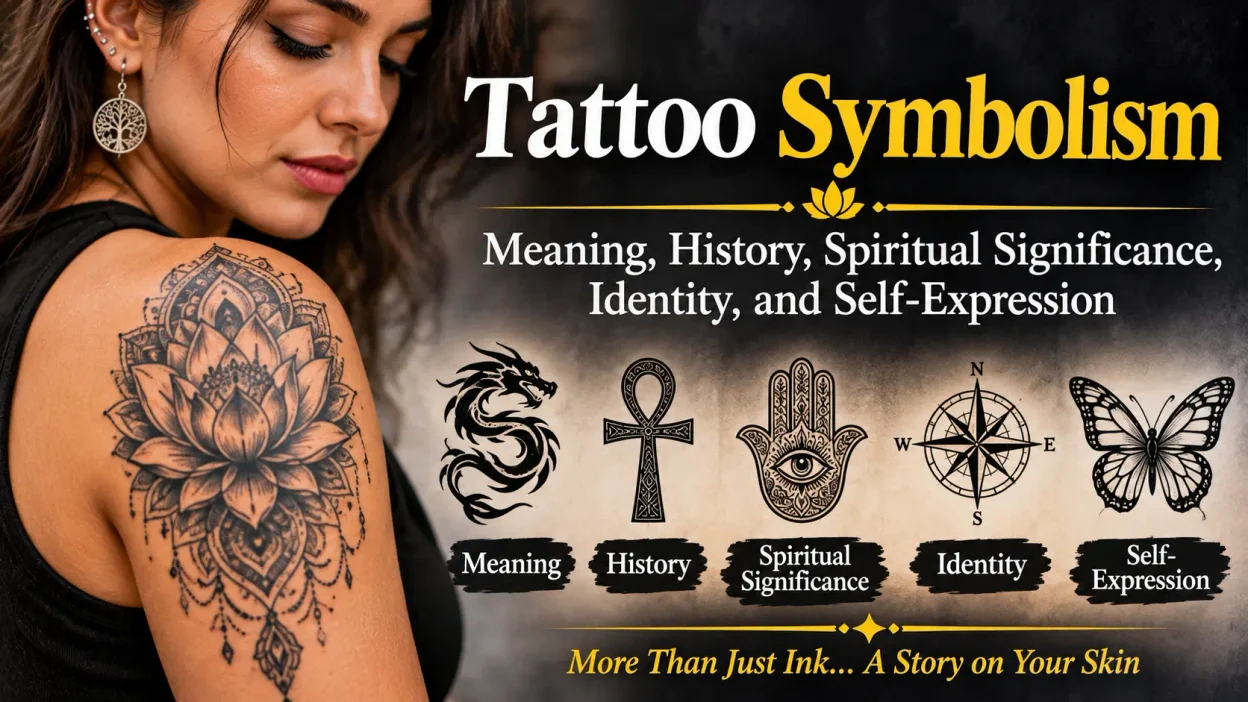
Tattoo symbolism is deeply connected to identity, self-expression, personal history, spirituality, and cultural traditions. For thousands of years, people have used tattoos to communicate beliefs, represent important experiences, honor loved ones, and express their connection to particular communities. A tattoo can be a simple decorative design, but it can also carry a deeply personal meaning that lasts a lifetime.
From ancient tribal markings to modern artistic designs, tattoos have served many purposes throughout human history. Some represent courage and protection, while others symbolize love, freedom, remembrance, transformation, or spiritual devotion. Animals, flowers, religious symbols, geometric patterns, and meaningful words can all become powerful expressions of individual identity.
The meaning of a tattoo often depends on its design, placement, cultural background, and the person wearing it. A particular symbol may represent strength to one person and healing to another. Understanding tattoo symbolism reveals how body art can communicate stories, preserve memories, and give visible form to ideas that are difficult to express through words.
What Do Tattoos Symbolize?
Tattoos can symbolize identity, individuality, strength, courage, love, protection, spirituality, and personal transformation. Their meanings are not universal because people choose designs based on their own experiences, cultural backgrounds, and beliefs.
Some of the most common symbolic meanings include:
1. Identity and Individuality
One of the strongest meanings of tattoos is personal identity. A tattoo can represent someone’s personality, values, interests, background, or life experiences.
People often choose designs that reflect important aspects of who they are. These may include meaningful quotes, family symbols, cultural patterns, favorite animals, or images connected to personal achievements.
Tattoo symbolism related to identity can represent:
- Individuality and independence
- Personal beliefs and values
- Cultural heritage
- Self-confidence
- Personal history
- Freedom of expression
For many people, tattoos provide a permanent way to express something meaningful about themselves.
2. Strength and Courage
Tattoos are frequently associated with physical, emotional, and spiritual strength. Designs featuring lions, tigers, dragons, warriors, and powerful natural elements often communicate courage and determination.
A person may choose a strength-related tattoo after overcoming a difficult experience or reaching an important personal milestone.
Common symbolic meanings include:
- Bravery in difficult situations
- Emotional resilience
- Determination and perseverance
- Confidence and independence
- The ability to overcome challenges
A strength tattoo can serve as a personal reminder that difficult experiences do not have to define the future.
3. Love and Connection
Tattoos can represent romantic love, friendship, family relationships, and emotional bonds.
Some people choose matching tattoos with partners or friends, while others use names, initials, dates, or symbolic images to honor important relationships.
Love-related tattoo symbolism may represent:
- Romantic commitment
- Family connections
- Friendship and loyalty
- Unconditional love
- Memories of loved ones
- Emotional devotion
A small heart, infinity symbol, or meaningful date can carry a powerful personal message.
4. Freedom and Independence
Freedom is another common theme in tattoo symbolism. Birds, butterflies, open wings, arrows, and flying creatures are often used to represent independence and the desire to live according to personal values.
These designs may symbolize breaking away from limitations, discovering individuality, or beginning a new chapter.
Freedom-related meanings include:
- Independence
- Personal liberation
- Self-discovery
- Breaking through limitations
- Following one’s own path
For someone who has experienced major life changes, a freedom tattoo can represent a renewed sense of control over their future.
5. Protection and Spirituality
In many cultures, tattoos have been connected with spiritual beliefs, religious devotion, and protective traditions.
Certain designs are believed by some communities to offer symbolic protection, connect individuals with ancestors, or express devotion to spiritual forces.
Examples include religious imagery, protective animals, sacred patterns, and traditional symbols.
These tattoos may represent:
- Faith and devotion
- Spiritual guidance
- Protection from harm
- Connection with ancestors
- Inner strength
- A sense of belonging
The meaning of these designs depends heavily on their cultural and religious context.
6. Transformation and Rebirth
Tattoos can also symbolize major personal changes. Butterfly, phoenix, snake, and lotus designs are particularly associated with transformation and renewal.
People sometimes choose these symbols to mark recovery, personal growth, or the decision to leave an earlier version of themselves behind.
Transformation-related meanings include:
- New beginnings
- Personal development
- Recovery after hardship
- Emotional healing
- Rebirth and renewal
- Letting go of the past
A transformation tattoo can serve as a reminder that change is a natural part of life.
Spiritual Meaning of Tattoos
The spiritual meaning of tattoos varies widely across religions, cultures, and individual belief systems. For some people, tattoos are a way to express faith, honor sacred traditions, or create a visible reminder of their spiritual journey.
For others, they represent personal values such as compassion, balance, mindfulness, and connection with nature.
Tattoos as Expressions of Faith
Religious tattoos may include crosses, religious figures, sacred texts, or other imagery associated with a particular faith.
These designs can represent devotion, gratitude, spiritual commitment, and the importance of religious teachings in someone’s life.
However, attitudes toward tattooing differ among religious traditions and communities. A design that is meaningful in one setting may be discouraged or interpreted differently in another.
Tattoos as Symbols of Inner Growth
Some people choose spiritual tattoos to represent their journey toward greater self-awareness.
Common examples include:
- Lotus flowers for growth and renewal
- Mandalas for balance and wholeness
- Trees for connection and stability
- Butterflies for transformation
- The sun for life and vitality
- The moon for cycles and change
These meanings are often influenced by personal interpretation and cultural traditions rather than a single universal spiritual system.
Tattoos and Personal Protection
Protective tattoos have existed in different societies throughout history. Some traditional designs were associated with spiritual protection, courage, social identity, or belonging.
Today, people may choose similar imagery as a symbolic reminder of strength and security. However, a tattoo should not be understood as providing scientifically established physical protection.
Tattoo Symbolism Across Different Cultures
Tattooing has a long history in different parts of the world. Its meanings have changed over time and reflect the customs, beliefs, and social structures of individual communities.
Understanding these traditions is important because some tattoo designs have cultural or sacred significance beyond their appearance.
Polynesian Tattoo Symbolism
<AsyncImage query=”traditional Polynesian tribal tattoo geometric patterns arm black ink” aspectRatio=”16:9″ width=”100%”/>
Traditional Polynesian tattooing includes distinct styles and practices from communities across the Pacific Islands.
In several Polynesian cultures, tattoos have historically communicated identity, ancestry, social status, achievements, and connections with community traditions.
Patterns may carry specific meanings depending on their arrangement, location, and cultural origin.
Traditional Polynesian tattooing should not be treated as one interchangeable style. Different island communities have their own histories and practices.
Japanese Tattoo Symbolism
<AsyncImage query=”traditional Japanese irezumi tattoo koi dragon waves colorful body art” aspectRatio=”16:9″ width=”100%”/>
Japanese tattoo art, often associated with the term irezumi, includes elaborate designs featuring dragons, koi fish, cherry blossoms, tigers, and other traditional imagery.
Common symbolic associations include:
- Dragons: Power, wisdom, and protection
- Koi fish: Perseverance and determination
- Cherry blossoms: The temporary nature of life
- Tigers: Strength and courage
- Waves: Natural power and change
Japanese tattoo traditions have a complex history involving art, social attitudes, and cultural identity. Their meanings cannot be reduced to simple universal definitions.
Maori Tattoo Symbolism
<AsyncImage query=”traditional Maori ta moko facial tattoo cultural patterns portrait” aspectRatio=”16:9″ width=”100%”/>
Māori tattooing, particularly tā moko, is an important part of Māori cultural identity.
Traditional tā moko can communicate genealogy, personal identity, social standing, and connections with ancestors. The designs are culturally specific and deeply meaningful.
Tā moko should not be treated as ordinary decorative tribal art. Its significance is connected to Māori heritage, tikanga, and community identity.
Ancient Egyptian Tattoo Symbolism
<AsyncImage query=”ancient Egyptian inspired tattoo ankh eye of horus lotus black ink” aspectRatio=”16:9″ width=”100%”/>
Tattooing existed in ancient Egypt, although its purposes and meanings varied across periods and individuals.
Modern Egyptian-inspired tattoos often feature symbols such as:
- Ankh: Life and vitality
- Eye of Horus: Protection and well-being
- Scarab: Transformation and renewal
- Lotus: Rebirth and regeneration
These symbols have broader histories in ancient Egyptian religion and art. Their modern tattoo interpretations may differ from their original historical meanings.
Celtic Tattoo Symbolism
<AsyncImage query=”Celtic knotwork tattoo black ink intricate interlacing patterns” aspectRatio=”16:9″ width=”100%”/>
Celtic-inspired tattoos often feature intricate knots, spirals, crosses, and interwoven patterns.
They are commonly associated with:
- Eternity and continuity
- Interconnection
- Heritage and ancestry
- Spirituality
- Strength and loyalty
Modern interpretations frequently connect Celtic knotwork with the idea of endless relationships or the continuing cycle of life.
Popular Tattoo Designs and Their Symbolic Meanings
Different tattoo designs communicate different ideas. Some have long-standing cultural associations, while others gain meaning through personal experiences.
<AsyncImageGroup query={[“black ink lion tattoo realistic arm”,”phoenix rising from flames tattoo design”,”butterfly floral fine line tattoo”,”lotus flower mandala tattoo black ink”]} aspectRatio=”5:4″ layout=”carousel”/>
| Tattoo Design | Common Symbolic Meaning |
|---|---|
| Lion | Courage, leadership, and strength |
| Butterfly | Transformation, freedom, and renewal |
| Phoenix | Rebirth, resilience, and overcoming hardship |
| Snake | Transformation, wisdom, and renewal |
| Lotus | Spiritual growth, purity, and resilience |
| Rose | Love, beauty, and passion |
| Eagle | Freedom, vision, and independence |
| Wolf | Loyalty, instinct, and family |
| Dragon | Power, wisdom, and protection |
| Tree | Growth, stability, and connection |
| Skull | Mortality, change, and remembrance |
| Anchor | Stability, hope, and security |
| Heart | Love, compassion, and connection |
| Sun | Life, energy, and vitality |
| Moon | Cycles, intuition, and transformation |
These meanings are common interpretations, not fixed rules. The person wearing a tattoo ultimately determines much of its personal significance.
Tattoo Symbolism by Placement
Tattoo placement can add another layer of meaning. Some people choose a location because it is visible, while others prefer a private placement for a more personal design.
Although there are no universal rules, certain placements are often associated with particular ideas.
Arm Tattoos
<AsyncImage query=”black ink artistic tattoo sleeve on forearm detailed floral geometric” aspectRatio=”16:9″ width=”100%”/>
Arm tattoos are among the most popular choices because they can be displayed or covered depending on clothing.
They may represent:
- Strength and confidence
- Personal identity
- Creativity
- Important life experiences
- Self-expression
Sleeve tattoos can combine several designs to tell a larger personal story.
Wrist Tattoos
<AsyncImage query=”minimalist small wrist tattoo fine line symbol” aspectRatio=”16:9″ width=”100%”/>
Wrist tattoos are often small and easy to see throughout the day.
They may symbolize:
- Personal reminders
- Love and connection
- Important dates
- Motivation and resilience
- Individual beliefs
Because of their visibility, wrist tattoos can serve as daily reminders of personal values.
Back Tattoos
<AsyncImage query=”large elegant floral ornamental back tattoo black ink body art” aspectRatio=”16:9″ width=”100%”/>
Back tattoos provide a large area for detailed artwork and complex designs.
They may represent:
- Personal transformation
- Strength and resilience
- Important memories
- Spiritual beliefs
- A private personal journey
Chest Tattoos
<AsyncImage query=”black ink ornamental chest tattoo geometric symmetrical design” aspectRatio=”16:9″ width=”100%”/>
Chest tattoos are often selected for symbols that carry deep personal or emotional meaning.
They may represent:
- Love and family
- Courage
- Personal values
- Loyalty
- Emotional strength
Neck Tattoos
<AsyncImage query=”minimalist fine line neck tattoo small symbolic design” aspectRatio=”16:9″ width=”100%”/>
Neck tattoos are highly visible and may communicate individuality, confidence, or artistic expression.
Their meaning depends on the design and the person’s intentions rather than the placement alone.
Tattoo Symbolism in Dreams
Dreams about tattoos can have different personal interpretations depending on the design, emotions, and circumstances involved.
There is no scientific evidence that tattoo dreams predict future events. However, they can provide an interesting starting point for reflecting on identity, commitment, and personal change.
Dreaming of Getting a Tattoo
Getting a tattoo in a dream may represent a desire for self-expression, a significant decision, or a new stage in life.
It might reflect the wish to make an important part of your identity more visible.
Dreaming of Removing a Tattoo
Removing a tattoo in a dream may symbolize letting go of an old belief, relationship, memory, or identity.
It could reflect a desire to move forward without being defined by the past.
Dreaming of a Beautiful Tattoo
A beautiful tattoo may represent confidence, creativity, and satisfaction with personal identity.
The design itself may provide additional clues about what matters to you.
Dreaming of a Tattoo You Regret
A tattoo you dislike in a dream may reflect anxiety about a decision, commitment, or past experience.
It may encourage you to consider whether something in your life no longer represents who you are.
Why Do People Choose Symbolic Tattoos?
People choose tattoos for many different reasons. While some simply appreciate the artistic value of body art, others want a design that preserves an important memory or communicates a personal belief.
Honoring Loved Ones
Names, portraits, dates, and symbolic images can help people remember family members, friends, or partners.
These tattoos may represent love, gratitude, and remembrance.
Celebrating Personal Achievements
Some people get tattoos after reaching an important milestone, overcoming an obstacle, or completing a major life goal.
The design becomes a permanent reminder of their determination and progress.
Expressing Cultural Identity
Traditional tattoos can communicate heritage, community belonging, and connections with ancestors.
However, cultural symbols should be approached with respect and an understanding of their original context.
Representing Personal Transformation
A tattoo can mark the end of one chapter and the beginning of another.
Symbols such as butterflies, phoenixes, and lotus flowers are popular choices for people who want to represent growth and renewal.
Expressing Creativity
For many people, tattoos are simply an artistic form of self-expression.
Color, composition, linework, and personal design choices can communicate individuality without requiring a specific traditional meaning.
How to Choose a Tattoo With Meaning
Choosing a meaningful tattoo involves more than selecting an attractive design. It is worth considering what the image represents and whether its meaning will remain important over time.
Here are some useful considerations:
- Identify your message: Decide whether you want to represent love, strength, freedom, remembrance, spirituality, or another personal value.
- Research the symbol: Learn about its historical and cultural background before using it.
- Consider the design: Think about whether you prefer minimalist, traditional, geometric, realistic, or illustrative artwork.
- Choose the placement: Consider visibility, professional requirements, personal comfort, and the size of the design.
- Think long term: Choose something that reflects a meaningful part of your identity rather than a temporary trend.
- Find a qualified tattoo artist: Review their portfolio, hygiene practices, and experience with your preferred style.
A meaningful tattoo should reflect your intentions while respecting the history and significance of the symbol.
Tattoo Symbolism and Modern Self-Expression
Modern tattoo culture has expanded beyond traditional meanings and social boundaries. Tattoos are now widely used in fashion, art, entertainment, and personal storytelling.
Social media has also influenced tattoo trends, making minimalist designs, fine-line artwork, lettering, and symbolic illustrations increasingly visible.
However, the popularity of a particular design does not mean everyone interprets it in the same way.
A small flower tattoo might represent a loved one to one person, personal growth to another, and simply an appreciation of nature to someone else.
This flexibility is one of the most interesting aspects of tattoo symbolism: the same image can carry different stories depending on the individual.
Frequently Asked Questions (FAQs)
1. What does a tattoo symbolize?
A tattoo can symbolize identity, strength, love, freedom, protection, spirituality, remembrance, or personal transformation. Its meaning depends on the design, cultural background, and individual wearing it.
2. What is the spiritual meaning of tattoos?
Spiritually, tattoos may represent faith, personal growth, protection, inner strength, and connection with cultural or religious traditions. Their meanings vary across belief systems.
3. What tattoo symbolizes strength?
Lions, tigers, dragons, eagles, and phoenixes are commonly associated with strength and courage. These designs can represent resilience, determination, and the ability to overcome challenges.
4. What tattoo symbolizes new beginnings?
Butterflies, phoenixes, lotus flowers, and rising suns are commonly used to represent new beginnings. They can symbolize transformation, renewal, hope, and personal growth.
5. What tattoo symbolizes protection?
Some people choose designs such as protective eyes, religious symbols, traditional patterns, and guardian animals to represent protection. Their meanings depend on cultural and personal beliefs.
6. What tattoo symbolizes freedom?
Birds, wings, butterflies, arrows, and open horizons are frequently associated with freedom and independence. They can represent personal liberation and the desire to follow one’s own path.
7. What tattoo symbolizes love and loyalty?
Hearts, roses, infinity symbols, anchors, and matching designs are commonly associated with love, commitment, and loyalty. Names and meaningful dates can also represent lasting connections.
8. What is the meaning of traditional tribal tattoos?
Traditional tribal tattoos can communicate ancestry, social identity, achievements, spiritual beliefs, and community belonging. Their meanings differ significantly among cultures, so specific designs should be understood within their original traditions.
9. Do tattoos have different meanings depending on placement?
Yes. Some people associate wrist tattoos with personal reminders, chest tattoos with emotional connections, and back tattoos with private experiences. However, placement meanings are subjective rather than universal.
10. Are tattoo symbols universal?
No. A symbol may have different meanings across cultures, religions, and individuals. It is important to understand its historical background rather than assume that one interpretation applies everywhere.
Conclusion
Tattoo symbolism reflects the many ways people express identity, preserve memories, communicate beliefs, and celebrate personal experiences. From symbols of strength and courage to images of love, freedom, protection, and transformation, tattoos can carry meanings that go far beyond their appearance.
Different cultures have developed unique tattoo traditions, each with its own artistic styles and historical significance. At the same time, modern tattoo culture allows individuals to create personal interpretations that reflect their values and life journeys.
Ultimately, a tattoo can be both a work of art and a meaningful personal statement. Whether it represents a loved one, a spiritual belief, a difficult experience, or a new beginning, its deepest significance comes from the story behind the design.