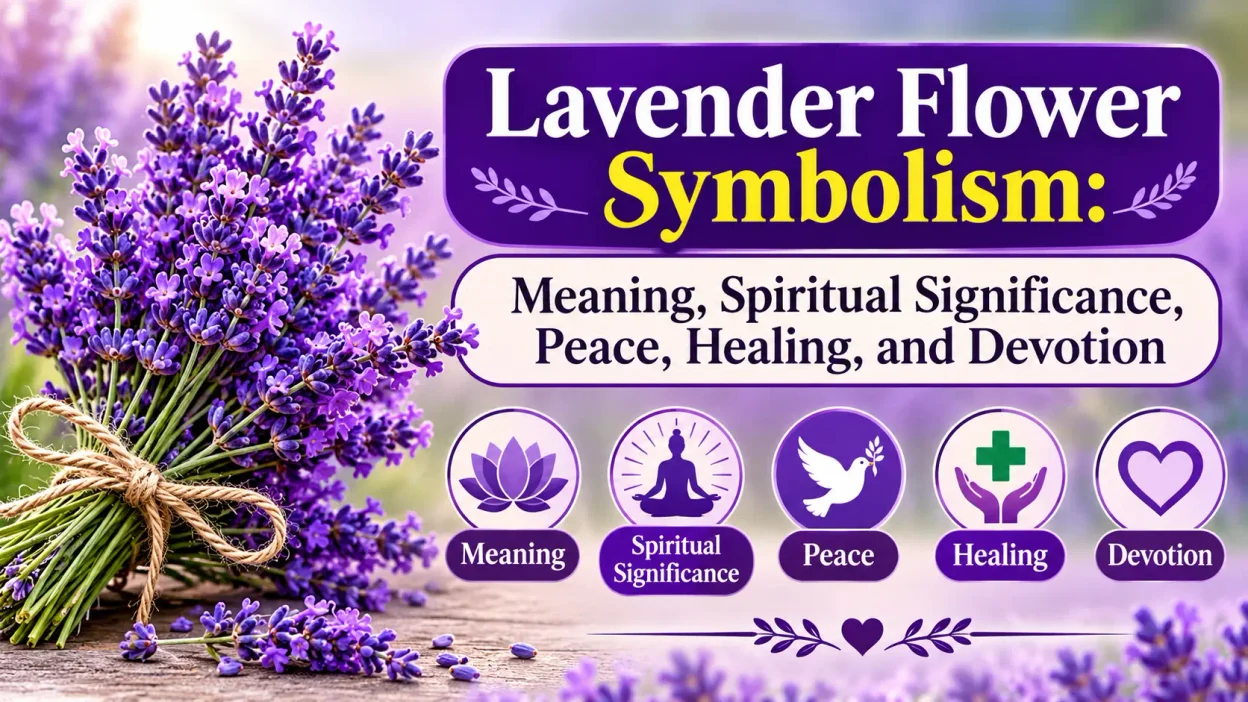
Lavender flower symbolism is closely associated with peace, purity, healing, devotion, tranquility, and emotional balance. Known for its delicate purple blooms and calming fragrance, lavender has been valued for centuries in gardens, traditional practices, perfumes, and cultural ceremonies. Its gentle appearance and distinctive scent have helped make it a lasting symbol of serenity, comfort, and renewal.
Beyond its beauty, lavender carries different meanings depending on cultural traditions, personal experiences, and spiritual beliefs. Some people associate it with emotional healing and inner peace, while others connect it with love, loyalty, protection, and spiritual awareness. Its soft purple color also gives it associations with elegance, wisdom, dignity, and imagination.
Whether you encounter lavender in a garden, receive it as a gift, dream about it, or choose it for a tattoo, the flower can offer a meaningful reminder to slow down, care for yourself, and appreciate life’s quieter moments.
In this guide, we explore lavender flower symbolism, its spiritual meaning, cultural associations, color interpretations, symbolism in love and dreams, and the lessons this beautiful flower can represent.
What Does Lavender Symbolize?
Lavender commonly symbolizes:
- Peace and tranquility: A calm mind, emotional balance, and freedom from unnecessary stress.
- Healing and restoration: Comfort, recovery, and the desire to feel whole again.
- Purity and innocence: Clean intentions, sincerity, and spiritual clarity.
- Love and devotion: Loyalty, tenderness, and lasting affection.
- Protection: A sense of safety and emotional reassurance.
- Grace and elegance: Beauty, refinement, and gentle strength.
- Wisdom and spirituality: Reflection, intuition, and personal growth.
- Renewal: Fresh beginnings and the restoration of hope.
These meanings are symbolic rather than universal. Lavender’s significance can vary according to the person, culture, and situation in which it appears.
Spiritual Meaning of Lavender
The spiritual meaning of lavender is often connected with peace, purification, emotional healing, and inner awareness. Its gentle fragrance and purple blossoms have made it a popular symbol of calmness and spiritual reflection.
In modern spiritual interpretations, lavender may represent an invitation to release emotional burdens, reconnect with yourself, and create a more peaceful environment.
1. Peace and Inner Calm
One of lavender’s most familiar symbolic meanings is peace. Its soothing fragrance and delicate flowers are commonly associated with relaxation and tranquility.
Spiritually, lavender can represent the importance of finding calmness even when life becomes stressful. It may remind you to step away from unnecessary conflict, slow down, and make room for moments of quiet reflection.
2. Healing and Emotional Restoration
Lavender is often associated with healing because of its long history in traditional herbal practices and its familiar use in relaxation products.
Symbolically, it can represent recovery after difficult experiences, emotional comfort, and the gradual process of rebuilding confidence.
Its message is not that every problem disappears immediately. Instead, lavender can serve as a reminder that healing often takes patience, care, and time.
3. Purity and Spiritual Cleansing
The soft appearance and pleasant scent of lavender have contributed to its associations with cleanliness, purity, and renewal.
In some modern spiritual practices, lavender is used symbolically in rituals intended to create a peaceful atmosphere or mark a fresh beginning.
Its spiritual meaning may encourage you to let go of negative habits, reconsider your priorities, and focus on what brings clarity to your life.
4. Protection and Security
Lavender has a long history of use in household fragrances, sachets, and traditional practices. These associations have contributed to its symbolic connection with protection and comfort.
In spiritual interpretations, lavender may represent creating a safe emotional environment and protecting your peace from unnecessary negativity.
These are symbolic beliefs, not evidence that lavender provides supernatural protection.
5. Wisdom and Spiritual Awareness
Because lavender is commonly associated with purple, it can also represent wisdom, imagination, dignity, and spiritual awareness.
Its symbolism may encourage you to trust your judgment, reflect on important decisions, and develop a deeper understanding of yourself.
Lavender Flower Symbolism in Different Cultures
Lavender has a long history in different parts of the world. Its uses in fragrance, household care, gardening, and traditional practices have influenced the meanings associated with it.
Ancient Roman Associations
The name lavender is commonly connected to the Latin word lavare, meaning “to wash.” Lavender was valued in the Roman world for its fragrance and association with bathing and cleanliness.
Its use in baths and household settings contributed to its symbolic connection with freshness, purification, and personal care.
Ancient Greek Associations
Lavender’s history in the wider Mediterranean region includes traditional uses of aromatic plants for fragrance and household purposes.
Although lavender is often discussed alongside ancient Greek herbal traditions, specific modern symbolic meanings should not automatically be presented as established beliefs of ancient Greeks.
European Traditions
In European history, lavender became closely associated with clean homes, fresh linens, gardens, and pleasant fragrances.
Its use in household sachets and traditional preparations helped develop associations with cleanliness, comfort, and protection.
In some European folk traditions, fragrant herbs were also kept in homes for practical and symbolic reasons.
Victorian Flower Language
During the Victorian era, flowers were often assigned meanings and used to communicate emotions without direct words.
Lavender is commonly associated in modern flower-language references with devotion, grace, refinement, and admiration. However, historical flower dictionaries were not completely consistent, and meanings could vary between sources.
Modern Spiritual Interpretations
Today, lavender is widely used as a symbol of:
- Emotional peace and relaxation
- Spiritual cleansing and renewal
- Love, loyalty, and devotion
- Protection and comfort
- Wisdom and personal growth
- Healing and self-care
These interpretations reflect contemporary symbolism and personal beliefs rather than one universal tradition.
Lavender Symbolism by Color
Lavender is best known for its purple flowers, but different cultivars and related varieties can display shades of blue, pink, white, and other colors. Each color can inspire a different symbolic interpretation.
| Lavender Flower Color | Common Symbolic Meaning |
|---|---|
| Purple lavender | Spirituality, wisdom, dignity, and elegance |
| Light purple lavender | Peace, gentleness, calmness, and grace |
| Dark purple lavender | Mystery, depth, ambition, and inner strength |
| White lavender | Purity, innocence, clarity, and new beginnings |
| Pink lavender | Tenderness, affection, romance, and compassion |
| Blue-toned lavender | Serenity, emotional balance, and harmony |
Purple Lavender Symbolism
Purple lavender is associated with spirituality, dignity, wisdom, and elegance. Purple has historically been connected with royalty and prestige in several cultural contexts.
As a flower, purple lavender can represent a combination of inner strength and gentle beauty. It may also symbolize the desire to find meaning beyond everyday concerns.
Light Purple Lavender Symbolism
Light purple lavender represents gentleness, peace, grace, and emotional comfort.
Its soft color can suggest a quiet personality, sincere affection, and the ability to bring calmness into difficult situations.
White Lavender Symbolism
White lavender is often interpreted as a symbol of purity, innocence, clarity, and spiritual renewal.
It can be a meaningful choice for occasions that celebrate fresh beginnings, remembrance, or sincere intentions.
Pink Lavender Symbolism
Pink lavender can symbolize tenderness, compassion, affection, and romantic feelings.
It may be especially meaningful as a gift to someone who brings kindness and warmth into your life.
Blue Lavender Symbolism
Blue-toned lavender can represent serenity, emotional stability, and harmony. Its appearance may inspire thoughts of peaceful surroundings and a balanced mind.
Lavender Flower Symbolism in Love and Relationships
In love and relationships, lavender is commonly associated with devotion, loyalty, tenderness, and emotional peace.
Unlike flowers that symbolize intense passion, lavender often represents a quieter kind of affection built on trust, patience, and mutual understanding.
Lavender as a Symbol of Devotion
Lavender can represent a lasting commitment to someone you care about. Its gentle beauty makes it a meaningful symbol of affection that is expressed through consistent support rather than dramatic gestures.
Lavender as a Symbol of Loyalty
The flower may also represent faithfulness and trust. Giving lavender to someone can communicate appreciation for a relationship built on honesty and mutual respect.
Lavender as a Symbol of Emotional Harmony
Healthy relationships require patience, understanding, and the ability to resolve disagreements peacefully. Lavender’s association with calmness makes it a fitting symbol of emotional balance.
Lavender as a Gift
A lavender bouquet or dried lavender arrangement can be a thoughtful gift for:
- A romantic partner you deeply appreciate.
- A friend who has supported you through difficult times.
- Someone beginning a new chapter in life.
- A family member who deserves comfort and encouragement.
- A person who values peaceful surroundings and natural beauty.
Lavender Flower Symbolism in Dreams
Dreaming about lavender can have several possible interpretations. Its meaning depends on the dream’s details, your emotions, and your personal experiences.
Dream symbolism is subjective and should not be treated as a prediction of future events.
Dreaming of Lavender Flowers
Seeing lavender flowers in a dream may symbolize peace, emotional comfort, or a desire for greater balance in your life.
It could reflect a period when you are learning to prioritize your well-being.
Dreaming of a Lavender Field
A large lavender field may represent abundance, contentment, freedom, and emotional restoration.
If the field feels peaceful, the dream may reflect your desire for a simpler and more balanced lifestyle.
Dreaming of Picking Lavender
Picking lavender in a dream may symbolize appreciating small blessings, recognizing personal progress, or making time for self-care.
It may also represent an effort to preserve something meaningful in your life.
Dreaming of Receiving Lavender as a Gift
Receiving lavender may symbolize affection, support, appreciation, or the desire for emotional reassurance.
Consider who gave you the flowers and how you felt during the dream. Those details may help you understand its personal meaning.
Dreaming of Dried Lavender
Dried lavender may symbolize memories, lasting affection, nostalgia, or the preservation of meaningful experiences.
Depending on the dream’s atmosphere, it may also represent the need to move forward from an earlier stage of life.
Dreaming of Withered Lavender
Withered lavender may represent emotional exhaustion, neglected relationships, or a need for renewal.
It could encourage you to consider whether an important part of your life needs more attention.
Lavender Symbolism in Death and Remembrance
Lavender can be used as a symbol of remembrance, comfort, and peaceful reflection.
Its gentle fragrance and traditional associations with calmness make it a thoughtful choice for memorial arrangements and moments of remembrance.
In this context, lavender may represent:
- Cherished memories of someone who has passed away.
- Love that continues through remembrance.
- Comfort during periods of grief.
- Peaceful reflection and acceptance.
- Gratitude for meaningful relationships.
Lavender does not have one universal meaning in funeral traditions. Its significance depends on personal, family, and cultural preferences.
Lavender Symbolism in Tattoos
A lavender flower tattoo can represent peace, healing, devotion, purity, and personal growth. Its delicate appearance makes it a popular choice for people who want a design with both beauty and emotional meaning.
Common interpretations include:
Peace and calmness: A reminder to protect your mental and emotional balance.
Healing: A symbol of recovering from difficult experiences and becoming stronger.
Love and loyalty: A representation of meaningful relationships and lasting affection.
Purity: A reminder to remain sincere and true to your values.
Personal growth: A symbol of moving forward and embracing change.
Femininity and grace: A delicate design associated with elegance and gentle strength.
Some people choose lavender tattoos to remember a loved one, celebrate a new beginning, or represent an important period of personal development.
Lavender Symbolism in the Home
Lavender is often associated with a peaceful, welcoming, and comfortable home.
Its fragrance and decorative appearance have made it popular in bedrooms, gardens, living spaces, and household products.
Symbolically, lavender in the home may represent:
- Peaceful family relationships.
- Emotional comfort and relaxation.
- Cleanliness and freshness.
- Protection and a sense of security.
- Hospitality and warmth.
- A balanced personal environment.
A lavender plant or dried arrangement can also serve as a reminder to create spaces where you can rest, reflect, and feel comfortable.
Lavender as a Birth Flower
Lavender is sometimes presented in modern birth-flower references as a flower associated with July. However, birth-flower lists are not completely standardized, and different sources may assign different flowers to individual months.
Lavender is more firmly recognized for its associations with calmness, devotion, grace, and refinement than for a universally accepted birth-month designation.
As a birthday gift, lavender can communicate appreciation, affection, and wishes for a peaceful year ahead.
Botanical Meaning and Interesting Facts About Lavender
Understanding lavender’s natural characteristics adds another dimension to its symbolism.
Lavender belongs to the genus Lavandula, which is part of the mint family, Lamiaceae. Several species are cultivated for their fragrant flowers and aromatic oils.
One of the best-known species is English lavender, Lavandula angustifolia.
Interesting facts include:
- Lavender is native to regions around the Mediterranean, although it is now cultivated in many parts of the world.
- Its flowers are commonly purple, but some varieties produce pink, white, or other shades.
- Lavender is widely used in perfumes, soaps, cosmetics, and household fragrances.
- Bees and other pollinators visit lavender flowers for nectar.
- Lavender is valued as an ornamental garden plant because of its fragrance and attractive appearance.
- Dried lavender is often used in sachets and decorative arrangements.
Lavender has a long history in traditional herbal practices. However, traditional use should not be confused with proof that every lavender preparation is medically effective. Essential oils are concentrated products and should be used according to appropriate safety guidance.
What Can Lavender Teach You?
Lavender’s symbolism offers several practical lessons for everyday life.
Make Time for Peace
Life can become overwhelming when responsibilities and expectations compete for your attention. Lavender reminds you to create time for rest and reflection.
Be Patient With Healing
Emotional recovery does not always happen quickly. Lavender can symbolize the importance of allowing yourself time to process difficult experiences and regain confidence.
Choose Kindness Without Losing Strength
Its delicate appearance represents gentleness, but gentleness does not mean weakness. You can treat others with compassion while maintaining healthy boundaries.
Appreciate Lasting Relationships
Lavender’s association with devotion and loyalty encourages you to value relationships built on trust, understanding, and consistent care.
Embrace Renewal
Lavender’s return in seasonal gardens can inspire thoughts of fresh beginnings, growth, and the possibility of creating a more balanced future.
Frequently Asked Questions About Lavender Flower Symbolism
1. What does the lavender flower symbolize?
The lavender flower commonly symbolizes peace, tranquility, healing, purity, devotion, protection, and spiritual awareness. Its meaning can vary depending on cultural traditions and personal interpretation.
2. What is the spiritual meaning of lavender?
The spiritual meaning of lavender is often connected with inner peace, emotional healing, purification, and personal growth. In modern spiritual practices, it may represent the desire to release negativity and create a calmer environment.
3. Does lavender symbolize love?
Yes. Lavender is commonly associated with devotion, loyalty, tenderness, and lasting affection. It can represent a loving relationship built on trust and emotional understanding.
4. What does purple lavender symbolize?
Purple lavender often symbolizes wisdom, spirituality, elegance, dignity, and inner strength. Its color adds associations with creativity, reflection, and personal growth.
5. What does white lavender symbolize?
White lavender is commonly associated with purity, innocence, clarity, sincerity, and new beginnings. It can also represent peaceful remembrance.
6. What does lavender symbolize in dreams?
Lavender in dreams may represent emotional peace, healing, comfort, and a desire for balance. The interpretation depends on the dream’s setting and the emotions you experienced.
7. Is lavender a symbol of protection?
Lavender is sometimes used as a symbol of protection because of its history in household traditions and its association with comfort and purification. In modern spiritual practices, it may represent emotional security and the protection of personal peace.
8. What does a lavender tattoo mean?
A lavender tattoo can symbolize healing, peace, loyalty, devotion, grace, and personal transformation. Its exact meaning depends on the wearer’s experiences and intentions.
9. What does lavender symbolize in death and remembrance?
Lavender can represent peaceful remembrance, lasting affection, comfort, and cherished memories. It may be used in memorial arrangements to express love and appreciation for someone who has passed away.
10. Why is lavender associated with peace?
Lavender’s calming fragrance, traditional use in bathing and household preparations, and widespread presence in relaxation products have contributed to its association with peace and tranquility.
Conclusion
Lavender flower symbolism represents peace, healing, purity, devotion, protection, and emotional balance. Its delicate purple blooms and familiar fragrance have made it a lasting symbol of comfort, grace, and renewal across different settings and traditions.
Whether it appears in a garden, a dream, a tattoo, or a thoughtful gift, lavender can remind you to care for yourself, appreciate meaningful relationships, and make space for inner peace.
Ultimately, lavender’s greatest symbolic lesson is that gentleness can be a form of strength. You can move through life’s challenges with patience, kindness, and confidence while remaining true to yourself.