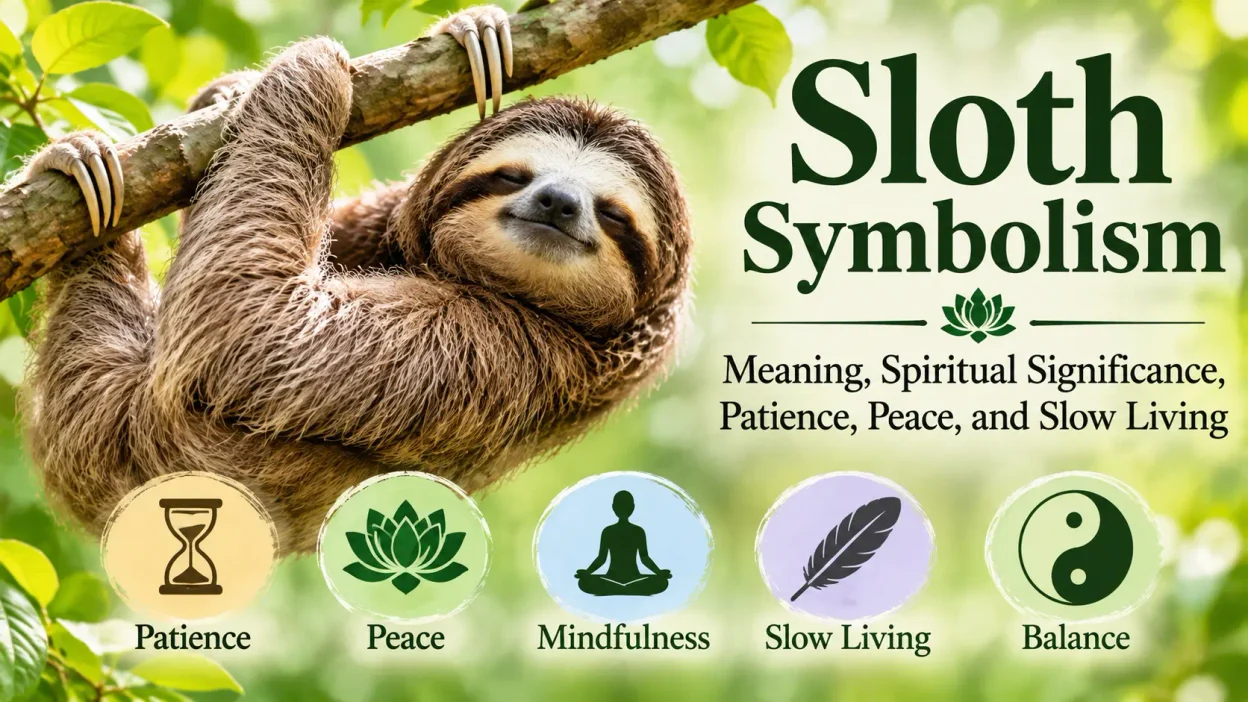
The sloth is one of the most recognizable animals in the world, famous for its slow movements, relaxed behavior, and peaceful appearance. Spending much of its life hanging from tree branches, this gentle mammal has become a powerful symbol of patience, calmness, simplicity, and a slower approach to life. Unlike animals associated with speed, aggression, or constant activity, the sloth represents the value of taking your time and appreciating the present moment.
Sloth symbolism is commonly connected with patience, mindfulness, rest, emotional balance, self-acceptance, and living without unnecessary pressure. Its relaxed lifestyle reminds us that productivity does not always require rushing and that personal growth can happen gradually. In modern spiritual interpretations, the sloth may also represent inner wisdom, independence, resilience, and the importance of protecting your energy.
Although sloths are sometimes associated with laziness, their slow movements are actually adaptations to their specialized diet and low-energy lifestyle. This makes their symbolism more meaningful: they demonstrate that moving slowly is not necessarily a weakness. Sometimes, it is a practical way to survive and maintain balance.
Whether you encounter a sloth in nature, dream about one, or simply feel drawn to its gentle personality, this animal can offer an important reminder to slow down, reconnect with yourself, and appreciate life’s quieter moments.
What Does a Sloth Symbolize?
A sloth most commonly symbolizes patience, peace, mindfulness, relaxation, and slow living. Its deliberate movements and quiet lifestyle represent the importance of taking life at a manageable pace rather than constantly chasing deadlines and expectations.
The most common symbolic meanings of a sloth include:
- Patience: Learning to wait and allowing life to develop naturally.
- Peace: Finding calmness instead of becoming overwhelmed by pressure.
- Mindfulness: Appreciating the present moment and noticing small experiences.
- Slow living: Choosing a balanced lifestyle instead of constant activity.
- Self-acceptance: Feeling comfortable with your own pace and individuality.
- Rest and recovery: Recognizing that relaxation is an important part of well-being.
- Resilience: Adapting to challenges through patience and practical strategies.
- Simplicity: Finding happiness in ordinary experiences rather than unnecessary complexity.
- Independence: Following your own path without constantly comparing yourself with others.
- Conservation: Representing the importance of protecting vulnerable wildlife and natural habitats.
These meanings are symbolic interpretations inspired by the sloth’s behavior and appearance. Their significance can vary depending on personal beliefs and cultural context.
Spiritual Meaning of a Sloth
In contemporary spiritual interpretations, the sloth is often viewed as a symbol of mindfulness, inner peace, patience, and emotional balance. Its quiet lifestyle encourages people to slow down, listen to their inner needs, and avoid becoming overwhelmed by the demands of everyday life.
1. Patience and Trust in the Process
One of the strongest spiritual meanings of the sloth is patience. Sloths move slowly and spend much of their time resting or feeding in trees.
Symbolically, this behavior represents accepting that meaningful progress takes time. Not every goal needs to be achieved immediately, and not every stage of life requires constant action.
The sloth reminds you to trust the process, remain consistent, and avoid judging your progress according to someone else’s timeline.
2. Inner Peace and Emotional Calmness
The sloth’s relaxed appearance has made it a modern symbol of tranquility and emotional balance.
Spiritually, seeing a sloth may encourage you to examine the sources of stress in your life. It can serve as a reminder to create space for rest, peaceful surroundings, and healthier daily routines.
Its message is not to ignore responsibilities but to approach them without unnecessary panic.
3. Mindfulness and Living in the Present
Sloths spend much of their lives in the trees, moving carefully and conserving energy. Their behavior inspires a symbolic connection with mindfulness.
The sloth encourages you to pay attention to ordinary moments, appreciate your surroundings, and avoid spending all your time worrying about the future.
Its symbolism suggests that happiness does not always come from achieving more. Sometimes, it comes from noticing what is already present.
4. Self-Acceptance and Individuality
A sloth does not attempt to move like a cheetah or compete with faster animals. It follows a lifestyle suited to its own nature.
This makes it a symbol of self-acceptance and individuality. It reminds you that your personal pace does not need to match the expectations of other people.
You can make progress in your own way without feeling pressured to imitate someone else’s journey.
5. Rest, Recovery, and Renewal
The sloth is also associated with rest and recovery. Its low-energy lifestyle symbolizes the importance of recognizing physical and emotional limits.
In spiritual interpretations, this animal may appear as a reminder that taking a break is not the same as giving up. Rest can provide the space needed to regain strength, reflect on priorities, and prepare for new challenges.
6. Simplicity and Contentment
Sloths spend much of their time feeding, resting, and moving through their forest habitats. Their lifestyle inspires a symbolic connection with simplicity.
The sloth can represent finding satisfaction in ordinary experiences instead of constantly searching for excitement, recognition, or material achievements.
Its message is that a peaceful life can be meaningful even when it appears simple from the outside.
Sloth Symbolism in Different Cultures
Sloths are native to Central and South America, and their cultural significance is connected with the environments and societies in which they live.
It is important not to assume that every Indigenous or Latin American community shares the same interpretation of the animal. Sloth symbolism can be found in different forms of art, storytelling, and modern popular culture, but there is no single universal spiritual meaning.
1. Indigenous South American Contexts
Sloths live in tropical forests across parts of Central and South America, including regions with long histories of Indigenous cultures.
In these environments, animals are part of complex relationships involving nature, survival, storytelling, and traditional knowledge. However, specific symbolic meanings should be connected to particular communities and documented traditions rather than generalized across all Indigenous peoples.
The sloth’s distinctive appearance and behavior can also inspire modern reflections on patience, adaptation, and the relationship between humans and the natural world.
2. Ancient South American Art
Sloth-like animals have appeared in ancient and prehistoric contexts across the Americas. However, it is important to distinguish modern tree-dwelling sloths from the giant ground sloths that lived during prehistoric periods.
Ancient depictions of animals can provide insights into how people understood their environment, but they should not automatically be interpreted as evidence of a specific spiritual meaning for modern sloths.
3. Modern Popular Culture
In contemporary culture, sloths have become popular symbols of relaxation, humor, and resistance to busy lifestyles.
Their slow movements and gentle expressions are frequently used in cartoons, advertisements, social media, and entertainment.
They often represent the desire to escape constant pressure and enjoy a more relaxed way of living.
Sloth Symbolism in Different Areas of Life
The sloth’s symbolic meaning can be applied to several aspects of everyday life, from personal development to relationships and work.
Sloth Symbolism and Patience
A sloth represents the importance of giving yourself enough time to develop and achieve meaningful goals.
Its symbolism encourages you to avoid rushing decisions, comparing your progress with others, or becoming discouraged when results take longer than expected.
Sloth Symbolism and Work
In a work environment, the sloth can symbolize sustainable productivity, careful planning, and the importance of avoiding burnout.
Its message is not that you should neglect responsibilities. Instead, it encourages you to work at a manageable pace, prioritize important tasks, and recognize when you need rest.
Sloth Symbolism and Personal Growth
The sloth can represent gradual transformation and the acceptance of different stages in life.
Personal growth does not always happen through dramatic changes. It can develop through small habits, quiet reflection, and consistent effort.
Sloth Symbolism and Emotional Healing
In modern spiritual interpretations, the sloth may represent the need to slow down and give yourself time to recover from emotionally difficult experiences.
It encourages self-compassion, patience, and the understanding that healing does not follow a fixed schedule.
Sloth Symbolism in Love and Relationships
In relationships, sloth symbolism can represent patience, emotional security, gentleness, and the importance of building connections without unnecessary pressure.
Its peaceful nature offers several meaningful lessons about love and companionship.
Romantic Love
A sloth may symbolize a relationship that develops gradually through trust, consistency, and mutual understanding.
Rather than focusing only on dramatic romantic gestures, its symbolism highlights the importance of small acts of care and emotional support.
Loyalty and Commitment
Sloths can also represent the value of steady companionship. Their symbolism encourages partners to give each other time, respect individual differences, and remain supportive through changing circumstances.
Self-Love and Personal Boundaries
The sloth’s independent pace can represent the importance of respecting your own emotional needs.
It reminds you that you do not need to rush into relationships or sacrifice your personal well-being to meet someone else’s expectations.
Sloth Symbolism in Dreams
Dreaming about a sloth can have several possible symbolic interpretations. Because dreams are influenced by personal experiences, emotions, and memories, there is no scientifically established universal meaning for seeing this animal in a dream.
However, sloth dreams are often interpreted through themes of patience, rest, delayed progress, and emotional calmness.
| Dream Scenario | Possible Symbolic Meaning |
|---|---|
| Seeing a sloth in a tree | Peace, stability, and taking life slowly |
| Holding a sloth | Desire for comfort, security, or emotional connection |
| A sloth moving slowly | Patience or frustration with delayed progress |
| A sloth sleeping | Need for rest and recovery |
| A sloth climbing a tree | Gradual personal growth and determination |
| A sloth falling from a tree | Feeling uncertain or losing stability |
| A baby sloth | Vulnerability, new beginnings, and nurturing |
| A sloth approaching you | A reminder to slow down and become more mindful |
| A sloth running | A sudden need to respond to pressure or change |
Seeing a Sloth in a Dream
Seeing a sloth may represent the need to slow down and reconsider your priorities. It could reflect a desire for a more peaceful lifestyle or a reminder that you are placing too much pressure on yourself.
Holding a Sloth in a Dream
Holding a sloth may symbolize comfort, emotional security, and a desire for gentleness in your life.
It can also reflect your wish to protect something important or reconnect with your softer side.
Dreaming of a Baby Sloth
A baby sloth may symbolize innocence, vulnerability, and new beginnings. It can represent a developing idea, a new responsibility, or a part of yourself that needs patience and care.
Dreaming of a Sloth Falling
A falling sloth may reflect feelings of instability or concern about losing control. It may encourage you to examine situations in which you feel unsupported or uncertain.
Seeing a Sloth: Spiritual Meaning
Encountering a sloth in nature, at a wildlife sanctuary, or even in an unexpected setting can feel memorable because of its unusual behavior and gentle appearance.
In modern spiritual interpretations, seeing a sloth may serve as a reminder to slow down, protect your energy, and appreciate the present moment.
Possible symbolic messages include:
- Slow down: You may need to reduce unnecessary pressure and make time for yourself.
- Practice patience: Important changes may require more time than expected.
- Protect your peace: Avoid situations that constantly drain your emotional energy.
- Enjoy simple moments: Pay attention to the small experiences that bring happiness.
- Accept your individuality: Your personal journey does not need to follow someone else’s timeline.
- Make room for rest: Recognize the value of recovery and relaxation.
These are personal interpretations rather than supernatural predictions. The meaning of an encounter depends on what the experience represents to you.
Baby Sloth Symbolism
Baby sloths are especially popular because of their small size, gentle expressions, and dependence on their mothers during early development.
Symbolically, a baby sloth can represent innocence, vulnerability, nurturing, and the beginning of a new chapter.
Its possible meanings include:
- New beginnings: Starting something that requires patience and care.
- Innocence: Approaching life with curiosity and openness.
- Nurturing: Giving attention and support to something important.
- Emotional sensitivity: Recognizing the need for gentleness.
- Gradual development: Allowing growth to happen naturally.
A baby sloth can be a meaningful symbol for someone entering a new stage of personal development or learning to care for themselves.
Sloth Spirit Animal Meaning
In contemporary spiritual language, the sloth spirit animal is often used as a symbol of patience, mindfulness, emotional balance, and peaceful living.
People who identify with this symbolism may appreciate a lifestyle that values quiet reflection, independence, and meaningful experiences over constant activity.
The sloth spirit animal can offer several symbolic lessons:
- Respect your own pace: You do not have to compete with everyone around you.
- Value rest: Recovery is an important part of maintaining balance.
- Practice mindfulness: Give attention to the present rather than constantly worrying about what comes next.
- Choose simplicity: Focus on what genuinely matters.
- Remain patient: Progress can be meaningful even when it happens slowly.
- Protect your energy: Be thoughtful about how you spend your time and attention.
The phrase “spirit animal” has specific cultural and religious associations in some Indigenous traditions. Using it as a general personality label can overlook those meanings, so it is best to understand the context in which the term is used.
Sloth Totem Symbolism
In modern symbolic writing, a sloth totem may represent patience, tranquility, and the ability to maintain a peaceful approach to life.
A person who connects with sloth symbolism may value:
- A calm and predictable environment.
- Personal independence.
- Emotional stability.
- Simple pleasures.
- Thoughtful decision-making.
- Time for rest and reflection.
However, the term “totem” has specific meanings in particular Indigenous cultures and should not be treated as a universal label for personal animal symbolism.
Sloth Color Symbolism
Sloths are generally recognized by their brown, gray, and sometimes greenish-looking fur. Their appearance can inspire additional symbolic interpretations.
| Color | Symbolic Meaning |
|---|---|
| Brown | Grounding, stability, simplicity, and connection with nature |
| Gray | Balance, neutrality, patience, and calmness |
| Green | Growth, renewal, harmony, and natural connection |
| Golden | Warmth, optimism, confidence, and personal value |
The greenish appearance sometimes seen on sloth fur is particularly interesting. Certain sloths have algae growing in their fur, which can contribute to a green tint and may provide camouflage.
Brown Sloth Meaning
Brown is strongly associated with the earth, trees, and natural environments. Symbolically, it represents stability, grounding, reliability, and a simple approach to life.
Gray Sloth Meaning
Gray can represent calmness, balance, patience, and thoughtful decision-making. It suggests the importance of remaining composed rather than reacting immediately.
Green Sloth Meaning
Green is often associated with nature, renewal, and personal development. A green-looking sloth can symbolize harmony with the environment and the importance of protecting natural habitats.
Sloth Symbolism in Tattoos
A sloth tattoo can represent a person’s desire to live peacefully, appreciate simple experiences, and avoid unnecessary pressure.
Its meaning can be humorous, spiritual, or deeply personal.
Common sloth tattoo meanings include:
- Patience and slow living.
- Relaxation and mindfulness.
- Self-acceptance.
- Independence and individuality.
- Emotional balance.
- Love of nature and wildlife.
- Resistance to constant social pressure.
A sloth hanging from a branch may symbolize comfort and a relaxed lifestyle. A sloth surrounded by leaves can represent a connection with nature, while a small sloth tattoo may communicate gentleness and simplicity.
Some people also choose sloth tattoos as reminders that they do not need to rush through life to achieve meaningful things.
Sloth Symbolism in Christianity and the Bible
The Bible does not specifically identify the sloth as an animal with a defined spiritual meaning. Its modern associations with patience, rest, and calmness should therefore not be presented as direct biblical teachings.
However, the sloth’s symbolism can be compared with broader biblical themes.
For example:
- Patience: Galatians 5:22 includes patience or forbearance among the fruits of the Spirit.
- Rest: Matthew 11:28 offers an invitation to those who are weary to find rest in Christ.
- Wisdom: Proverbs 19:2 emphasizes the importance of knowledge and thoughtful action.
- Diligence: Proverbs 13:4 contrasts laziness with the rewards of diligence.
An important distinction is that the animal’s naturally slow movements are not the same thing as the human moral concept of slothfulness.
In Christian tradition, sloth is also the name of one of the seven deadly sins, referring to spiritual apathy or neglect of responsibility. This is different from the biological behavior of the sloth animal.
The sloth can therefore be used as a modern symbol of peaceful living, but it should not be confused with the biblical or theological concept of sloth.
What Sloths Teach Us About Life
The sloth offers several meaningful lessons through its unique lifestyle and adaptations.
1. You Do Not Have to Rush
The sloth reminds us that everyone has a different pace. Constant comparison can create unnecessary stress and make it harder to appreciate personal progress.
2. Rest Is Part of a Balanced Life
Rest is not automatically a sign of weakness. Taking time to recover can help you maintain your energy and approach responsibilities more effectively.
3. Simplicity Can Bring Happiness
The sloth’s lifestyle inspires a focus on basic needs and peaceful surroundings. It reminds us that a meaningful life does not always require constant excitement.
4. Adaptation Is a Form of Strength
Sloths have evolved specialized adaptations that help them survive in their environments. Their slow movement is part of a successful ecological strategy, not simply a lack of ability.
5. Your Journey Is Your Own
The sloth encourages self-acceptance. You can develop, learn, and achieve goals without following the same timeline as other people.
Sloth Facts: Understanding the Animal Behind the Symbolism
Understanding the real sloth helps explain why it has become such a powerful symbol of slow living and adaptation.
| Feature | Description |
|---|---|
| Animal Group | Mammal |
| Main Habitat | Tropical forests of Central and South America |
| Living Types | Two-toed sloths and three-toed sloths |
| Diet | Primarily leaves, with some species eating other plant material |
| Lifestyle | Mostly arboreal, meaning they live in trees |
| Movement | Generally slow and energy-conserving |
| Main Adaptations | Specialized limbs, curved claws, and a low-energy lifestyle |
| Ecological Role | Part of tropical forest ecosystems |
There are six living species of sloths, divided into two families: Bradypodidae, which includes three-toed sloths, and Choloepodidae, which includes two-toed sloths.
Despite their names, both groups have three toes on their hind feet. The distinction refers to the number of fingers on their forelimbs.
Sloths are adapted to a specialized diet and relatively low-energy lifestyle. Their slow metabolism and movement help them conserve energy.
Some sloths also have algae growing in their fur, creating a greenish appearance that can help them blend into their forest surroundings.
Their unusual biology demonstrates that survival does not always depend on speed. Adaptation, specialization, and efficiency can be equally important.
Frequently Asked Questions About Sloth Symbolism
What does a sloth symbolize spiritually?
A sloth commonly symbolizes patience, peace, mindfulness, relaxation, self-acceptance, and slow living in modern spiritual interpretations. It can represent the importance of trusting your own pace and maintaining emotional balance.
Is a sloth a symbol of laziness?
Sloths are sometimes associated with laziness because of their slow movements. However, their behavior is an adaptation to their diet and energy requirements. Symbolically, they are often better understood as representations of patience, rest, and efficient use of energy.
What does it mean when you see a sloth?
Seeing a sloth may serve as a personal reminder to slow down, appreciate the present, and avoid unnecessary stress. In spiritual interpretations, it can symbolize patience, emotional calmness, and self-acceptance.
What does a sloth symbolize in a dream?
A sloth in a dream may represent rest, delayed progress, patience, or a desire for a calmer lifestyle. Its meaning depends on the dream’s circumstances and your personal emotions.
What does a baby sloth symbolize?
A baby sloth commonly represents innocence, vulnerability, nurturing, new beginnings, and gradual development. It can symbolize something in your life that needs patience and care.
Is the sloth a symbol of good luck?
There is no widely established universal tradition that identifies the sloth as a good-luck animal. However, some modern spiritual interpretations connect it with peaceful living, patience, and positive personal change.
What does a sloth symbolize in love?
In relationships, the sloth can represent patience, gentleness, loyalty, emotional security, and the importance of allowing love to develop naturally.
What does a sloth tattoo mean?
A sloth tattoo may symbolize slow living, relaxation, mindfulness, self-acceptance, individuality, and a connection with nature. Some people choose it as a humorous reminder not to take life too seriously.
What is the difference between sloth symbolism and the sin of sloth?
Sloth symbolism involving the animal often focuses on patience and a relaxed lifestyle. In Christian theology, the sin of sloth refers to spiritual apathy or neglect of responsibility. These are two different concepts.
What lesson does the sloth teach us?
The sloth teaches us to respect our own pace, value rest, practice patience, and appreciate simple experiences. Its lifestyle reminds us that meaningful progress does not always require speed.
Conclusion
Sloth symbolism centers on patience, peace, mindfulness, self-acceptance, and the value of slow living. Its gentle appearance and deliberate movements make it a meaningful reminder that life does not need to be rushed to be worthwhile.
In modern spiritual interpretations, the sloth represents emotional balance, inner peace, resilience, and the importance of respecting personal limits. Its symbolism encourages people to appreciate simple experiences, protect their energy, and allow personal growth to happen naturally.
Beyond its symbolic meaning, the sloth is an extraordinary animal whose unique adaptations demonstrate the importance of living in harmony with the environment. Whether it appears in a dream, a tattoo, or an unexpected encounter, the sloth offers a simple but powerful message: move at your own pace, value peaceful moments, and remember that slow progress is still progress.