
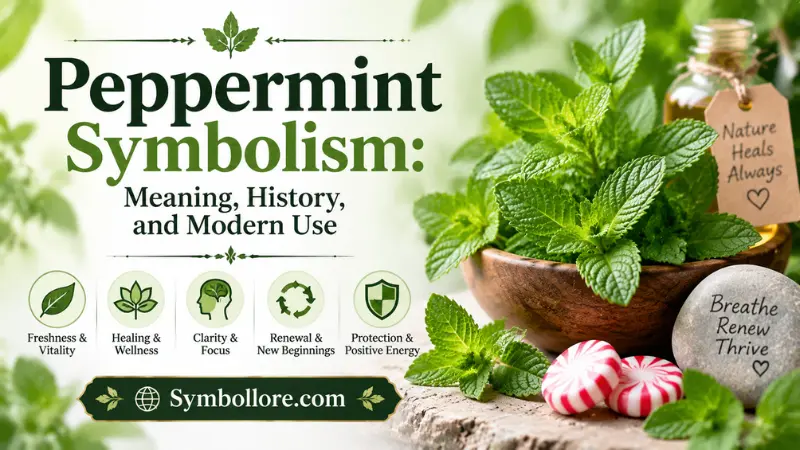
Peppermint is more than a familiar flavor found in candy canes, tea, and holiday treats. Peppermint symbolism reflects ideas of freshness, renewal, comfort, hospitality, and seasonal celebration, making the plant meaningful in both everyday life and cultural traditions.
From ancient herbal practices to modern American holiday decorations, peppermint has developed associations with cleansing, energy, and simple pleasures. Its recognizable scent, cooling taste, and connection with winter celebrations have helped it become a symbol that feels both practical and emotional.
Quick Answer
Peppermint commonly symbolizes freshness, renewal, comfort, and celebration in modern American culture, especially through holiday traditions, personal care products, and festive decorations. Historically, it has also represented healing, hospitality, and the value of natural remedies.
TL;DR
- Peppermint represents freshness, comfort, and renewal.
- Ancient cultures valued peppermint for healing uses.
- Americans connect peppermint with Christmas traditions.
- Its scent creates feelings of cleanliness and calm.
- Modern designs use peppermint for cheerful nostalgia.
What Peppermint Looks Like and Where People Encounter It
Peppermint is a hybrid mint plant with bright green leaves and a strong cooling aroma caused by its natural menthol content. Unlike many plants valued mainly for appearance, peppermint is recognized through multiple senses: its smell, taste, and refreshing sensation.
People encounter peppermint in many forms:
- Candy canes and holiday desserts
- Herbal teas and breath products
- Essential oils and candles
- Toothpaste and personal care items
- Seasonal decorations and gift packaging
Because peppermint appears in both health-related products and celebrations, its symbolism combines ideas of wellness and enjoyment.
The Core Meaning of Peppermint Symbolism Today
In the United States, peppermint most commonly represents freshness and a feeling of renewal. The plant’s cooling sensation creates an association with cleanliness, clarity, and a mental “reset.”
Several meanings are commonly connected with peppermint:
| Context | Meaning in the USA | Common Associations | Notes |
| Holidays | Joy and celebration | Candy canes, Christmas treats | Strong seasonal connection |
| Wellness | Refreshment and care | Tea, oils, remedies | Linked with soothing practices |
| Home design | Warm nostalgia | Candles, decorations | Creates a cozy atmosphere |
| Personal style | Playfulness | Colors and patterns | Often used in festive designs |
| Food culture | Comfort and tradition | Desserts and drinks | Connects generations |
Peppermint also symbolizes balance because it combines two contrasting experiences: sweetness and sharpness. Its flavor can feel comforting while its cooling effect feels energizing.
Ancient Roots and Early Symbolic Uses
Peppermint’s symbolic history is connected to the broader cultural importance of mint plants. Ancient societies valued different types of mint for practical reasons, especially cooking, medicine, and hospitality.
The ancient Greeks and Romans used mint varieties in food, bathing practices, and household traditions. Mint was associated with cleanliness because its strong scent helped freshen spaces and create a pleasant environment.
In earlier herbal traditions, mint plants represented care and restoration. People often viewed useful healing plants as signs of nature’s ability to support human well-being.
Peppermint itself became widely recognized later than many traditional mint varieties. As cultivation expanded, it gained popularity because of its stronger flavor and higher menthol content.
How Peppermint Became Connected With Healing and Wellness
One of peppermint’s strongest symbolic connections comes from its long history in traditional remedies. For generations, people used peppermint preparations for digestive comfort, soothing sensations, and aromatic purposes.
This practical use influenced its symbolic meaning. A plant associated with relief naturally became connected with:
- Care
- Recovery
- Cleanliness
- Comfort
- Physical refreshment
Today, peppermint continues to appear in wellness products because many people associate its scent with alertness and relaxation at the same time.
Modern interpretations do not mean peppermint can replace medical treatment, but the cultural association between peppermint and personal care remains strong.
Why Peppermint Became a Major American Holiday Symbol
In the United States, peppermint is strongly connected with Christmas. Candy canes, peppermint bark, and peppermint-flavored drinks have made the plant a familiar part of the holiday season.
The connection developed through the popularity of candy canes as Christmas decorations and treats. Over time, peppermint became linked with memories of family gatherings, winter celebrations, and childhood traditions.
For many Americans, peppermint represents:
- Holiday nostalgia
- Generosity through shared treats
- Warm family moments
- Seasonal excitement
Its red-and-white appearance also contributes to its holiday identity. The colors are often associated with winter, celebration, and traditional Christmas imagery.
Peppermint Symbolism in American Culture and Design
Beyond food, peppermint appears throughout American visual culture. Designers use peppermint patterns and colors in packaging, clothing, advertisements, and home decorations because they quickly communicate cheerfulness and seasonal warmth.
Peppermint imagery often creates a specific emotional response:
- A sense of childhood memories
- A connection to winter traditions
- A feeling of cleanliness and freshness
- A playful, welcoming atmosphere
Businesses frequently use peppermint themes during holiday seasons because consumers already connect the scent and appearance with positive experiences.
Cross-Cultural Meanings of Mint and Peppermint
While peppermint itself has modern global popularity, mint plants have carried symbolic meanings across many cultures.
In Mediterranean traditions, mint was connected with hospitality and household care. Offering food or drinks containing mint could represent welcome and generosity.
In some Middle Eastern and North African cultures, mint tea remains an important social tradition. The plant represents friendship, conversation, and hospitality because sharing tea is often a meaningful social activity.
These interpretations overlap with American ideas of peppermint as a symbol of comfort and connection.
The Emotional and Psychological Associations of Peppermint
Peppermint’s symbolism is strongly connected to sensory experience. Smell and taste can trigger memories, which is why peppermint often reminds people of specific seasons, places, or relationships.
Psychologically, peppermint is often associated with:
- Mental freshness
- Energy
- Clean surroundings
- Positive memories
- Seasonal happiness
A peppermint scent in a home may remind someone of winter holidays, while peppermint tea may represent a quiet moment of self-care.
The emotional meaning comes less from the plant itself and more from personal experiences built around it.
Peppermint Symbolism in Gifts, Decor, and Personal Expression
Peppermint appears in gifts and decorations because it communicates friendliness and celebration without being overly formal.
Common uses include:
- Holiday gift baskets
- Decorative candles
- Kitchen accessories
- Seasonal clothing
- Festive artwork
People may choose peppermint-inspired designs because they want to express warmth, playfulness, or appreciation for traditional celebrations.
Unlike symbols with heavy historical or religious meanings, peppermint usually carries a lighter emotional message focused on enjoyment and comfort.
Why Peppermint Appears in Tattoos and Personal Style
Peppermint tattoos are less common than symbols like flowers, animals, or celestial designs, but when people choose peppermint imagery, the meaning is often personal.
Possible interpretations include:
- Love of holiday traditions
- Appreciation for childhood memories
- Connection with cooking or baking
- Interest in herbal practices
- A reminder of freshness and change
The meaning depends heavily on the person’s experience. A peppermint design may represent a favorite season for one person and personal renewal for another.
Common Misunderstandings About Peppermint Symbolism
Because peppermint is strongly connected with holidays, some people assume its meaning is limited to Christmas. However, its symbolism existed beyond modern holiday traditions.
Peppermint also represents:
- Practical healing traditions
- Hospitality
- Cleanliness
- Refreshment
- Everyday comfort
Another misunderstanding is that symbolic meanings are fixed rules. In reality, symbols change depending on culture, personal memories, and context.
A peppermint candle in December may suggest celebration, while peppermint tea in a quiet room may suggest relaxation and care.
How Peppermint Symbolism Has Changed Over Time
Peppermint’s meaning has shifted from mainly practical use toward broader emotional and cultural associations.
Earlier interpretations focused on usefulness: medicine, food, and household freshness. Modern meanings include nostalgia, seasonal identity, and lifestyle choices.
In today’s culture, peppermint represents a blend of old and new ideas:
- Traditional herbal knowledge
- Modern wellness habits
- Holiday memories
- Everyday comfort
Its continued popularity comes from its ability to connect simple sensory experiences with personal memories.
Modern Uses of Peppermint Symbolism
Today, peppermint symbolism appears in many areas of American life.
Food and Drinks
Peppermint flavors appear in coffee drinks, desserts, chocolates, and holiday recipes. These foods often represent celebration and sharing.
Home and Lifestyle
Candles, soaps, and decorations use peppermint scents to create feelings of freshness and seasonal comfort.
Digital and Pop Culture
Online holiday content often uses peppermint imagery because people instantly recognize it as a sign of festive traditions.
Branding
Companies use peppermint themes to communicate friendliness, cleanliness, and seasonal excitement.
FAQs
What does peppermint symbolize spiritually?
Peppermint is often associated with renewal, cleansing, and restoration in spiritual interpretations. These meanings usually come from its refreshing scent and historical use as a valued plant rather than from one universal belief system.
Why is peppermint associated with Christmas?
Peppermint became linked with Christmas mainly through candy canes and holiday treats in American culture. Its red-and-white appearance and sweet flavor helped make it a recognizable part of seasonal celebrations.
Why is peppermint associated with Christmas?
Peppermint became linked with Christmas mainly through candy canes and holiday treats in American culture. Its red-and-white appearance and sweet flavor helped make it a recognizable part of seasonal celebrations.
What does a peppermint tattoo symbolize?
A peppermint tattoo may represent holiday memories, comfort, personal traditions, or a connection to natural remedies. The meaning depends on the individual’s reason for choosing the design.
Is peppermint a symbol of healing?
Peppermint is commonly associated with healing because mint plants have long been used in traditional remedies. Today, it remains culturally connected with wellness, although symbolic meaning is different from medical effectiveness.
Does peppermint have a negative symbolic meaning?
Peppermint usually has positive associations, but meanings can change depending on context. In some situations, its strong scent or sharp flavor may represent intensity or contrast rather than only comfort.
What does peppermint represent in American culture?
In the United States, peppermint represents holiday traditions, freshness, hospitality, and simple pleasures. It is especially recognized through Christmas foods, decorations, and seasonal products.
Conclusion
Peppermint represents freshness, comfort, celebration, and renewal in many modern American settings. Its meaning developed from practical uses in food and herbal traditions and expanded through holiday customs, design, and personal memories.
Whether it appears in a candy cane, a cup of tea, a candle, or a decoration, peppermint carries a familiar message of warmth and refreshment. Peppermint symbolism remains meaningful because it connects everyday experiences with feelings of care, tradition, and seasonal joy.