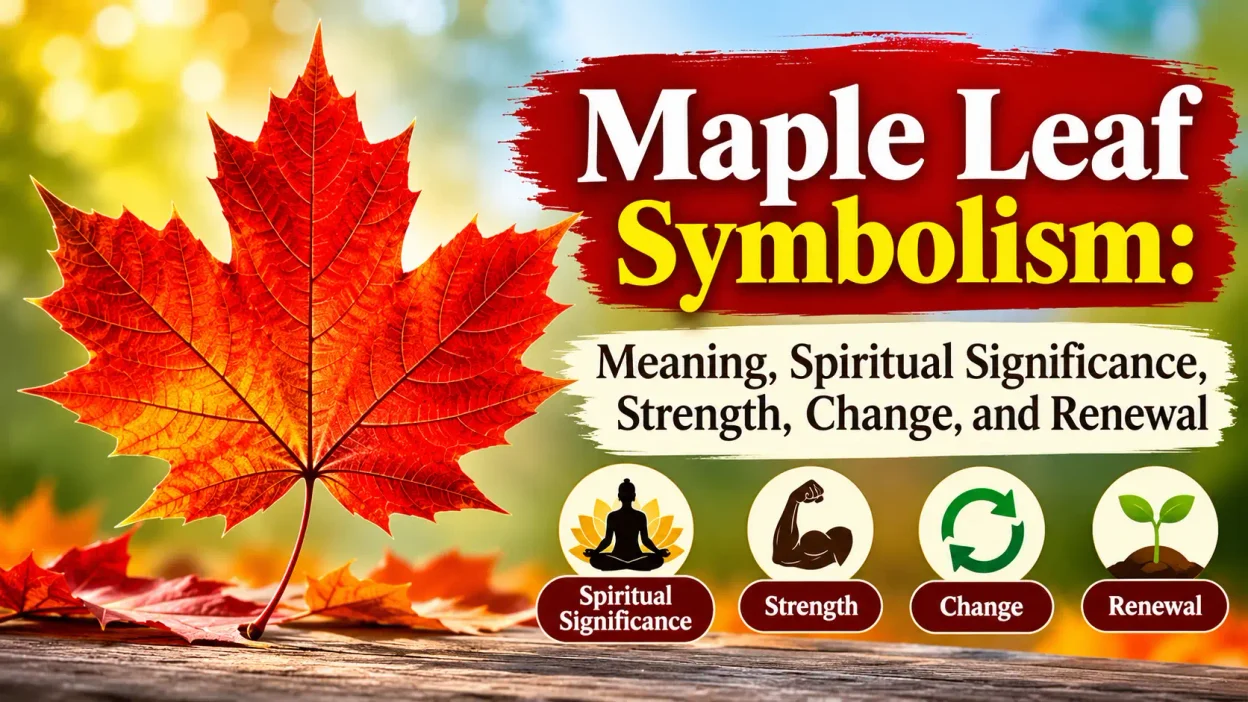
Maple leaf symbolism is closely associated with transformation, resilience, balance, abundance, and the beauty of change. Recognized for its distinctive shape and brilliant autumn colors, the maple leaf represents the natural cycles of life and the ability to adapt to new circumstances. As maple trees change from green to shades of yellow, orange, and red, their leaves offer a powerful reminder that change can be beautiful and meaningful.
Beyond its seasonal appearance, the maple leaf carries important cultural associations. It is one of Canada’s most recognizable national symbols, representing unity, identity, and national pride. In other contexts, it may symbolize generosity, longevity, harmony, and the connection between people and nature.
Spiritually, the maple leaf is often interpreted as a reminder to embrace personal growth, release what no longer serves you, and appreciate each stage of life’s journey. Its meaning can also depend on its color, appearance, cultural background, and the circumstances in which it is encountered.
In this guide, we explore maple leaf symbolism, its spiritual meaning, cultural significance, different colors, relationships, dreams, and the lessons this remarkable leaf can teach.
What Does a Maple Leaf Symbolize?
A maple leaf commonly symbolizes:
- Transformation: Accepting change and moving into a new stage of life.
- Resilience: Remaining strong through difficult circumstances.
- Balance: Finding harmony between different aspects of life.
- Abundance: Growth, prosperity, generosity, and natural richness.
- Renewal: Letting go of the past and welcoming fresh beginnings.
- Unity: Shared identity, community, and belonging.
- Longevity: Endurance, stability, and the passage of time.
- Connection with nature: Appreciating seasonal cycles and the natural world.
These meanings are not universal. A maple leaf may represent national identity in one context, seasonal beauty in another, and personal transformation in a spiritual interpretation.
Spiritual Meaning of a Maple Leaf
The spiritual meaning of a maple leaf is often connected with transformation, personal growth, balance, and the natural rhythm of life. Its changing colors and seasonal cycle make it a meaningful symbol of accepting transitions and recognizing that every stage of life has value.
In modern spiritual interpretations, encountering a maple leaf may encourage you to reflect on your journey, appreciate your progress, and remain open to new possibilities.
1. Transformation and Change
One of the strongest symbolic meanings of a maple leaf is transformation. During autumn, many maple leaves change from green to vibrant shades of yellow, orange, and red before falling from the tree.
This natural process represents the changing stages of life. Spiritually, the maple leaf may remind you that personal growth often requires letting go of old habits, beliefs, or situations.
Change does not always mean losing something valuable. Sometimes, it creates the space needed for a better beginning.
2. Strength and Resilience
Maple trees grow in different environments and experience seasonal changes throughout their lives. Their leaves are part of a natural cycle that continues through changing weather conditions.
Symbolically, this makes the maple leaf a representation of resilience and endurance.
It may encourage you to remain patient during difficult periods and remember that temporary challenges do not define your entire journey.
3. Balance and Harmony
The maple leaf’s symmetrical shape can inspire associations with balance, stability, and harmony.
Its symbolism may encourage you to find a healthy relationship between work and rest, independence and connection, or ambition and contentment.
It serves as a reminder that a fulfilling life requires attention to more than one priority.
4. Abundance and Prosperity
Maple trees are valued for their beauty, shade, timber, and sap, which can be processed into maple syrup. These practical benefits contribute to modern symbolic associations with abundance, generosity, and prosperity.
Spiritually, a maple leaf may represent appreciating the resources you have and recognizing opportunities for growth.
5. Renewal and New Beginnings
The falling of maple leaves during autumn is part of the tree’s natural seasonal cycle. New leaves emerge again when growing conditions become favorable.
This process makes the maple leaf a symbol of renewal and fresh beginnings.
It may remind you that an ending can be part of a larger cycle rather than the conclusion of your journey.
Maple Leaf Symbolism in Different Cultures
The maple leaf has different cultural meanings depending on geography, history, and tradition. Its strongest established associations are connected with Canadian identity, while other interpretations come from regional customs, art, and modern symbolism.
Maple Leaf Symbolism in Canada
The maple leaf is one of Canada’s most recognizable national symbols. It represents Canadian identity, unity, heritage, and national pride.
Its importance developed over time, particularly through its use in Canadian military insignia, official emblems, and national imagery.
The maple leaf appeared on Canadian military badges during the nineteenth century and became increasingly associated with the country’s identity. In 1965, it became the central feature of Canada’s national flag.
Today, the red maple leaf on the Canadian flag represents the country and its people. It is also widely used in sports, public institutions, official documents, and cultural celebrations.
Maple Leaf Symbolism in Japan
Maple leaves are especially admired in Japan for their autumn colors. The seasonal appreciation of autumn foliage is known as momijigari, which means viewing or appreciating autumn leaves.
Japanese maple trees, particularly those with delicate, colorful foliage, are popular in gardens and traditional landscapes.
In this setting, maple leaves can evoke:
- The beauty of seasonal change.
- The passage of time.
- Impermanence and the temporary nature of beauty.
- Reflection and appreciation of nature.
- Peaceful seasonal transitions.
Japanese autumn foliage is an important visual and cultural tradition, although the precise meaning of a maple leaf depends on the artistic or personal context.
Maple Leaf Symbolism in China
Maple trees and their autumn foliage appear in Chinese poetry, paintings, and traditional landscape imagery.
Red autumn leaves can evoke seasonal beauty, reflection, and the passage of time. Their appearance in literature and art may also be connected with travel, distance, nostalgia, and changing emotions.
These meanings depend on the particular poem, artwork, or cultural setting rather than representing one universal Chinese interpretation.
Maple Leaf Symbolism in North America
Maple trees are native to several regions of North America and have long been part of the continent’s natural landscapes.
Their leaves are associated with autumn, seasonal change, forests, and the relationship between people and nature.
Different Indigenous nations have their own relationships with maple trees, including practical and cultural traditions connected with the natural environment. These traditions should be understood within their specific communities rather than combined into a single universal Indigenous meaning.
Maple Leaf Symbolism by Color
Maple leaves change color throughout the year, making their appearance an important part of their symbolism. Different colors can represent different emotional and spiritual themes.
| Maple Leaf Color | Common Symbolic Meaning |
|---|---|
| Green | Growth, vitality, hope, and renewal |
| Red | Passion, courage, strength, and transformation |
| Orange | Creativity, enthusiasm, warmth, and change |
| Yellow | Happiness, optimism, wisdom, and clarity |
| Golden | Prosperity, success, abundance, and achievement |
| Brown | Stability, maturity, grounding, and acceptance |
Green Maple Leaf Symbolism
A green maple leaf symbolizes growth, vitality, renewal, and new opportunities.
Green leaves are associated with the active growing season, making them natural symbols of life and development.
Spiritually, a green maple leaf may encourage you to nurture your goals, develop healthy habits, and remain open to positive changes.
Red Maple Leaf Symbolism
Red maple leaves are among the most recognizable images of autumn. Their vivid color can symbolize passion, courage, energy, and transformation.
A red maple leaf may represent the strength to move forward, even when life requires difficult decisions.
In Canada, the red maple leaf also has a specific national meaning connected with identity and unity.
Orange Maple Leaf Symbolism
Orange maple leaves often symbolize enthusiasm, creativity, warmth, and personal change.
Their bright appearance can represent a period of renewed motivation or the courage to explore new opportunities.
Yellow Maple Leaf Symbolism
Yellow maple leaves are associated with optimism, happiness, wisdom, and mental clarity.
They may represent learning from experience and recognizing the positive lessons that can emerge from change.
Golden Maple Leaf Symbolism
Golden maple leaves can symbolize abundance, prosperity, achievement, and gratitude.
Their rich color may remind you to appreciate what you have accomplished and recognize the value of personal growth.
Brown Maple Leaf Symbolism
Brown maple leaves are commonly associated with maturity, stability, grounding, and acceptance.
As leaves dry and fall, they become part of the natural process that supports future growth. Symbolically, this can represent accepting endings and finding value in life experiences.
Maple Leaf Symbolism in Love and Relationships
In relationships, the maple leaf can represent lasting affection, loyalty, balance, and the ability to grow together through different stages of life.
Its seasonal transformation offers a meaningful metaphor for relationships because love also changes and develops over time.
Lasting Love and Commitment
The maple leaf may symbolize a relationship that continues through changing circumstances.
It can represent the willingness to remain supportive during both comfortable and challenging periods.
Balance and Mutual Respect
The leaf’s balanced shape can inspire ideas of equality and harmony. In relationships, it may represent the importance of listening, sharing responsibilities, and respecting one another’s needs.
Growth Together
Just as a maple tree changes through the seasons, relationships develop through shared experiences.
A maple leaf can symbolize learning together, adapting to new circumstances, and becoming stronger through mutual support.
Letting Go of the Past
Falling maple leaves can also represent releasing old disappointments and allowing relationships to move into healthier stages.
This does not necessarily mean ending a relationship. It may simply symbolize forgiveness, personal development, or leaving harmful patterns behind.
Maple Leaf Symbolism in Dreams
Dreaming about a maple leaf can have different interpretations depending on its color, condition, location, and the emotions you experience.
Dream meanings are subjective and should not be treated as predictions or guaranteed spiritual messages.
Dreaming of a Green Maple Leaf
A green maple leaf may symbolize growth, hope, and fresh opportunities.
It could reflect a period when you are developing new skills, building confidence, or beginning an important project.
Dreaming of a Red Maple Leaf
A red maple leaf may represent strong emotions, courage, passion, or an important life transition.
The dream may encourage you to acknowledge your feelings and approach changes with confidence.
Dreaming of Falling Maple Leaves
Falling maple leaves may symbolize endings, acceptance, and the natural movement of life.
You may be experiencing a transition or learning to release something that no longer fits your current circumstances.
Dreaming of a Maple Tree Full of Leaves
A healthy maple tree covered in leaves may symbolize stability, growth, abundance, and a strong support system.
It could reflect your desire for security or appreciation for the people who support you.
Dreaming of Collecting Maple Leaves
Collecting maple leaves may represent preserving memories, appreciating meaningful experiences, or recognizing personal achievements.
It can also reflect nostalgia for an earlier stage of life.
Dreaming of a Dry or Withered Maple Leaf
A dry maple leaf may symbolize exhaustion, disappointment, or the completion of a particular stage.
It may encourage you to recognize what needs attention and make room for renewal.
Maple Leaf Symbolism in Death and Remembrance
Maple leaves can represent remembrance, the passage of time, and the lasting influence of meaningful relationships.
Their seasonal cycle offers a natural metaphor for the relationship between beginnings, endings, and renewal.
In memorial settings, a maple leaf may symbolize:
- Memories of a loved one.
- Appreciation for a life well lived.
- The passage of time.
- Acceptance and emotional healing.
- The continuing influence of someone who has passed away.
The leaf’s changing colors can also represent the beauty of a life filled with different experiences and stages.
Maple leaves are not universally associated with death or mourning, but their autumn imagery can make them meaningful in personal memorial designs and artwork.
Maple Leaf Symbolism in Tattoos
A maple leaf tattoo can represent national identity, strength, transformation, resilience, and appreciation of nature.
Its meaning often depends on the design, color, and personal story behind the tattoo.
Common interpretations include:
National pride: A red maple leaf may represent Canadian heritage, identity, and belonging.
Transformation: An autumn maple leaf can symbolize accepting change and embracing a new stage of life.
Strength and resilience: The leaf may serve as a reminder to remain strong during difficult experiences.
Family and unity: A maple leaf can represent connection, shared memories, and lasting relationships.
Nature and simplicity: Some people choose maple leaf tattoos because they appreciate forests, autumn, and the natural world.
Personal growth: A changing leaf can represent learning from experience and continuing to develop.
Maple leaf tattoos are popular in both simple and detailed designs, including realistic foliage, watercolor artwork, and minimalist outlines.
Maple Leaf Symbolism in Art and Literature
Maple leaves have inspired artists, writers, and photographers because of their distinctive shape and seasonal colors.
In autumn landscapes, they often represent the beauty of nature and the temporary nature of life.
In poetry and literature, falling leaves can be used as images of memory, change, aging, nostalgia, and acceptance.
A red maple leaf may create feelings of warmth and intensity, while a golden leaf can suggest nostalgia and peaceful reflection.
In visual art, maple leaves are also used to communicate a connection with Canada, particularly through national flags, cultural emblems, and landscapes.
What Can a Maple Leaf Teach You?
The maple leaf offers several meaningful lessons that can be applied to everyday life.
Embrace Change
Maple leaves demonstrate that transformation is a natural part of life. Their changing colors remind you that different stages can bring their own beauty and opportunities.
Stay Strong During Difficult Seasons
A maple tree experiences changing weather throughout the year. Its seasonal cycle can inspire patience and resilience when circumstances become challenging.
Appreciate the Present
Autumn foliage does not last forever, which makes its beauty especially meaningful. A maple leaf can remind you to appreciate the people, opportunities, and experiences you have today.
Find Balance in Your Life
The maple leaf’s symmetrical shape can inspire reflection on balance. Make room for work, relationships, personal interests, and rest rather than allowing one area to consume everything.
Let Go When Necessary
Falling leaves are part of the natural cycle of a maple tree. Symbolically, they remind you that releasing something can be necessary for future growth.
Interesting Facts About Maple Leaves
Understanding the natural characteristics of maple leaves adds another dimension to their symbolism.
- Maple trees belong to the genus Acer.
- They are native to several regions of the Northern Hemisphere.
- Many maple species develop brilliant autumn colors.
- Maple leaves have distinctive shapes, often with several lobes and pointed edges.
- Some maple species produce sap that can be processed into maple syrup.
- The sugar maple, Acer saccharum, is particularly important in maple syrup production.
- Not all maple species have the same leaf shape or autumn color.
- The maple leaf is the central feature of Canada’s national flag.
These characteristics help explain why maple leaves are associated with natural beauty, seasonal change, abundance, and cultural identity.
Frequently Asked Questions About Maple Leaf Symbolism
1. What does a maple leaf symbolize?
A maple leaf commonly symbolizes transformation, resilience, balance, abundance, renewal, and unity. In Canada, it is also an important national symbol representing identity and pride.
2. What is the spiritual meaning of a maple leaf?
The spiritual meaning of a maple leaf is often connected with personal growth, transformation, acceptance, and balance. In modern spiritual interpretations, it may encourage you to embrace change and appreciate every stage of life.
3. What does a red maple leaf symbolize?
A red maple leaf can symbolize courage, passion, strength, and transformation. It is also an important symbol of Canadian identity and national pride.
4. What does a green maple leaf symbolize?
A green maple leaf commonly represents growth, vitality, hope, renewal, and new opportunities. It may symbolize the beginning of a positive period in life.
5. What does a maple leaf symbolize in Canada?
In Canada, the maple leaf represents national identity, unity, heritage, and pride. It became the central feature of the Canadian flag in 1965.
6. What does a maple leaf symbolize in Japan?
In Japan, maple leaves are strongly associated with autumn foliage and the tradition of momijigari, or viewing autumn leaves. They can evoke seasonal beauty, impermanence, and the passage of time.
7. What does a maple leaf mean in a dream?
A maple leaf in a dream may symbolize change, personal development, emotional reflection, or a new stage of life. Its meaning depends on the leaf’s condition, color, and the feelings associated with the dream.
8. What does a falling maple leaf symbolize?
A falling maple leaf often symbolizes endings, acceptance, transformation, and the natural cycle of life. It can remind you that letting go may create opportunities for renewal.
9. What does a maple leaf tattoo represent?
A maple leaf tattoo may represent strength, resilience, national pride, transformation, family connection, or appreciation of nature. Its meaning depends on the design and the wearer’s personal experiences.
10. Is the maple leaf a symbol of good luck?
Some people associate maple leaves with prosperity, abundance, and positive change. However, there is no universal cultural belief that a maple leaf guarantees good luck.
Conclusion
Maple leaf symbolism represents transformation, strength, resilience, balance, abundance, and renewal. Its distinctive shape and changing autumn colors make it a powerful reminder that life moves through different stages, each offering opportunities for learning and growth.
Across different contexts, the maple leaf can represent Canadian identity, Japanese appreciation of autumn, personal development, lasting relationships, and the beauty of nature. Its spiritual interpretations also encourage patience, acceptance, and the courage to move forward.
Ultimately, the maple leaf teaches an important lesson: change is not something to fear. Like the changing seasons, every stage of life has its own purpose, beauty, and opportunity for renewal.