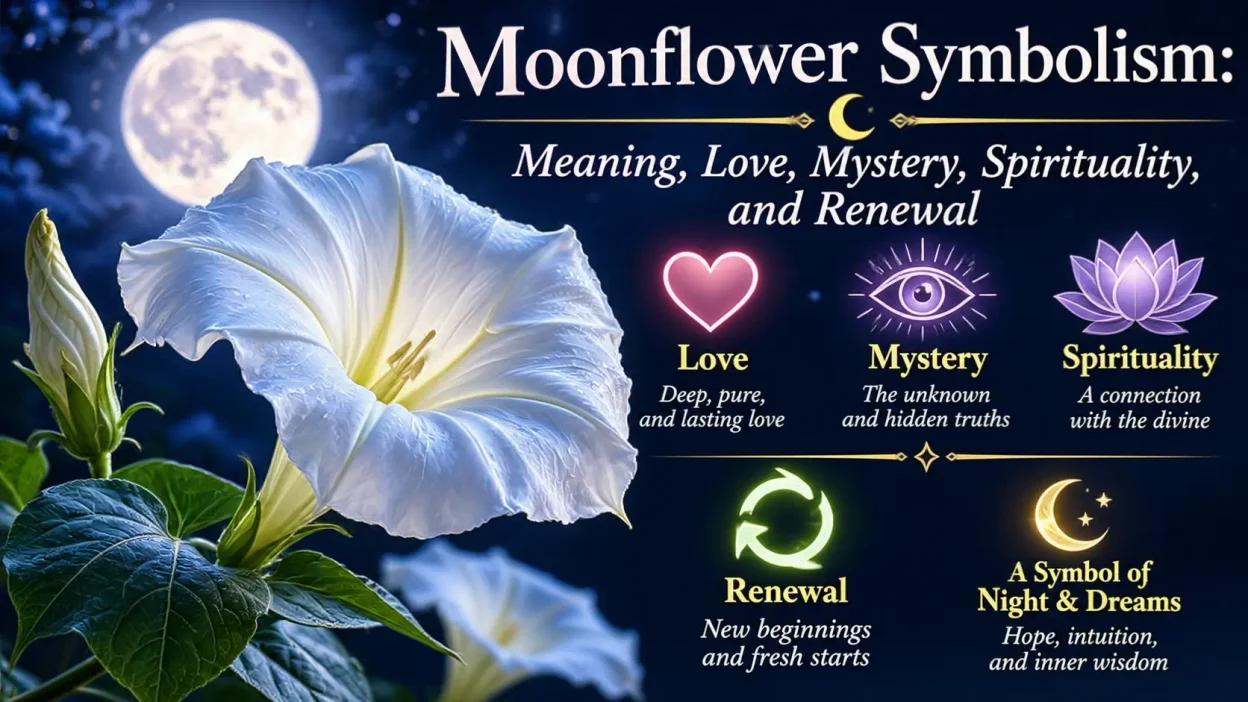
Moonflower symbolism is closely connected to mystery, love, intuition, spiritual awakening, transformation, and the beauty of things that flourish in darkness. Known for their large, elegant blooms that open in the evening or at night, moonflowers have a distinctive quality that separates them from many other garden flowers. Their nighttime blossoms create an atmosphere of wonder and make them natural symbols of hidden beauty, quiet strength, and the mysteries of life.
The moonflower’s connection with nighttime also gives it symbolic associations with intuition, dreams, emotional depth, and the unseen aspects of human experience. Its flowers open when daylight fades, reminding us that beauty does not always need bright surroundings to become visible. Sometimes, the most meaningful growth happens during quiet periods when we are learning, healing, or discovering something new about ourselves.
Depending on its cultural context and personal interpretation, the moonflower may represent romantic devotion, feminine energy, hope, renewal, or the ability to find light in difficult circumstances.
This guide explores moonflower symbolism in detail, including its spiritual meaning, cultural associations, color symbolism, romantic significance, dream interpretations, and the lessons this unusual flower can offer.
What Does the Moonflower Symbolize?
The moonflower commonly symbolizes mystery, intuition, love, transformation, spiritual growth, and hidden beauty. Its nighttime blooming habit gives it a strong connection with the moon, darkness, and the quiet experiences that are often overlooked during busy daytime life.
Some of its most recognized symbolic meanings include:
- Mystery: Its nighttime blooms represent the unknown, secrets, and the hidden aspects of existence.
- Intuition: Its connection with the night and moon can symbolize inner wisdom and the ability to trust your instincts.
- Love and romance: Its delicate appearance and evening fragrance can represent affection, devotion, and emotional intimacy.
- Transformation: Opening after sunset symbolizes change, personal development, and the discovery of new possibilities.
- Spiritual awakening: The flower can represent inner exploration and a deeper understanding of life.
- Hope: Its ability to bloom in darkness can symbolize finding beauty and possibility during difficult periods.
- Feminine energy: Its association with the moon can connect it with nurturing qualities, receptivity, and emotional depth.
- Renewal: Its recurring blooms can represent fresh opportunities and the continuous cycle of growth.
These meanings are symbolic interpretations rather than universal beliefs. The significance of a moonflower can vary according to personal experience, cultural tradition, and the particular species being discussed.
Spiritual Meaning of Moonflower
Spiritually, the moonflower is often interpreted as a symbol of intuition, emotional awareness, hidden beauty, renewal, and inner transformation. Its relationship with nighttime creates a natural connection with reflection and the parts of life that are not immediately visible.
1. Intuition and Inner Wisdom
The moonflower blooms when sunlight disappears, making it a fitting symbol of looking inward rather than relying only on what is visible.
In spiritual interpretations, it may represent intuition, inner awareness, and the ability to recognize truths that are not immediately obvious.
Its symbolism encourages people to listen to their instincts, reflect before making important decisions, and trust the knowledge gained through personal experience.
2. Mystery and the Unknown
Nighttime has long been associated with mystery, dreams, imagination, and unanswered questions. Because moonflowers open after sunset, they naturally share these symbolic associations.
A moonflower may represent the unknown parts of your journey, hidden opportunities, or experiences that require patience before their meaning becomes clear.
It reminds us that not everything needs to be understood immediately.
3. Transformation and Personal Growth
The opening of a moonflower is a striking natural event. Its petals gradually unfold as evening approaches, creating a beautiful example of change.
Symbolically, this process represents personal transformation, emotional development, and the courage to enter a new stage of life.
It may encourage you to accept change rather than resist it, especially when a new opportunity requires you to leave familiar circumstances behind.
4. Hope During Difficult Times
One of the most meaningful interpretations of moonflower symbolism is the idea that beauty can emerge in darkness.
The flower does not wait for bright daylight to open. Instead, it flourishes under nighttime conditions.
In a spiritual sense, this can represent hope, resilience, and the belief that difficult experiences do not prevent future happiness.
It may remind you that challenging periods can become opportunities for reflection and growth.
5. Emotional Healing and Peace
The moonflower’s quiet nighttime presence can symbolize emotional calmness, reflection, and the gradual process of healing.
Its symbolism may encourage you to make time for yourself, release unnecessary emotional pressure, and approach difficult feelings with patience.
6. Feminine Energy and Receptivity
Because the moon is traditionally associated with feminine symbolism in several cultural and spiritual systems, flowers connected with nighttime may also be interpreted through themes of feminine energy.
The moonflower can therefore represent nurturing, receptivity, emotional sensitivity, creativity, and the changing rhythms of life.
This is a symbolic association rather than a statement about gender or identity.
Moonflower Symbolism and the Moon
The moonflower’s name and nighttime blooming habit make its connection with lunar symbolism especially meaningful.
Across many cultures, the moon has been associated with cycles, intuition, dreams, mystery, and transformation. The moonflower shares several of these symbolic themes because its blossoms become visible after daylight fades.
1. Cycles and Change
The moon changes appearance throughout its monthly cycle, while many moonflowers open and close according to daily rhythms.
Together, these natural patterns can symbolize the changing stages of life, emotional development, and the importance of accepting transitions.
2. Intuition and Reflection
Moonlight creates a different atmosphere from sunlight. It encourages a quieter way of experiencing the world, making the moonflower a symbol of introspection and inner awareness.
3. Hidden Beauty
The moonflower becomes especially noticeable when many daytime flowers have closed. This quality can represent beauty that exists beyond immediate attention or public recognition.
4. Balance Between Light and Darkness
The moonflower can also symbolize the relationship between contrasting experiences: happiness and sadness, certainty and uncertainty, visibility and mystery.
Its message is that darkness does not always represent something negative. It can also provide space for rest, reflection, and renewal.
Moonflower Symbolism in Different Cultures
Moonflowers do not have one universal symbolic meaning across cultures. Their associations are influenced by local plants, religious traditions, folklore, and the particular species known by this name.
The term “moonflower” can refer to more than one plant. In many gardens, it describes Ipomoea alba, a tropical climbing vine with large white flowers that open at night. Other plants, including certain species of Datura, may also be called moonflowers in some regions.
This distinction matters because different plants have different histories and cultural associations.
Moonflower Symbolism in Mexico and Central America
Ipomoea alba is native to tropical regions of the Americas, including parts of Mexico and Central America.
Its large white nighttime flowers and climbing growth habit make it a striking part of tropical landscapes.
Modern symbolic interpretations often connect it with mystery, natural beauty, renewal, and the relationship between day and night. However, these interpretations should not automatically be presented as ancient or universal beliefs of Indigenous communities.
Moonflower Symbolism in Western Floral Traditions
In modern Western floral symbolism, moonflowers are often associated with mystery, romance, nighttime beauty, and quiet admiration.
Their evening fragrance and unusual blooming schedule make them appealing in moon gardens and romantic outdoor settings.
They can represent appreciating someone or something whose beauty becomes more noticeable when the world grows quiet.
Moonflower Symbolism in Japanese-Inspired Moon Gardens
The moonflower can be appreciated in garden designs that emphasize nighttime atmosphere, moonlight, and seasonal beauty.
Although it should not be confused with traditional Japanese flowers or assigned a universal Japanese religious meaning, its white blooms and evening opening make it suitable for gardens inspired by quiet reflection and the beauty of the night.
Moonflower Symbolism in Modern Spirituality
In contemporary spiritual interpretations, moonflowers are sometimes connected with intuition, feminine energy, emotional healing, dreams, and spiritual awareness.
These associations are influenced by broader lunar symbolism rather than one specific historical tradition.
They offer personal ways to understand the flower but should not be treated as established religious doctrine.
Moonflower Color Symbolism
The word moonflower is most commonly associated with the large white blooms of Ipomoea alba. However, other plants called moonflowers may have different colors.
Color symbolism can therefore help explain the meaning of particular moonflower varieties, but it should not be confused with a universal botanical classification.
| Moonflower Color | Symbolic Meaning |
|---|---|
| White | Purity, peace, mystery, and spiritual reflection |
| Pink | Tenderness, affection, romance, and emotional warmth |
| Purple | Imagination, mystery, creativity, and transformation |
| Yellow | Happiness, optimism, energy, and hope |
White Moonflower Symbolism
White is the color most strongly associated with the traditional moonflower image.
White moonflowers can symbolize:
- Purity and innocence
- Peace and tranquility
- Spiritual reflection
- Hidden beauty
- New beginnings
- Mystery and elegance
Their pale petals are especially striking against a dark evening background, reinforcing their association with quiet beauty and hope.
Pink Moonflower Symbolism
When a pink-flowered plant is described as a moonflower, its color can suggest tenderness, affection, and emotional warmth.
Pink floral symbolism is often associated with gentle love, admiration, and compassion.
Purple Moonflower Symbolism
Purple flowers can symbolize imagination, mystery, creativity, and individuality.
In modern symbolic interpretations, a purple moonflower may represent exploring the unknown, developing intuition, or embracing a distinctive personal identity.
Yellow Moonflower Symbolism
Yellow flowers commonly represent happiness, friendship, optimism, and enthusiasm.
A yellow-flowered plant called a moonflower may therefore symbolize hope, positive energy, and the ability to find joy in unexpected circumstances.
Moonflower Symbolism in Love and Relationships
The moonflower has a natural connection with romance because of its evening fragrance, delicate appearance, and nighttime blooming habit.
Its beauty is revealed as the day ends, creating a symbolic connection with quiet affection, emotional intimacy, and meaningful moments shared away from distractions.
In relationships, moonflower symbolism may represent:
- Romantic devotion: A connection built on genuine affection and emotional closeness.
- Hidden feelings: Love or admiration that has not yet been openly expressed.
- Emotional intimacy: The importance of understanding someone beyond outward appearances.
- Patience: Allowing a relationship to develop naturally rather than forcing its progress.
- Renewal: Rebuilding trust and creating a fresh beginning after difficult experiences.
- Quiet beauty: Appreciating the small, private moments that strengthen a relationship.
A moonflower can be a thoughtful symbolic gift for someone who values romance, reflection, and the beauty of meaningful connections.
Moonflower Symbolism in Dreams
Dreaming about moonflowers can have different interpretations depending on the flower’s condition, color, surroundings, and your emotions during the dream.
Because moonflowers are associated with nighttime, dreams featuring them may be interpreted through themes of mystery, intuition, hidden feelings, emotional growth, and new beginnings.
Dream symbolism is subjective and should not be treated as a prediction or guaranteed spiritual message.
Dreaming of a Blooming Moonflower
A blooming moonflower may symbolize personal growth, emotional openness, hope, or the discovery of something beautiful during a difficult period.
It may reflect a growing awareness of your abilities or a new opportunity entering your life.
Dreaming of a White Moonflower
A white moonflower may represent peace, sincerity, purity, or a desire for emotional clarity.
It could also symbolize a period of reflection in which you are trying to understand your feelings more deeply.
Dreaming of a Moonflower Opening at Night
Seeing a moonflower open after sunset may symbolize hidden potential becoming visible.
It can represent discovering your strengths, expressing feelings that you have kept private, or becoming ready for a new stage of life.
Dreaming of a Withered Moonflower
A fading moonflower may represent disappointment, emotional exhaustion, changing relationships, or the end of a particular phase.
It may encourage you to recognize what needs attention and allow yourself time to recover.
Dreaming of a Moonflower Garden
A garden full of moonflowers may symbolize emotional richness, creativity, peace, and personal development.
If the garden feels calm, it may reflect a desire for balance and security. If it feels dark or frightening, it could represent uncertainty or unresolved concerns.
Dreaming of Giving Someone a Moonflower
Giving someone a moonflower may symbolize affection, admiration, emotional honesty, or a desire to develop a deeper connection.
It could also reflect feelings that you have not yet found the right words to express.
What Does It Mean When You See a Moonflower?
Seeing a moonflower can feel unusual because its blossoms are often most noticeable after sunset. In spiritual interpretations, encountering one may represent mystery, intuition, personal growth, or the importance of appreciating quiet moments.
Possible symbolic interpretations include:
- Trust your intuition: Pay attention to your inner feelings when making decisions.
- Accept change: Allow yourself to enter a new stage of life.
- Recognize hidden beauty: Look beyond appearances and notice what is easily overlooked.
- Make time for reflection: Slow down and consider what truly matters.
- Remain hopeful: Remember that meaningful growth can happen during difficult periods.
There is no scientific evidence that seeing a moonflower is a supernatural sign. Its appearance is a natural botanical event, and any additional meaning depends on personal beliefs and interpretation.
Moonflower Symbolism and Personal Transformation
The moonflower’s nighttime blooming pattern makes it an especially meaningful symbol of transformation.
Unlike flowers that open in full sunlight, many traditional moonflowers reveal their blooms after the day has ended. This unusual rhythm can represent the idea that personal growth does not always happen in visible or predictable ways.
Its symbolism can encourage several lessons:
- Embrace your own timing: Growth does not need to follow someone else’s schedule.
- Accept uncertainty: Not every new stage begins with complete understanding.
- Recognize hidden potential: Your strengths may become clear in unexpected circumstances.
- Allow emotional change: Healing and development often require patience.
- Appreciate quiet progress: Important transformations can happen without public recognition.
The moonflower reminds us that becoming something new is not always a dramatic process. Sometimes, it happens gradually and quietly.
Moonflower Symbolism in Art and Literature
Moonflowers are visually powerful symbols in art, poetry, and creative writing because they combine the beauty of flowers with the mystery of nighttime.
Writers and artists may use them to represent:
- Unspoken love and longing
- Dreams and imagination
- Hidden identities
- Mystery and uncertainty
- Beauty in darkness
- Emotional transformation
- The passage of time
A moonflower appearing in a nighttime scene can create an atmosphere of romance, reflection, or suspense. Its white petals may stand out against darkness, suggesting hope or something valuable emerging from an uncertain situation.
In literature, the flower can also represent a character whose strengths or true personality are not immediately recognized.
Moonflower Symbolism vs. Moon Symbolism
Moonflower symbolism and moon symbolism are closely related, but they are not identical.
Moonflower symbolism focuses on the flower’s nighttime blooms, fragrance, natural growth, and associations with mystery, romance, and renewal.
Moon symbolism is broader and often includes cycles, time, intuition, emotions, femininity, and the changing nature of life.
Their shared connection with nighttime creates overlapping meanings, especially around reflection, transformation, and hidden beauty.
Important Botanical Note: What Is a Moonflower?
The name moonflower can refer to several different plants, so understanding the botanical distinction helps prevent confusion.
One of the best-known moonflowers is Ipomoea alba, a climbing vine in the morning glory family. It produces large, fragrant white flowers that typically open in the evening and close after sunrise.
Other plants, including certain Datura species, are also sometimes called moonflowers. These are botanically different plants with different growth habits and characteristics.
Safety note: Some plants commonly called moonflowers, particularly Datura species, are highly poisonous if ingested. Never eat an unidentified moonflower or use it as a home remedy. Identify the plant correctly before handling or growing it around children and pets.
Frequently Asked Questions About Moonflower Symbolism
1. What does a moonflower symbolize?
A moonflower commonly symbolizes mystery, intuition, love, transformation, hidden beauty, hope, and spiritual growth. Its nighttime blooms give it a special connection with the moon and the unknown.
2. What is the spiritual meaning of a moonflower?
Spiritually, a moonflower may represent inner wisdom, emotional healing, personal transformation, reflection, and the ability to find beauty during difficult times. These meanings are modern symbolic interpretations rather than universal religious beliefs.
3. Why is the moonflower associated with mystery?
The moonflower is associated with mystery because many well-known varieties open after sunset. Its unusual blooming schedule connects it with darkness, dreams, intuition, and the hidden aspects of life.
4. What does a white moonflower symbolize?
A white moonflower commonly represents purity, peace, innocence, elegance, spiritual reflection, and hidden beauty. Its pale petals are especially striking in the darkness of evening.
5. What does a moonflower symbolize in love?
In love, the moonflower can symbolize romantic devotion, tenderness, emotional intimacy, patience, and unspoken affection. It may represent a relationship that grows through quiet and meaningful moments.
6. What does dreaming about moonflowers mean?
Dreaming about moonflowers may symbolize personal growth, hidden feelings, intuition, hope, or emotional transformation. The interpretation depends on the flower’s condition and the dreamer’s personal experiences.
7. Is the moonflower a symbol of new beginnings?
Yes. In modern floral symbolism, the moonflower can represent new beginnings because its blooms open as darkness arrives. This natural process can symbolize fresh opportunities, personal development, and renewed hope.
8. Does the moonflower represent feminine energy?
In some modern spiritual interpretations, the moonflower is connected with feminine energy because of its association with the moon. It may represent intuition, receptivity, nurturing, and emotional depth. These associations are symbolic rather than universal.
9. What does it mean when a moonflower blooms at night?
Botanically, nighttime blooming is a natural adaptation that can help certain flowers attract nocturnal pollinators. Symbolically, it may represent hidden beauty, transformation, intuition, and the idea that growth can happen outside the spotlight.
10. Is moonflower a symbol of hope?
The moonflower can symbolize hope because it opens during darkness and displays its beauty when many other flowers have closed. It can serve as a reminder that difficult periods do not prevent new opportunities or personal growth.
11. What is the difference between moonflower and morning glory?
Moonflower commonly refers to Ipomoea alba, a climbing vine that opens its flowers at night. Morning glory usually refers to related plants whose flowers open during the day. Both belong to the morning glory family, but their blooming schedules and symbolic associations differ.
12. Is moonflower poisonous?
Some plants called moonflowers are poisonous, particularly certain Datura species. The commonly grown Ipomoea alba is a different plant, but no unidentified moonflower should be eaten or used medicinally. Always confirm the botanical identity.
Conclusion: The Deeper Meaning of Moonflower Symbolism
Moonflower symbolism brings together mystery, love, intuition, transformation, hope, and hidden beauty. Its nighttime blooms create a powerful image of growth that does not depend on bright surroundings or public attention. Instead, the flower reminds us that meaningful change can happen quietly, often when we least expect it.
Its connection with the moon adds further layers of symbolism, including reflection, emotional awareness, natural cycles, and the acceptance of change. In romantic interpretations, it represents affection, patience, and meaningful connections. In spiritual interpretations, it can encourage inner wisdom, self-discovery, and the courage to move through uncertain periods.
Although moonflowers do not have one universal meaning across cultures, their distinctive beauty makes them powerful symbols in modern floral interpretation, art, and personal reflection.
Ultimately, the moonflower teaches us that darkness does not always mean an absence of beauty. Sometimes, it is simply the setting in which something extraordinary begins to bloom. Its symbolism encourages patience, trust in your own journey, and appreciation for the quiet transformations that shape your life.