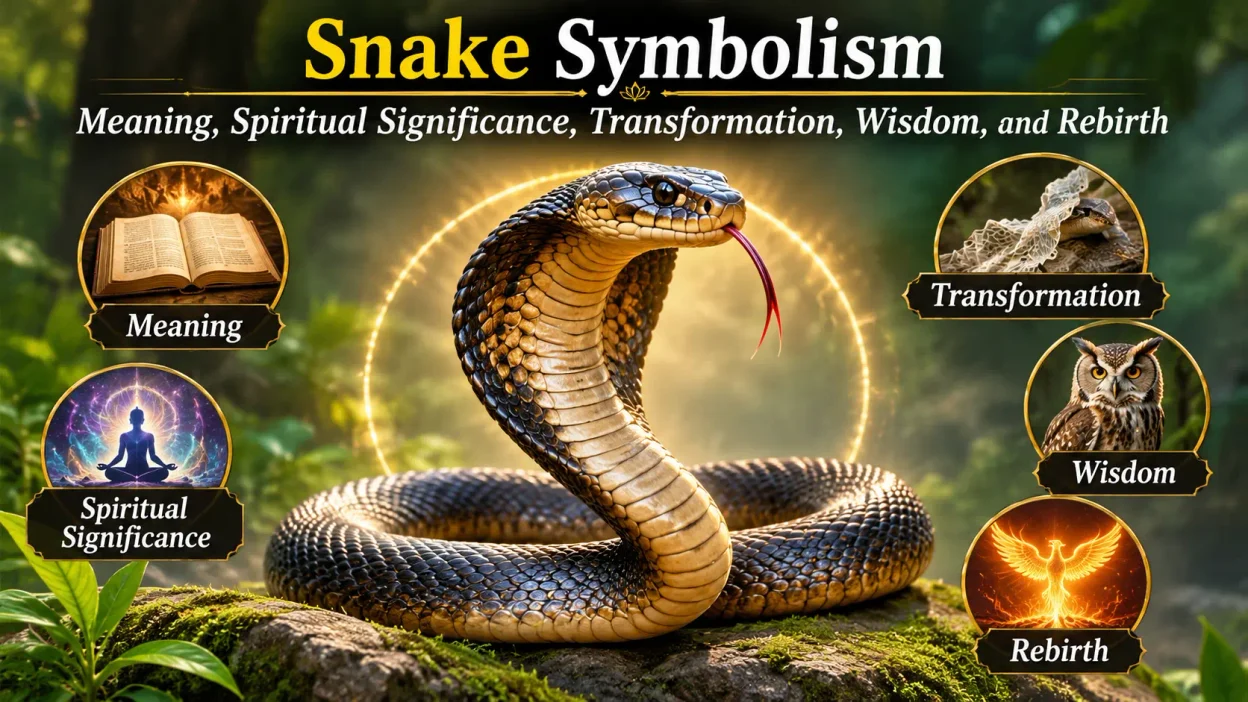
Snakes have fascinated and frightened people for thousands of years. Their mysterious movements, ability to shed their skin, and powerful presence in nature have made them important symbols in myths, religions, literature, and spiritual traditions. Across different cultures, snake symbolism can represent transformation, renewal, wisdom, healing, protection, temptation, danger, and hidden knowledge.
A snake may appear as a symbol of life and rebirth because it sheds its old skin, revealing a fresh layer beneath. In other traditions, it represents danger, deception, or the unpredictable forces of nature. Its meaning often depends on the cultural setting, the type of snake, and the circumstances in which it appears.
Whether a snake is encountered in a dream, depicted in ancient artwork, or used as a spiritual symbol, it carries layers of meaning that go far beyond its physical appearance.
What Does a Snake Symbolize?
Snake symbolism is commonly associated with transformation, rebirth, wisdom, healing, protection, temptation, and hidden power. Because snakes shed their skin, they are frequently connected with personal growth, renewal, and leaving the past behind.
However, snakes do not have one universal meaning. Some traditions view them as sacred guardians or symbols of divine knowledge, while others associate them with danger, deception, and temptation.
Here are some of the most common symbolic meanings of snakes:
- Transformation: Shedding skin represents change, personal growth, and renewal.
- Rebirth: Snakes can symbolize fresh beginnings and the continuous cycle of life.
- Wisdom: Their mysterious nature has connected them with hidden knowledge and ancient understanding.
- Healing: Snakes appear in several historical healing traditions and medical symbols.
- Protection: In some cultures, snakes serve as guardians of sacred places, treasures, or spiritual knowledge.
- Temptation: Biblical and literary traditions sometimes associate snakes with deception and temptation.
- Danger: Their venomous abilities can represent threats, fear, and hidden risks.
- Life force: Their movement and connection with the natural world can symbolize vitality and primal energy.
Spiritual Meaning of Snakes
The spiritual meaning of snakes varies across belief systems, but transformation and renewal are among their most recognizable associations.
A snake’s ability to shed its skin provides a natural image of releasing what is no longer needed. Spiritually, people may interpret this process as letting go of outdated beliefs, emotional burdens, unhealthy habits, or circumstances that prevent personal development.
In modern spiritual interpretations, a snake may also represent:
- Awakening to a new stage of life.
- Becoming more aware of personal strengths.
- Recognizing hidden fears or emotions.
- Developing patience and self-understanding.
- Embracing change rather than resisting it.
- Reconnecting with instinct and intuition.
Some contemporary spiritual traditions associate snakes with kundalini energy, often described as a dormant spiritual energy represented by a coiled serpent. This idea comes from particular Hindu and yogic traditions and should not be treated as a universal belief about snakes.
Ultimately, a snake’s spiritual meaning depends on the tradition and personal interpretation through which it is understood.
Snake Symbolism in Different Cultures
Snakes appear in the mythology, art, and religious traditions of societies around the world. Their symbolic meanings can be remarkably different, ranging from sacred wisdom to chaos and danger.
1. Ancient Egyptian Snake Symbolism
In ancient Egypt, snakes could represent both protection and dangerous supernatural power.
One of the best-known serpent symbols was the uraeus, a rearing cobra worn on the crowns of Egyptian rulers. It was associated with royal authority and divine protection. The cobra was also connected with the goddess Wadjet, a protective deity of Lower Egypt.
Another important serpent figure was Apep, also known as Apophis. In Egyptian mythology, Apep represented chaos and threatened the sun god Ra during his nightly journey through the underworld.
These contrasting figures show that snakes could symbolize protection and order as well as destruction and chaos.
2. Greek Snake Symbolism
In ancient Greek mythology, snakes were connected with healing, wisdom, renewal, and divine power.
The god Asclepius, associated with medicine and healing, was commonly represented with a staff around which a serpent was coiled. This image became an enduring symbol of medicine.
Snakes also appeared in stories involving prophecy, transformation, and divine punishment. Their association with Asclepius reflects the ancient belief that serpents possessed mysterious qualities connected with health and renewal.
3. Hindu Snake Symbolism
Snakes hold an important place in Hindu mythology and religious imagery. Serpents known as nagas are often portrayed as powerful supernatural beings associated with water, fertility, protection, and sacred places.
Lord Shiva is frequently depicted with a serpent around his neck. This imagery is interpreted in different ways, including mastery over fear, control of destructive forces, and spiritual power.
Lord Vishnu is traditionally shown resting on Shesha, a divine serpent associated with cosmic existence and the preservation of the universe.
Naga traditions are diverse, and their meanings differ across Hindu texts, regional practices, and local communities.
4. Snake Symbolism in Christianity
In Christian tradition, snakes often carry associations with temptation, deception, and sin.
The most familiar example appears in the Book of Genesis, where a serpent tempts Eve to eat fruit from the tree of the knowledge of good and evil. The passage establishes a powerful association between the serpent and disobedience, temptation, and humanity’s loss of innocence.
However, biblical serpent imagery is not entirely negative. In Numbers 21, Moses raises a bronze serpent so that people bitten by snakes can look at it and live. Jesus later refers to this event in John 3:14–15.
The Gospel of Matthew also uses serpent imagery positively when Jesus tells his followers to be wise as serpents and innocent as doves.
These passages demonstrate that biblical snake symbolism can include wisdom and healing as well as temptation and danger.
5. Snake Symbolism in Ancient Mesoamerican Cultures
Serpents played significant roles in the religious art and mythology of several ancient Mesoamerican civilizations.
One famous example is Quetzalcoatl, the Feathered Serpent, an important deity in different Mesoamerican traditions. The figure combines serpent imagery with feathers, connecting earthly and celestial qualities in complex religious and cultural symbolism.
The Feathered Serpent was associated with different aspects of creation, knowledge, rulership, and sacred power, depending on the civilization and historical period.
It is important not to treat all Mesoamerican cultures as having identical beliefs. Their serpent traditions developed in distinct historical and regional contexts.
6. Snake Symbolism in Chinese Culture
In Chinese culture, snakes have several symbolic associations, including intelligence, mystery, transformation, and good fortune.
The snake is one of the twelve animals of the Chinese zodiac. People born in the Year of the Snake are traditionally associated with qualities such as wisdom, elegance, careful observation, and strategic thinking.
Snakes can also represent hidden potential and the ability to move through difficult circumstances with patience. Their meanings vary across folklore, zodiac interpretations, and regional traditions.
Snake Symbolism in Dreams
Dreams about snakes can feel powerful because these animals often trigger strong emotional reactions. Their meaning depends on the dream’s details, the dreamer’s feelings, and personal experiences.
There is no scientifically established universal meaning for dreaming about snakes. However, common psychological and symbolic interpretations include fear, change, uncertainty, hidden concerns, and personal growth.
Here are several common snake dreams and their possible interpretations.
Dreaming of a Snake
Seeing a snake in a dream may reflect something that feels uncertain, threatening, or difficult to understand. It may also symbolize a period of change or an issue that requires attention.
The emotional atmosphere of the dream can provide useful context. A peaceful encounter may feel very different from a dream involving an aggressive snake.
Dreaming of a Snake Biting You
A snake bite in a dream may symbolize emotional pain, conflict, betrayal, or a problem that feels impossible to ignore.
Some interpretations view the bite as a wake-up call, encouraging the dreamer to recognize an uncomfortable situation. However, it should not be treated as a prediction that something bad will happen.
Dreaming of a Snake Shedding Its Skin
A snake shedding its skin is one of the clearest images of transformation and renewal.
This dream may reflect a desire to move beyond an old identity, release an unhealthy habit, or begin a new chapter. It can also symbolize personal development after a challenging experience.
Dreaming of a Black Snake
A black snake may symbolize mystery, fear, uncertainty, or hidden emotions. In some modern interpretations, it represents confronting something that has been ignored.
Its meaning depends heavily on the dreamer’s associations with the color black and the snake itself.
Dreaming of a White Snake
A white snake is sometimes interpreted as a symbol of clarity, renewal, peace, or spiritual reflection.
In other contexts, it may represent something unfamiliar or difficult to understand. White snake symbolism varies considerably between cultures and should not be assigned one fixed meaning.
Dreaming of a Snake Chasing You
Being chased by a snake may reflect avoidance, stress, or an unresolved concern. The dream could symbolize a situation the dreamer feels unprepared to confront.
Rather than predicting danger, it may provide an opportunity to reflect on what feels overwhelming in waking life.
Different Snake Colors and Their Symbolic Meanings
Snake colors can add another layer to their symbolic interpretation. In folklore, literature, and modern spiritual discussions, different colors are often connected with particular emotions and ideas.
| Snake Color | Common Symbolic Associations |
|---|---|
| Black snake | Mystery, fear, hidden emotions, and the unknown |
| White snake | Purity, clarity, renewal, and spiritual reflection |
| Green snake | Growth, nature, healing, and renewal |
| Red snake | Passion, danger, intensity, and strong emotions |
| Yellow snake | Caution, awareness, intelligence, and energy |
| Golden snake | Wealth, transformation, power, and sacred value |
| Blue snake | Calmness, communication, mystery, and intuition |
| Brown snake | Grounding, stability, nature, and practicality |
These associations are interpretive rather than universal. A snake’s actual color may also have biological significance, such as camouflage or warning coloration.
Symbolism of Different Types of Snakes
Different snake species have their own physical characteristics, habitats, and cultural associations. These differences can influence how people interpret them symbolically.
1. Cobra Symbolism
<PRIVATE_PERSON> Cobras are often associated with authority, protection, danger, and power. Their raised posture and distinctive hood make them recognizable symbols in ancient Egyptian and South Asian art.
In Egyptian royal imagery, the cobra represented divine protection and kingship. In Hindu traditions, cobras also appear in sacred imagery and naga-related stories.
2. Python Symbolism
Pythons are large constrictors that capture prey through powerful coils. Symbolically, they may represent strength, patience, control, and the ability to overcome challenges.
Their powerful bodies and hunting methods can also make them symbols of overwhelming forces or situations that feel difficult to escape.
3. Rattlesnake Symbolism
Rattlesnakes are known for their distinctive warning rattle. This characteristic makes them natural symbols of caution, boundaries, awareness, and self-protection.
Their warning behavior can represent the importance of recognizing danger before it becomes unavoidable.
4. Viper Symbolism
Vipers are often associated with hidden danger, deception, and sudden consequences because many species possess venomous bites.
In literature and folklore, their image can represent threats that are difficult to recognize until it is too late.
5. Garden Snake Symbolism
Small, harmless garden snakes are sometimes interpreted as symbols of adaptability, balance, and connection with nature.
Because many species help control insect and rodent populations, they can also represent the importance of less noticeable contributions to an ecosystem.
Snake Symbolism in Love and Relationships
In love and relationships, snake symbolism can have both positive and negative interpretations.
On the positive side, snakes may represent transformation, renewal, passion, and the ability to grow through changing circumstances. A relationship may evolve as two people learn to understand each other more deeply.
On the negative side, snakes can symbolize jealousy, dishonesty, manipulation, or a lack of trust. These associations are especially common in stories where serpents represent deception.
A snake in relationship symbolism may therefore encourage reflection on questions such as:
- Is the relationship helping both people grow?
- Are trust and honesty present?
- Are old emotional patterns affecting the connection?
- Is it time to establish healthier boundaries?
A snake does not automatically indicate betrayal or relationship problems. Its meaning depends on the context in which it appears.
Snake Symbolism in Healing and Medicine
One of the most recognizable uses of snake symbolism is in medicine.
The Rod of Asclepius, featuring a single serpent wrapped around a staff, is an ancient Greek symbol associated with healing and medicine. It remains an important medical emblem today.
The serpent’s connection with healing may relate partly to its ability to shed its skin, which offers a visible metaphor for renewal and restoration.
Another symbol, the caduceus, features two serpents wrapped around a staff with wings. It is associated with Hermes in Greek mythology and is sometimes used in medical contexts, particularly in the United States. However, it is historically distinct from the Rod of Asclepius.
These symbols demonstrate how snakes can represent healing and restoration despite their association with venom and danger.
Snake Symbolism in Literature and Mythology
Snakes have long been used in storytelling to represent complex human experiences and moral questions.
Their ability to move quietly, hide in different environments, and strike unexpectedly makes them effective symbols of secrecy, danger, and deception. At the same time, their skin-shedding process provides a natural metaphor for transformation and rebirth.
In mythology, serpents may guard sacred knowledge, protect treasures, challenge heroes, or represent powerful forces of nature.
In literature, a snake may symbolize:
- Temptation and moral conflict.
- Hidden threats and betrayal.
- Wisdom and forbidden knowledge.
- Renewal and personal transformation.
- The struggle between good and evil.
- The relationship between humanity and nature.
Writers often use snakes because their symbolic meanings can change depending on the story. A serpent may be a villain in one narrative and a guardian or source of wisdom in another.
Snake Symbolism and Personal Transformation
The shedding of a snake’s skin is one of the strongest natural images of transformation. As a snake grows, it periodically sheds its outer skin, allowing a new layer to emerge.
This process has inspired symbolic interpretations about personal change and renewal.
A snake can represent the courage to leave behind:
- Outdated beliefs and habits.
- Unhealthy relationships.
- Limiting fears and expectations.
- Past mistakes and regrets.
- Circumstances that prevent growth.
The symbolism is not about becoming an entirely different person. Instead, it can represent developing a stronger understanding of yourself while releasing what no longer supports your progress.
For this reason, snakes frequently appear in discussions of personal growth, resilience, and new beginnings.
Is Snake Symbolism Positive or Negative?
Snake symbolism can be positive, negative, or neutral depending on the culture, story, and situation.
| Positive Symbolism | Negative Symbolism |
|---|---|
| Transformation | Deception |
| Wisdom | Temptation |
| Healing | Danger |
| Protection | Betrayal |
| Renewal | Fear |
| Spiritual awareness | Hidden threats |
| Adaptability | Manipulation |
This contrast is what makes snake symbolism especially interesting. Snakes are neither universally good nor universally evil in symbolic traditions. They represent powerful natural qualities that people interpret in different ways.
Why Are Snakes Powerful Symbols?
Snakes have become powerful symbols because their physical characteristics invite meaningful interpretations.
Shedding skin: Their natural renewal process provides a strong metaphor for transformation and rebirth.
Venom: Venomous species can represent danger, destructive power, and the consequences of carelessness.
Movement: Their ability to move quietly and navigate narrow spaces can suggest adaptability, secrecy, and awareness.
Predatory behavior: Their hunting methods can symbolize patience, instinct, and focused energy.
Ancient presence: Snakes appear in myths and religious traditions across many societies, giving them a long and complex symbolic history.
Together, these characteristics help explain why snakes remain important symbols in art, religion, folklore, psychology, and popular culture.
Frequently Asked Questions About Snake Symbolism
1. What is the main meaning of snake symbolism?
Snake symbolism is commonly associated with transformation, rebirth, wisdom, healing, protection, temptation, and danger. Its meaning depends on the cultural and personal context.
2. What does a snake symbolize spiritually?
Spiritually, snakes may represent renewal, personal growth, hidden wisdom, instinct, and transformation. Some modern spiritual traditions also connect them with awakening and kundalini energy.
3. Are snakes a symbol of good luck?
In certain cultural traditions, snakes are associated with good fortune, wisdom, protection, or prosperity. In others, they represent danger or misfortune. Their association with luck is not universal.
4. What does a snake symbolize in Christianity?
In Christianity, the serpent in Genesis is strongly associated with temptation and deception. However, other biblical passages use serpent imagery in connection with healing and wisdom, giving the symbol a more complex meaning.
5. What does a snake symbolize in a dream?
A snake in a dream may reflect fear, uncertainty, hidden concerns, change, or personal transformation. Dream meanings are subjective and are not reliable predictions of future events.
6. What does a snake shedding its skin symbolize?
A snake shedding its skin commonly symbolizes renewal, rebirth, personal development, and leaving the past behind. It is one of the strongest natural metaphors for transformation.
7. What does a black snake symbolize?
In modern symbolic interpretations, a black snake may represent mystery, hidden emotions, fear, uncertainty, or the unknown. Its meaning depends on the context and cultural associations.
8. What does a white snake symbolize?
A white snake is sometimes associated with purity, clarity, renewal, and spiritual reflection. However, its interpretation differs across cultural traditions and personal beliefs.
9. What does a snake symbolize in love?
In relationships, snakes may symbolize passion, transformation, and growth. They can also represent jealousy, dishonesty, or mistrust in stories and symbolic interpretations.
10. Are snakes symbols of healing?
Yes. Snakes are associated with healing in ancient Greek tradition through the Rod of Asclepius, which features a serpent wrapped around a staff. This symbol remains widely recognized in medicine.
Conclusion: The Deeper Meaning of Snake Symbolism
Snake symbolism is rich, complex, and deeply connected to human experiences. Across cultures and historical periods, snakes have represented transformation, wisdom, healing, protection, temptation, danger, and the mysteries of life.
Their ability to shed their skin makes them especially powerful symbols of renewal and personal growth. Their venom and secretive movements, however, have also connected them with fear, deception, and hidden threats. Religious traditions and ancient myths add further layers, presenting serpents as divine guardians, sources of knowledge, or symbols of moral struggle.
Ultimately, the meaning of a snake depends on the context in which it appears. It may represent the need to embrace change, recognize hidden challenges, develop wisdom, or find strength during difficult periods. More than simply a symbol of good or evil, the snake reflects the complicated relationship between danger, renewal, instinct, and transformation.