A dream catcher is a beautiful handmade object traditionally associated with protection, dreams, and spiritual well-being. Recognized by its circular frame, woven web, hanging feathers, and decorative beads, it has become one of the most recognizable symbols connected with Native American culture. Today, dream catchers appear in homes, bedrooms, jewelry, artwork, and spiritual decorations around the world.
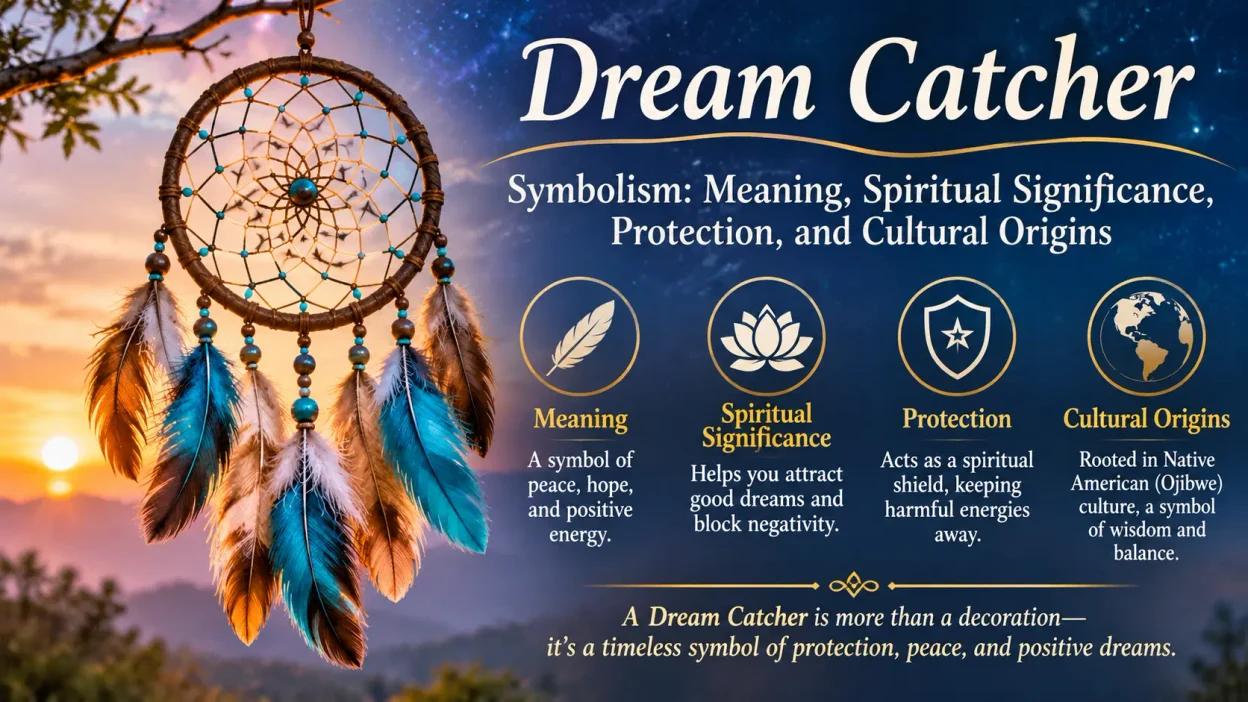
Dream catcher symbolism is commonly associated with protection, positive energy, peaceful sleep, spiritual connection, and the separation of good dreams from bad dreams. According to a well-known Ojibwe tradition, a dream catcher helps filter dreams, allowing good dreams to pass through while harmful dreams become caught in its web.
However, dream catchers have a deeper cultural history than their modern decorative appearance suggests. Their traditional meanings are connected with Indigenous storytelling, family protection, cultural identity, and the importance of preserving spiritual traditions.
But what does a dream catcher symbolize spiritually? What do its web, feathers, beads, and colors mean? And is there a difference between traditional Native American dream catchers and modern decorative versions?
This guide explores dream catcher symbolism, its historical origins, spiritual significance, cultural importance, design elements, and modern interpretations.
What Does a Dream Catcher Symbolize?
A dream catcher traditionally symbolizes protection, peaceful dreams, and the filtering of harmful influences. Its circular frame and woven web are associated with the traditional belief that dreams and spiritual influences can be guided or filtered during sleep.
In modern symbolic interpretations, a dream catcher may represent:
- Protection: A symbolic barrier against harmful dreams and negative influences.
- Peaceful Sleep: The desire for rest, comfort, and emotional calm.
- Positive Energy: An invitation to focus on hope and uplifting experiences.
- Spiritual Connection: A connection with traditional beliefs and the unseen world.
- Guidance: The importance of direction, wisdom, and awareness.
- Family Protection: Love, care, and the desire to keep loved ones safe.
- Cultural Identity: A connection with Indigenous heritage and traditions.
- Balance: The relationship between positive and negative experiences.
The traditional meaning is rooted especially in Ojibwe cultural history, while many additional interpretations have developed through modern spiritual and decorative uses.
Spiritual Meaning of Dream Catchers
In traditional and modern interpretations, dream catchers are associated with protection, peaceful sleep, guidance, and spiritual awareness.
Their symbolism comes from the belief that the woven web can filter dreams and influences during the night. Although this is a cultural and spiritual belief rather than a scientifically established function, it remains meaningful to people who value the tradition.
1. Protection From Negative Dreams
The most familiar meaning of a dream catcher is protection from bad dreams.
According to a widely shared Ojibwe tradition, the web catches harmful dreams or negative influences while allowing good dreams to pass through its openings.
The captured negative dreams are traditionally believed to disappear with the morning light.
This symbolism represents:
- Protection during sleep.
- Peace of mind.
- Emotional comfort.
- Safety from disturbing influences.
- The desire for restful nights.
For many people, a dream catcher serves as a comforting reminder of protection and care.
2. Positive Energy and Hope
Dream catchers are often associated with positivity because of their traditional connection with filtering harmful dreams.
In modern spiritual interpretations, they may represent the intention to welcome hope, happiness, and peaceful experiences into everyday life.
They can serve as reminders to focus on constructive thoughts, maintain optimism, and create a peaceful environment.
3. Spiritual Guidance
The dream catcher is sometimes interpreted as a symbol of guidance because it is traditionally connected with dreams.
Dreams have held spiritual importance in many cultures, and people have often viewed them as experiences that can encourage reflection, provide insight, or inspire personal decisions.
In modern interpretations, a dream catcher may represent the desire to understand your inner thoughts and become more aware of your personal journey.
4. Balance Between Good and Bad Experiences
The woven web provides a powerful visual metaphor for filtering experiences.
Its openings and connected threads can represent the idea that life contains both positive and negative influences.
Symbolically, the dream catcher may encourage people to:
- Focus on positive experiences.
- Learn from difficult moments.
- Release unnecessary fears.
- Maintain emotional balance.
- Protect their peace of mind.
This interpretation extends beyond sleep and connects the dream catcher with everyday emotional well-being.
5. Love and Family Protection
Dream catchers are often given as gifts to children, family members, and loved ones.
Their traditional protective associations make them meaningful symbols of care, affection, and the desire to keep someone safe.
In this context, a dream catcher can represent:
- Parental love.
- Family connection.
- Emotional support.
- Care for children.
- Good wishes for someone starting a new chapter.
A dream catcher placed in a child’s bedroom may symbolize the family’s wish for peaceful sleep and comfort.
History and Cultural Origins of Dream Catchers
Dream catchers are strongly associated with the Ojibwe people, also known as the Anishinaabe. Their traditional origins are connected with Indigenous storytelling, family life, and spiritual beliefs.
Understanding this history is important because dream catchers are not simply decorative objects. They have cultural significance within the communities that developed and preserved the tradition.
1. Dream Catchers in Ojibwe Tradition
The dream catcher is most commonly traced to Ojibwe cultural traditions.
Traditionally, it was made using a circular frame, often formed from willow, with a web woven inside it. Some designs included feathers and beads.
A well-known story connects the tradition with Asibikaashi, often translated as Spider Woman.
In Ojibwe storytelling, Asibikaashi cared for children and protected people. As the Ojibwe people spread across different regions, it became difficult for her to reach everyone. Women began making protective web-like objects for children as a way of maintaining this connection.
The story is shared in different versions, and details can vary among tellers and communities.
2. The Role of the Spider Web
The woven web is one of the most important parts of a traditional dream catcher.
Its design is commonly associated with the filtering of dreams and influences.
The web can symbolize:
- Protection.
- Connection.
- Guidance.
- The relationship between different parts of life.
- The importance of family and community.
Its circular structure and woven threads also reflect the craftsmanship involved in traditional designs.
3. The Spread of Dream Catchers
During the twentieth century, dream catchers became more widely known beyond Ojibwe communities.
They spread through Indigenous cultural exchange, intertribal connections, tourism, and the wider Native American cultural revival.
As their popularity increased, dream catchers began appearing in commercial products, home decorations, and jewelry.
However, their widespread popularity also raised concerns about cultural appropriation, inaccurate historical claims, and the commercial use of Indigenous traditions without proper acknowledgment.
4. Dream Catchers in Modern Culture
Today, dream catchers are used as decorative and symbolic objects around the world.
People may associate them with:
- Peaceful sleep.
- Positive intentions.
- Personal protection.
- Spirituality.
- Creativity.
- Cultural appreciation.
Modern designs may use different materials, colors, shapes, and decorations. However, not every commercially produced dream catcher follows traditional Ojibwe craftsmanship or cultural practices.
What Do the Different Parts of a Dream Catcher Symbolize?
A dream catcher’s design contains several recognizable elements. Each part can carry traditional or modern symbolic associations.
1. The Circular Hoop
The circular frame is one of the most important features of a dream catcher.
In many Indigenous symbolic traditions, circles can represent cycles, continuity, relationships, and the interconnectedness of life.
In dream catcher interpretations, the hoop may symbolize:
- The cycle of life.
- Unity and connection.
- Wholeness.
- Continuity.
- The natural world.
Traditionally, the hoop was often made from willow, although modern designs use many different materials.
2. The Woven Web
The web is the central feature of the dream catcher.
In the commonly shared traditional interpretation, it catches harmful dreams or influences while allowing positive dreams to pass through.
Symbolically, the web may represent:
- Protection.
- Filtering negative influences.
- Connection and relationships.
- Spiritual awareness.
- The complexity of life.
The web is also an important reminder of the spider imagery found in the Ojibwe story of Asibikaashi.
3. The Feathers
Feathers are common decorative elements in many dream catcher designs.
In traditional interpretations, feathers are sometimes associated with gentle movement and the passage of good dreams toward the sleeping person.
In modern symbolism, feathers may represent:
- Freedom.
- Lightness.
- Hope.
- Spiritual connection.
- Peace.
- Guidance.
Different Indigenous nations have their own traditions concerning feathers. Their meanings should not be treated as identical across all Native American cultures.
4. The Beads
Beads are frequently included in dream catchers, although their placement and meaning vary between designs.
In modern interpretations, beads may symbolize:
- Positive memories.
- Wisdom.
- Protection.
- Beauty.
- Personal experiences.
Some contemporary explanations identify a central bead with a spider or the spirit of the web, but this is not a universal traditional rule.
5. The Hanging Threads
The threads and decorations hanging beneath the hoop are often associated with the movement of dreams through the design.
They may symbolize connection, guidance, and the journey from darkness toward light.
In modern decorative interpretations, they can also represent personal growth and the movement of life experiences.
Dream Catcher Colors and Their Symbolic Meanings
Modern dream catchers are available in many colors. Their meanings often come from general color symbolism rather than one universal traditional Ojibwe color system.
| Color | Common Symbolic Meaning |
|---|---|
| White | Purity, peace, clarity, and calmness |
| Black | Mystery, strength, protection, and grounding |
| Blue | Tranquility, wisdom, and emotional balance |
| Red | Passion, courage, energy, and vitality |
| Purple | Spirituality, creativity, and intuition |
| Pink | Love, compassion, and tenderness |
| Green | Growth, renewal, and harmony with nature |
| Yellow | Happiness, optimism, and confidence |
| Brown | Stability, grounding, and connection with the earth |
| Rainbow | Diversity, creativity, hope, and positivity |
These meanings can help explain modern decorative choices, but they should not be presented as fixed traditional meanings shared by all Indigenous communities.
Dream Catcher Symbolism in Different Cultural Contexts
Although dream catchers are particularly associated with Ojibwe traditions, their popularity has introduced them into many other cultural settings.
It is important to distinguish their Indigenous origins from the meanings people assign to them today.
1. Ojibwe Cultural Meaning
The Ojibwe tradition provides the strongest historical and cultural foundation for dream catcher symbolism.
Its central associations include protection, children, dreams, and the traditional story of Asibikaashi.
The dream catcher reflects a relationship between storytelling, family care, and spiritual beliefs.
2. Broader Indigenous Contexts
As dream catchers became more widely recognized, they were adopted and adapted by people from different Indigenous communities.
However, Indigenous nations have distinct histories, languages, artistic traditions, and spiritual beliefs.
Not every Native American community traditionally used dream catchers, and their meanings should not be generalized to all Indigenous peoples.
3. Modern Western Spirituality
In contemporary Western spirituality, dream catchers are often associated with positive energy, emotional healing, peaceful sleep, and personal protection.
Some people use them as decorative reminders of their intentions or beliefs.
These modern interpretations may differ considerably from the original Ojibwe cultural context.
What Does It Mean When You Receive a Dream Catcher as a Gift?
Receiving a dream catcher as a gift is often interpreted as a gesture of care, affection, and good wishes.
Because of its traditional association with protection and peaceful dreams, the gift may communicate that someone wants you to feel safe and supported.
Possible meanings include:
- Care and Affection: The giver wants to show that they value you.
- Protection: They wish you peaceful sleep and comfort.
- Positive Wishes: They hope you experience happiness and success.
- Emotional Support: They want to remind you that you are not alone.
- New Beginnings: They may be celebrating a new home, relationship, or stage of life.
A dream catcher can be a thoughtful gift for a child, friend, family member, or someone moving into a new home.
Its meaning ultimately depends on the giver’s intentions and the cultural context of the object.
Dream Catcher Symbolism in Dreams
Dreaming about a dream catcher may reflect a desire for safety, emotional comfort, peaceful sleep, or protection from troubling thoughts.
Because dream catchers are already associated with dreams in popular understanding, they can appear in dreams as symbols of emotional security and self-reflection.
Dream interpretation is subjective, and these meanings should not be treated as predictions.
1. Dreaming of a Dream Catcher Hanging Above Your Bed
This dream may symbolize a desire for peace, safety, and emotional comfort.
It could reflect a need to create a more relaxing environment or protect your personal space from unnecessary stress.
2. Dreaming of a Broken Dream Catcher
A broken dream catcher may symbolize feelings of vulnerability, disappointment, or uncertainty.
It could represent concerns about losing something that once made you feel protected.
3. Dreaming of Buying a Dream Catcher
Buying a dream catcher may represent an effort to improve your emotional well-being or create a sense of security.
It could reflect a desire for a fresh beginning or greater peace in your daily life.
4. Dreaming of Making a Dream Catcher
Making a dream catcher may symbolize creativity, patience, and taking responsibility for your emotional well-being.
It can represent the process of building healthier habits and stronger personal boundaries.
5. Dreaming of a Colorful Dream Catcher
A colorful dream catcher may represent hope, creativity, happiness, and emotional variety.
The colors you notice and your feelings during the dream may influence its personal interpretation.
6. Dreaming of Giving Someone a Dream Catcher
Giving someone a dream catcher may symbolize affection, protection, and the desire to support another person.
It may reflect your wish to help someone through a difficult period.
Dream Catcher Symbolism in Love and Relationships
Dream catchers are often used as romantic or meaningful gifts because of their associations with care, protection, and emotional connection.
In relationships, they can symbolize the desire to protect a bond and create a peaceful environment.
1. Protection of Love
A dream catcher may represent the intention to protect a relationship from unnecessary conflict, dishonesty, and outside pressure.
It can serve as a reminder that healthy relationships require attention and respect.
2. Emotional Connection
The woven web can be interpreted as a metaphor for the connections people build through shared experiences, trust, and communication.
Each thread may remind us that relationships develop through many small interactions.
3. Peace and Understanding
The dream catcher’s association with peaceful sleep can also extend to emotional peace within relationships.
It may symbolize the desire to resolve disagreements and create a supportive partnership.
4. A Meaningful Romantic Gift
Giving a dream catcher to a partner may communicate affection, thoughtfulness, and positive wishes.
However, its meaning should be understood through the intentions of the person giving it rather than assuming it has a universal romantic significance.
Dream Catcher Symbolism in Tattoos
Dream catcher tattoos are popular among people who appreciate their design, spiritual associations, or cultural significance.
A dream catcher tattoo can represent personal beliefs, a desire for protection, meaningful memories, or an appreciation of Indigenous artistry.
Common symbolic associations include:
Protection: A reminder to maintain emotional and personal boundaries.
Peace: The desire for calmness and restful experiences.
Hope: A commitment to positive thinking and new opportunities.
Spiritual Connection: An interest in dreams, reflection, and spiritual traditions.
Family: A personal reminder of love and care for loved ones.
Personal Growth: The desire to learn from experiences and develop emotional strength.
Popular Dream Catcher Tattoo Designs
- Traditional-Inspired Dream Catcher: Represents an appreciation of the traditional form and its cultural history.
- Dream Catcher With Feathers: Often symbolizes freedom, hope, and peacefulness.
- Dream Catcher With Flowers: Combines themes of growth, beauty, and renewal.
- Dream Catcher With a Moon: Connects dream symbolism with nighttime, reflection, and mystery.
- Dream Catcher With Birds: May represent freedom, movement, and personal aspirations.
- Minimalist Dream Catcher: Focuses on simplicity, balance, and personal meaning.
Because dream catchers have Indigenous cultural origins, people considering tattoos should learn about their history and approach the design respectfully rather than treating it as an anonymous decorative pattern.
Is It Good to Keep a Dream Catcher in Your Bedroom?
Dream catchers are traditionally associated with children’s sleeping spaces and peaceful dreams.
Many people place them above or near a bed because of the belief that their web filters dreams during the night.
From a modern decorative perspective, a dream catcher can also serve as a visual reminder of comfort, protection, and personal beliefs.
There is no scientific evidence that hanging a dream catcher prevents nightmares or changes dream content. Its value may instead come from cultural meaning, personal significance, and the sense of comfort it provides.
If you choose to display one, learning about its cultural origins and selecting an authentic, respectfully made item can help you appreciate its significance.
Positive and Negative Symbolism of Dream Catchers
Dream catchers are generally associated with positive meanings, but modern interpretations can also include concerns about dependence, fear, or misunderstanding.
| Positive Symbolism | Possible Negative Associations |
|---|---|
| Protection | Fear of negative influences |
| Peaceful sleep | Anxiety about nightmares |
| Hope | Unrealistic expectations |
| Spiritual connection | Misunderstanding cultural traditions |
| Guidance | Depending too heavily on external symbols |
| Family care | Treating cultural objects as simple decorations |
| Emotional balance | Avoiding deeper personal issues |
These negative associations are modern reflections rather than established traditional meanings.
What Can We Learn From Dream Catcher Symbolism?
Dream catcher symbolism offers several meaningful lessons about protection, emotional well-being, and cultural appreciation.
- Protect your peace: Make choices that support your emotional well-being.
- Focus on positive experiences: Give attention to thoughts and relationships that help you grow.
- Respect cultural traditions: Understand the history behind meaningful objects.
- Value family and community: Remember the importance of care and connection.
- Learn from difficult experiences: Not every negative experience has to define your future.
- Create healthy boundaries: Protect your personal space while remaining open to meaningful relationships.
- Stay curious: Explore the stories and traditions that give symbols their deeper meaning.
The dream catcher reminds us that protection, hope, and emotional comfort are closely connected with the way we care for ourselves and others.
Conclusion
Dream catcher symbolism is deeply connected with protection, peaceful dreams, spiritual guidance, family care, and emotional well-being. Rooted especially in Ojibwe tradition, the dream catcher carries cultural significance that extends beyond its recognizable web and feather design.
Its circular hoop, woven web, beads, and hanging feathers contribute to its symbolic meaning. In modern interpretations, it may represent hope, positive energy, personal growth, and the desire for a peaceful life.
Dream catchers also appear in tattoos, home decorations, gifts, and dreams, where their meanings often reflect personal beliefs and emotional experiences. However, understanding their Indigenous origins is essential to appreciating their cultural importance and avoiding inaccurate generalizations.
Ultimately, a dream catcher can serve as a meaningful reminder to protect your peace, value your relationships, and approach life with hope and awareness.
Frequently Asked Questions About Dream Catcher Symbolism
1. What does a dream catcher symbolize spiritually?
A dream catcher traditionally symbolizes protection, peaceful dreams, and the filtering of harmful influences. In modern spiritual interpretations, it may also represent hope, positive energy, guidance, and emotional balance.
2. What is the original meaning of a dream catcher?
Dream catchers are most strongly associated with Ojibwe traditions. A well-known traditional belief describes the web as catching harmful dreams or influences while allowing good dreams to pass through.
3. What do the feathers on a dream catcher symbolize?
Feathers are traditionally included in some dream catcher designs and are often associated with the movement of good dreams. In modern interpretations, they may also represent freedom, peace, hope, and spiritual connection.
4. What does the web of a dream catcher represent?
The woven web is traditionally associated with filtering dreams and harmful influences. It can also symbolize protection, connection, and the complex relationships that shape life.
5. What does a dream catcher symbolize in a bedroom?
In a bedroom, a dream catcher commonly represents protection, peaceful sleep, and comfort. Traditionally, it is associated with the belief that its web filters dreams during the night.
6. What does a broken dream catcher symbolize?
A broken dream catcher may symbolically represent vulnerability, emotional uncertainty, or a changing sense of security. However, it does not automatically indicate bad luck or a spiritual warning.
7. What does a dream catcher mean as a gift?
A dream catcher given as a gift may express care, affection, protection, and good wishes. It can communicate the giver’s hope that the recipient experiences peace and comfort.
8. What does a dream catcher tattoo symbolize?
A dream catcher tattoo may symbolize protection, hope, spiritual connection, family, and personal growth. Its meaning often depends on the design and the wearer’s personal beliefs.
9. What does a black dream catcher symbolize?
In modern color symbolism, a black dream catcher may represent strength, protection, mystery, and grounding. These meanings are modern interpretations rather than universal traditional Ojibwe rules.
10. What does a white dream catcher symbolize?
A white dream catcher may represent peace, purity, clarity, and calmness. These associations come from broader color symbolism and modern decorative traditions.
11. Do dream catchers actually stop nightmares?
There is no scientific evidence that dream catchers prevent nightmares. Their traditional purpose is rooted in cultural and spiritual beliefs, and many people value them as meaningful objects that provide comfort.
12. Are dream catchers Native American?
Dream catchers are particularly associated with the Ojibwe people and have important Indigenous cultural origins. They later spread through wider Indigenous cultural exchange and became popular around the world. Not all Native American communities traditionally used them.
13. Where should a dream catcher be placed?
Traditionally, dream catchers are often associated with sleeping areas, especially near or above a bed. Many people place them in bedrooms as decorative symbols of protection and peaceful sleep.
14. What is the main message of dream catcher symbolism?
The central message of dream catcher symbolism is protection, peacefulness, and care. It encourages people to value emotional well-being, maintain meaningful connections, and understand the cultural traditions behind the symbols they appreciate.